Showing posts with label change. Show all posts

Sunday, March 2, 2014

Evolution Sunday

New Seed Moon 

**** **** **** **** **** **** ****
 
I was asked to give the message at my Quaker church for Evolution Sunday 2014. This is usually celebrated the second weekend in February in honor of Charles Darwin's birthday but a rare Portland snowpocalypse postponed it until the first weekend in March. Here is what I wrote. What I said was slightly different, but for details and impressions from the gathered crowd you'll have to ask someone who was there. Enjoy!

**** **** **** **** **** **** ****
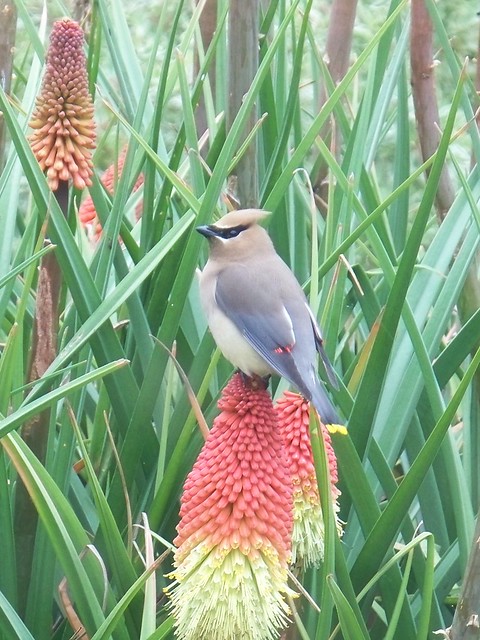
It is interesting to contemplate an entangled bank, clothed with many plants of many kinds, with birds singing on the bushes, with various insects flitting about, and with worms crawling through the damp earth, and to reflect that these elaborately constructed forms, so different from each other, and dependent on each other in so complex a manner, have all been produced by laws acting around us..... There is grandeur in this view of life, with its several powers, having been originally breathed into a few forms or into one; and that, whilst this planet has gone cycling on according to the fixed law of gravity, from so simple a beginning endless forms most beautiful and most wonderful have been, and are being, evolved.
Charles Darwin's The Origin of Species, Chapter 14, Concluding Remarks

Today is evolution Sunday, a day when we reaffirm that science and religion or spirituality are not enemies but both ways that we humans find meaning in a world that all too often seems meaningless. I have always been a nature girl. My mom took me and my friends out on nature hikes all around the San Franscisco bay area from the time I was very little and there was always a sense of awe and wonder in those natural places. From climbing on redwood logs as tall as a house to catching newts and bugs in creeks and playing in the ocean, I was always most happy outside. As a teenager I spent hours wandering by myself through the forested parks in this neighborhood and my sense of wonder grew as my awareness and understanding grew. My studies of natural history and science in high school and college led to some of my first explicitly spiritual experiences - laying on a log overwhelmed with awe at xylem and phloem one year, stunned at the intricacies of the body systems of the starlings flying above me another year, grinning with joy and awe at the migrating vultures overhead another year. I watched the moon and saw the face of god there. I climbed mountains and swam in rivers and studied the workings of the earth and her inhabitants and I was in awe.

Like so many students of science before me I found wonder and awe in the theories that scientists have used to explain and understand the world, too. Mathematicians and physicists often describe equations as beautiful and I don't quite get that, but I do see stunning beauty in Darwin's Theory of Evolution by Natural Selection. It is beautiful because it is simple, but out of that simplicity comes immense variation and flexibility. It is beautiful because it is based on observed evidence and it is beautiful because it allows me to make some sense out of an otherwise rather senseless world. 

The theory of evolution by natural selection says that over time populations of organisms change because some of the organisms have heritable traits allow them to survive more easily and thus have more offspring. A classic example of this is the story of the peppered moth, a standard sort of moth found in England. The typical variety seen before the Industrial revolution was a pretty white grey with some darker specks, allowing the moth to blend in perfectly with the white grey and speckled tree bark and lichen found in its forest home. As coal burning became more prevalent during the Industrial revolution the trees in England became stained with soot, making the pretty white grey with speckles colored moths easy targets for the birds who wanted to eat them. Luckily for the moth population, some small number of moths were born with darker wings and they blended in well with these new, darker trees. In recent decades, with stricter air quality standards and cleaner trees, the lighter speckly variety is again more common. Other classic examples of populations that change because some traits are more adaptive that we all know and love are things as mundane as dog breeds and as important as antibiotic resistant bacteria.

Evolution by Natural Selection is beautiful because it is simple, but out of that simplicity comes immense variation and flexibility. It shows a biological universe where just a few simple rules, carried out with novelty, creativity and fecundity, lead to stable ecosystems where every creature's needs are met. The rules of natural selection really basic: gather enough food and evade becoming food long enough to create the next generation. The ways creatures fulfill these rules are staggeringly varied and the results it allows for are mind boggling. Dandilions grow in any patch of soil and quickly flower, sending out millions of seeds on fluffy parachutes into the world in the hopes that just one or two will survive. Coast redwood trees, however, don't even begin to produce seeds until they are 10 or 15 years old and only about 15 percent of those seeds are viable. Cheetahs and antelope have honed each other into lean running machines though countless generations of "arms race" competition. Slightly less fast antelopes get eaten by slightly more fast cheetahs while slightly less fast cheetahs are outrun by the slightly more fast antelope. Each generation slightly faster than the last until we find in the plains of Africa today these amazing creatures. Sometimes the sheer number of types and individual living things overwhelms me. We get blase about it but our entire planet is covered in living things. Grass and weeds, ants and bugs, sea gulls and pigeons. There is so much variety of life. All I can do some days is gawk in awe.


Evolution by Natural Selection is beautiful because it is based on observed evidence and it is beautiful because it allows me to make some sense out of an otherwise rather senseless world. Charles Darwin spent twenty years studying and compiling evidence for his theory and scientists have spent 150 years continuing that work. Darwin himself saw evidence for evolution by natural selection in the distribution of species such as his famous finches in the Galapagos islands, in fossils and in the comparative anatomy he studied for most of his adult life. The story told in every biology text book of the bones in the forelimb of mammals is classic for a reason - my human hand has the same bones as the flipper of a whale, the wing of a bat and the paw of a cat. Common descent with modification explains that fact in a simple, logical, sense making way. North American paleontologists have discovered a well preserved series of fossils showing the change over time of a little forest dwelling leaf eater with four toes into a large, grassland dwelling single hoofed and long necked horse many of love today. Not all lines show such well preserved evidence, but exciting discoveries in fossil whales and feathered dinosaurs support the theory with evidence. Darwin knew nothing about genetics but we know lots about the biochemical mechanisms of inheritance today, and all of it shows that vastly different kinds of living things are related to each other. People talk about "believing" in evolution but that seems to me completely besides the point. It's not a matter of faith to me, it is simply the best explanation for the evidence observed. Every new way we question nature with scientific methods we see patterns of common descent and patterns of change in populations over time due to environmental pressures. I have to believe that scientists know what they are talking about, but scientific thinking provides evidence for conclusions. The overwhelming variety of life on earth makes sense when we understand evolution. There is a pattern, there is order in this chaotic complexity. And that is beautiful.

The theory of evolution by natural selection is beautiful because it is simple, but out of that simplicity comes immense variation and flexibility. It is beautiful because it is based on observed evidence and it is beautiful because it allows me to make some sense out of an otherwise rather senseless world. I see in our Quaker community a similar, beautiful system of variety out of simplicity and order out of chaos with evidence to support it. 

Here at West Hills I see a system of just a few rules carried out with creativity and novelty that lead to a stable system with room for all who want to be here. We don't have a long list of rules rigidly enforced to keep the good from the bad, we let the equilibrium of the system that is in touch with it's source do that heavy lifting for us. Our rules really are few: the Inward Teacher is within every person, listening for that Still Small Voice together allows us better access than seeking alone, and we must love each other and God in the same way for they are the same thing. In this very room right now we have people who have widely varying beliefs about the figure of Jesus Christ, about the best ways to live a moral life and the best way to sing Happy Birthday. But all of us together make for a forest full of variety and adaptability. 

I also see at West Hills a system of practice based in the evidence of what actually works. George Fox, in his journal, told of his first opening to understanding that the spirit of god could speak directly to his condition. He finished his report with the words "and this I knew experimentally". He had tried listening to the priests and the preachers, he had examined the paths of soldier and tradesman and none gave him the peace and understanding he sought. But listening to his inward teacher, "who enlightens, and gives grace, and faith, and power" worked, he had evidence for a fruitful path. The earliest of Quaker advice and queries such as the Balby Letter of 1656 admonish Friends to gather regularly and "speak the word of the Lord at such meetings, that it be done in faithfulness, without adding or diminishing". They reminded each other to care for those in need in their community and "all be subject one to another, and be clothed with humility". These weren't rules just to be followed because those 17th century Friends liked rules, they were advice given based on what they had experienced to work. They saw in their meetings that Friends who spoke the words of the Lord clearly and faithfully contributed to the life of their meetings. They saw that taking care of each other, walking with humility and grace and being discrete in their confrontations of straying Friends made their lives together better and made it easier to hear those words of the Lord. Quaker practice is an evidence based practice. I don't need to take it on faith that it will work, I've seen it work for four years and three centuries of Friends before me have seen it work. And that is beautiful.

The theory of evolution by natural selection is beautiful because it is simple, but out of that simplicity comes immense variation and flexibility. It is beautiful because it is based on observed evidence and it is beautiful because it allows me to make some sense out of an otherwise rather senseless world. Quaker practice is beautiful because it is simple, but out of that simplicity comes the adaptability to accept all who want to come. It is beautiful because just as George Fox before us "knew it experimentally", we see the fruits of our work, we see evidence for our best practice. And that is pretty darn beautiful.


What do you see in the human life of the mind as beautiful? What is your experience with waking up to the beauty of the natural world?

Where in Quaker practice do you see flexibility and adaptability coming out of simple rules? How has Quaker practice taught you, experimentally, to hear the still small voice?

What signs of spring are showing you the beauty of life all around us? 

**** **** **** **** **** **** ****

New Seed Moon 2012: The Seed Moon

New Seed Moon 2011: Johnny Appleseed (one of my all time favorite posts!)

New Seed Moon 2010: To Everything there is a Season

New Seed Moon 2009: The Seed Moon Is New 

Also, check out my other posts labeled Quaker for more I've written addressed to and about my Quaker community.



Monday, November 25, 2013

Changing our Stories

-->
This is a First Word I presented to my Quaker community, West Hills Friends. A First Word is a time to share a story of how God's spirit is moving in your life and through sharing these stories we can more fully understand the world of the spirit in the world. I hope this story can shed some light on this big crazy world for you. Writing it helped me. 

*** *** ***

Hi, my name is Alyss and I am a middle school teacher. As far as I can see, the only thing on earth harder than being a middle school teacher is being a middle school student. Some of my students come into my cramped but well appointed classroom with worried faces, and folded, tight body language of those trying to be unobtrusive. Others show up with manic grins, big bouncing steps, drawing attention to themselves with wild gestures and loud words. Not a single one of them is sure of themselves or how they fit in this world and in that, I feel a great kinship with them. Being twelve is really, really hard… but it turns out being an adult is almost just as hard. Actually, I think it’s just hard to be a people.

I teach science and my main objectives as a science educator are to introduce kids to great minds that have come before them and to give their minds the tools they need to see the great world in front of them. We just started a unit on the Solar System and so, fittingly, we started with an introduction to how astronomers have viewed the solar system throughout the history of western civilization. I should not have been so surprised at their eagerness for these stories – stories of men who looked and saw, were confused and then made sense.

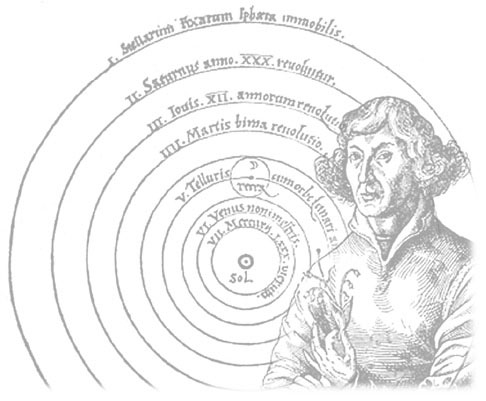
One of their favorites and mine is that well-known Polish astronomer Copernicus. 500 years ago he spent his life watching the stars trying to understand what was going on in this big crazy world. My sixth graders love it when I tell them that the world is crazy and we’re all just trying to understand it…. Copernicus, me and them in the same boat of having no idea what is going on. After years of dedicated watching, Copernicus realized that the observations he was making about the heavens did not fit with story he had been taught about how the solar system worked.  For over 1000 years western culture had been sure that the earth stood still in the center of the solar system and the rest of the heavenly bodies moved around it. But Copernicus’ data just wouldn’t fit that model. He had to change his story to make sense of his observations.

He had to change his story to make sense of his observations. I probably said that 25 times this week and at some point it dawned on me – I’m not just talking about astronomy, or science even. When Copernicus realized that his new information didn’t fit this old story he most likely felt the excitement of discovery but I suspect he also felt confused, insecure, anxious and maybe even more intense emotions like fear, dread, sadness or grief. Or maybe I’m just projecting.

We have to change our story to make sense of our observations. We tell ourselves lots of stories about how the world works – that the earth stands still, that God created heaven and earth in 6 days, that those people are taking our jobs, that that person will always act like this, or I will always do this or someday my prince will come. So many of these stories were built on outdated information but humans are meaning making machines and we hold onto our narratives like a drowning man, even when we know how to swim.

We have to change our story to make sense of our new observations. Hah, if only it were so easy. The child psychologist Piaget recognized that when humans get new information they can either ignore it, assimilate it seamlessly into their old story or reshape their understanding. Fundamentalists, hack scientists and addicts of all kinds are prime examples of the ignoring strategy, but we are all guilty. Piaget called the reshaping strategy disequilibrium, recognizing how uncomfortable and complex this process is.

Disequilibrium. Yeah, I know about that. Feeling like the ground is shifting under your feet. Like nothing makes sense anymore. Like all the old rules and old stories are a bunch of garbage and you are left with…. Well, you have no idea what you are left with. Anxiety and fear, sadness and grief are marking my disequilibrium. I see confusion and distress in the disequilibrium that my students are going through – because what is middle school if not a time when you are learning new things that don’t make sense in your old world order. Their bodies are changing, their brains are changing, their social networks are changing and nothing makes sense anymore. Yep, I know all about disequilibrium.

Piaget says that disequilibrium is a motivator for intellectual growth and creating schema, understandings, that are ever more adequate for dealing with reality. The astronomers we studied eventually came to a schema about the solar system that has allowed us to send men to the moon and probes to the worlds throughout our solar system. I have faith that my 6th graders will some day be generally functional adults and I’m sure I will come to an “ever more adequate schema” though I have no idea what that will look like. And none of these disequilibrium events are easy or comfortable. But as my Zen Buddhist friend says, with that very serious look Zen Buddhists so often have – what’s wrong with being uncomfortable? You just want to tell them to shut it, but he’s probably right.

I have to change my story to make sense of my observations. I’m anxious, uncomfortable, upset scared and sad these days. I’m in a state of disequilibrium. I’m not miserable, though… a new thing is rising or else I would still be happy in my old understanding. Its hard, it’s not fun, there are a lot of tears. But I guess one of those stories that doesn’t really work is the one that says life will be simple, comfortable and pleasant at all times.

Monday, June 24, 2013

Practicing Community

Mother's Moon

**** **** **** **** **** **** ****
 
This piece was written and presented as a "First Word" at my Quaker meeting. A First Word is a time to share with the community how god moves in your life so that we may more fully understand god's workings in the world. 
 
This is a topic I have been mulling over since at least last October (this post is what came out of those initial mullings) but between the time I agreed to give a First Word and the time I actually did get a chance to speak my life got turned pretty much on it's head. I contracted a serious bacterial infection in my ankle that landed me in the hospital for seven days, not walking for another week and still managing the physical and emotional recovery a month later. As I came through that trauma I realized I hadn't written out my thoughts and wondered if this was really what I wanted to speak about. I worried for a bit as I tried mightily to get thoughts to paper but then remembered - hey, I'm a Quaker. Words will come as words are meant to come. I got something down and trusted that the message that actually got shared would be the right message for the moment. 

What I present here is mostly "what I got down." I edited it lightly post ipso facto, but those of you who were in Meeting that morning will have to remember the sparkle as you saw it. 

*** *** ***
 
As much as we instant gratification, 21st century technology natives hate to admit it, it turns out, you gotta practice to get good at something. I was on a kickball team last spring and we lost every game we played. We had fun, but no one got any better at kicking or catching because we never practiced. I failed calculus three times in college before I figured out that doing the homework was the way to go. It helped that that last teacher was easy on the eyes, but the real key to success was practicing the work every day. Anything we want to get better at requires practice, from Stephen King writing every morning to things like friendship and relationships. I watch kids practice relationship with every awkward embrace in a high school hallway and every timid “can I play?” at day camp. 
 
Edward Hick's Peaceable Kingdom
Here at West Hills we do a lot of practicing, too; practicing how to be a community. Living in community with other people is hard, way harder than kickball and so the practice is that much more intense. We practice living in community with each birthday song and potluck, every dinner group and play date. I see us practicing the harder work of being vulnerable with each sharing of genuine joy or deep scary concern and I see us practicing caring for each other with every word of support or note of condolence. As a Quaker community we have a whole special set of skills to practice, from listening inwardly and outwardly in Meetings for Worship to learning to see that of god in every person. We practice discernment together and practice waiting for ways to open to lead us to win-win-win solutions. These are important skills that, through developing and practicing here, we have the opportunity to share with other communities we belong to. 
 
All this practice has paid off in my life. In recent hard times I have felt both the comforting refuge of a caring community and applied skills practiced here to other communities I am a part of. When I was in those dark days of finishing a master’s in teaching program I felt the support coming from this community and wondered why my group of girlfriends wasn’t doing the same for me. When I realized that this community includes explicit times to share concerns and encourages each other explicitly to meet each other’s expressed needs I was able to help my friends know what I needed. They stepped up and we grew closer as a community.
 
Recent events have tested my ability to give and receive support from my community again. Being in the hospital was overwhelmingly difficult in many ways. I have gotten tangible, physical support from members of this community as well as a flood of prayers, well wishes and more cat videos than I can shake a stick at. More importantly, though, this community has been a place for me to practiced asking for and receiving and giving support of all kinds so that when I really needed it, I could figure out what to ask for and how to ask it.
 
West Hills Friends is a community of peacemakers
A trusting, genuine, loving community is a basic human need that is hard to come by in our time and place in history. Here at West Hills Friends we have a special jewel worth nurturing and learning from. We have done the practice, put in the work to develop a community that, through our trusting relationships with each other and with the Spirit, allows people to be vulnerable, ask for help, receive help and celebrate joys. We have fun with each other, we do hard work together and we take care of each other. It is a safe and caring refuge for each of us in a world that can be scary, painful or cold. But it is also a training field for us to learn and practice skills we can bring to our other communities, our families, our work places, our other groups of friends. Learning to listen, to wait, to explicitly ask for help and cheerfully give what help we can, to subvert the power hierarchies of the culture by valuing people and relationships. These skills that we practice here at West Hills can be applied in all aspects of our lives. 
 
We have a lot to offer the world here, and the only way to get good enough to get noticed is to keep practicing. 
 
**** **** **** **** **** **** ****

Note: The topic of this post does not have much to do with the Mother's Moon. It's really much more a Journey Moon or a Father's Moon topic. But the fact of the matter is it got written and spoken during the Mother's Moon so that's where it falls in the blog. Things are getting a bit wacky around here. To understand the Mother's Moon energies, check out past posts, please.

Mother's Moon 2012: Nothing but Good Can Come of This 

Mother's Moon 2011: Freedom, July and Krishna and the Gopis


Mother's Moon 2009: Gifts from the Mother


Tuesday, March 20, 2012

Sap Moon

Full Fasting Moon

**** **** **** **** **** **** ****

I walked out of my house at 6:30 this morning and was greeted by the bright light of the rising old crescent moon. It was lovely, and a beautiful sight in the predawn hour, but it also reminded me just how late in writing this blog post I am.

This month is the Hunger Moon in Annette Hinshaw's calendar and the Sap Moon in Jessica Prentice's. It is the late winter moon where resources are scarce but the first joyful gift of spring - sugary sap from maple, birch and other trees - is starting to flow. Even in the harshest of climates, spring is starting to show itself. Heck, in milder climates like mine spring has sprung! I saw the first car-covered-in-fruit-tree-petals of the season yesterday and daffodils are popping up in many yards around town. We did have a freak snow storm earlier this week, but it melted into a warm, soggy rain by the end of the week.

The interlocking themes of the Sap Moon and the Fasting Moon have been fascinating me this month. One of the first connections that jumped to mind in thinking about these two moon themes is the connection between sugar consumption and poor health. It is getting clearer and clearer to both medical professionals and the general public that consuming too much sugar (and other refined carbohydrates) is really bad for your health. Dr. Joseph Mercola, the well known counter cultural medical doctor and businessman, recently wrote an article claiming sugar is the cause of everything from obesity and diabetes to high blood pressure, kidney disease and fatty liver disease.  Other researchers have evidence that sugar interferes with mineral and protein absorption, an acidic digestive tract, food allergies and distracted, hyper or anxious behavior. A classic favorite New York Times article from 2002, What If It's All Been a Big Fat Lie by Gary Taubes, also puts forth the idea that it isn't fat that is making us sick and fat, but carbohydrates like sugar and white bread. Even if none of those fantastical claims are true, the uber-main stream USDA's My Plate campaign still count "reducing your kids' sweet treats" as one of their 10 tips for healthier eating (though there is almost nothing else worth commending about this plan. Ugh). The general consensus among thinking people is that the American habits of sugary foods and sugary drinks are not helping our chronic public and private health problems (check out this AWESOME infographic about sugary fruit drinks).

Mait Jüriado
So, we can agree that we should be eating less sugar than we currently do. But sugar tastes so good. It reminds us of mother's milk, sweets we had as children and general lovely and happy feelings. They are an important part of our food rituals and traditions. As a blogger I love noted the other day, sweets make you smile. Imagine trying to have a sugar free Christmas (no cookies, or candycanes!) or birthday (no cake, ice cream or soda!). But to be skinny, cavity free and healthy it might be worth it.

We can look back into progressive tradition to find another group of people who abstained from sugar for a good reason. 19th century abolitionists in America and Britain launched strong and successful campaigns to convince people to refrain from sugar on the grounds that it was produced by slave labor. An anti sugar leaflet was published by a man named William Fox in 1791 and by the next year as many as 400,000 people claimed to be abstaining from slave grown sugar. In March of that year, a Quaker merchant from Suffolk named James Wright put out an advertisement informing his customers that he would no longer be selling sugar. 
 “…..Therefore being impressed (as I have said) with the Sufferings and Wrongs of that deeply injured People, and also with an Apprehension, that while I am a Dealer in that Article, which appears to be a principal Support of the Slave-Trade, I am encouraging Slavery; I take this Method of informing my Customers, that I mean to discontinue selling the Article of SUGAR, (when I have disposed of the Stock I have on hand) ‘till I can procure it through Channels less contaminated, more unconnected with Slavery, and less polluted with Human Blood…….”
Abolition Project
Those "channels less contaminated" included, for some people, the more expensive sugar produced by free laborers in India but for many it meant natural sugars like honey, sorghum and maple syrup. As early as the signing of the Declaration of Independence, abolitionists like Benjamin Rush along with some more early Quakers, were agitating for families to use maple syrup instead of slave produced West Indian sugar. Maple syrup, made by small farmers in New England and Canada, was free of these bloody associations with slavery and very patriotic. Maple syrup is still a valued food, known as an artisanal, local specialty and considered much more healthful than white sugar. A wonderful homeschooling family just did a whole unit on maple sugaring this winter and blogged about the whole, fascinating process. Go check out what they did and what they learned. 

Buying local sweetners instead of slave produced ones was a a matter of deep held principal for these abolitionists. They knew that all men are born of God and thus all men are entitled to the same respect, rights and love as all others. To be economically entangled with an industry that is so guilty of the disrespect of these rights and duties towards mankind was morally indefensible. Is it any more defensible today? There are still enslaved Africans producing our chocolate and many other goods are produced through the blood and sweat of economically indentured workers or grotesque and inhumane treatment of sentient beings. Still others come at the price of environmental degradation that most of us are appalled at. How can we spend our money on such dirty things?

Hadleygrass is asparagus
Then I am back to the perennial question of how do we idealistic liberals continue to live in this culture (rather than abandoning it for Utopian communes or private Edens) while still holding to our core beliefs and values? The beloved 18th century Quaker John Woolman, in his essay Some Considerations on the Keeping of Negroes, placed his finger right on the crux of this issue: 
 "When self-love presides in our minds our opinions are biased in our own favour. In this condition, being concerned with a people so situated that they have no voice to plead their own cause, there’s danger of using ourselves to an undisturbed partiality till, by long custom, the mind becomes reconciled with it and the judgment itself infected. "
When we love ourselves more than we love God (God-in-others, God-in-nature, God-in-ourselves or any other kind of God we can think of) we find a way to justify our actions. We find a way to believe that it is all OK, we don't make a difference, it's not that big of a problem anyway. In December I addressed this very question and offered the idea of making connections with other people, other genuine, connected to God, honest to goodness people would help rebuild webs of community. Building or rebuilding the structures we want in the world are important, but the Fasting Moon this month points to the fact that we can reject that which we don't want, too. 

Sometimes, we just have to buck up and say no. It is important that people say no to slave grown sugar and chocolate, factory farmed meat, and destructive industries of all kinds. Sigh. That is just so hard, and I don't have much energy leftover right now for another hard challenge in my life. Part of Grabbing the Tiger by the Tail is knowing when to walk away from the tiger... knowing that you will return someday. 

What is your relationship with sugar? Do you watch how much you consume or do you pack in the sweets whenever possible? Are you worried about health implications or do you have other moral issues like the early abolitionists? Have you ever tapped maple trees or raised bees? How are you Grabbing the Tiger by the Tail this early spring? 

**** **** **** **** **** **** ****  

Full Fasting Moon 2009: Full Moon in the Fasting Moon

Full Fasting Moon 2010: I didn't post a Full Fasting Moon post in 2010, but Spring is Springing is a New Fasting Moon post for that spring.

Full Fasting Moon 2011: Of Peacocks, Pride and Park Rangers

Thursday, October 20, 2011

An Ill Harvest

Full Harvest Moon

**** **** **** **** **** **** ****


You've been following the Occupy Wall Street movement, haven't you? Maybe you've read some articles, seen John Stewart's take on the protests or forwarded along photos, videos and other information on Facebook. Maybe you even joined the a march, rally or protest in your local area. Or maybe, like me, you've felt some kind of way about the whole thing and didn't.

I've been very curious with myself trying to understand my ambivalence. I am in support of the movement, at least in many ways and as I see it. I believe that our political and economic systems funnel wealth and power to an elite few while disadvantaging a majority of people. I believe that citizen should protest when their government doesn't support their rights and needs and believe that government should play a roll in redistributing wealth, creating social safety nets and limiting the power of the wealthy. I believe we should be spending money on schools, public infrastructure and health care so that no one in this, the richest nation on earth, would be without the basics for survival and the ability to make their lives better. I really do believe all of that, and still, I didn't go down to Occupy Portland last week.

One of my concerns, valid or not, is that a rally and a protest are not going to change things. My organizer friends remind me that the point of a rally is not to change policy (though that does appear to be one aim of the Tahrir square-like Occupy Wall Street protest), but to show the public how much support there is for change and give activists time and space to talk, share ideas and boost morale. I guess those are good goals, but I wonder if it is the best way for me to spend my energy.

Ultimately, I see that our unjust system of politics and economics are the results of generations of decisions, very few of which had the explicit goal of giving some people advantage at the expense of others (some people will argue with me on that, I really don't believe in a group of old white guys sitting around trying to screw the rest of us [with the exception of women's fashion, they really are trying to screw us there]). We are currently reaping the harvest of short sightedness, putting personal material gain above all else and general unintended consequences. It is an ill harvest, but I don't really think we can put the apples back on the tree and hope for new ones before winter.

I am glad there are people who want to brave bad weather, giant crowds and pissed off, power drunk cops to protest. I am also glad there are people who want to counsel prisoners and volunteer in African refugee camps. I just don't think these are my ways of doing the work to fix things. The world needs all of us to do what we can to make it a better place but we need to discern where our efforts are best used, what we can sow to reap the best harvest. Maybe I was being lazy or scared or just crowd averse when I didn't go downtown last week. I spent the day reading about critical pedagogy and integrated curriculum in middle schools, cooking food from my garden and resting my body that wasn't feeling at the top of it's game. I don't have a witty sign to show for my efforts on October 6th, 2011 but I think I sowed some seeds that I will be able to harvest in the future. I hope my actions on that day, and all others, ripple out into the universe. And I hope the rain holds off on the Occupy folks, at least for another week or so.

How are you feeling about Occupy? Are there rallies and camp ins happening where you are? Are you forwarding stuff on social media or talking about it with your friends and family? How are you planting seeds of peace, justice and goodwill in your life? What harvests, good or ill, are you taking in these days? Has it started raining in your neck of the woods?

**** **** **** **** **** **** ****

Full Harvest Moon 2009: The Moon When Squirrels Throw Acorns at You (Inexplicably, my most viewed post. Ir has been viewed over 500 times, more than two hundred times more than my second most viewed post. Curiouser and curiouser.)

Full Harvest Moon 2010: Harvest Moon

Friday, September 2, 2011

The Book of Nature

New Nesting Moon
**** **** **** **** **** **** ****


When I was 21 I began observing the moon. I was well versed in the natural history and geology of my environment, but was woefully ignorant of how the sun and the moon cycles worked. Maybe I was inspired by the months on end of clear skies in Southern Oregon or maybe it was my continuing interest in nature based spirituality. Maybe it was God tapping me on the shoulder and pointing her finger at something I should check out. Whatever it was, I faithfully watched the moon for cycle after cycle that year.

What I found amazed me. I was enthralled by the shapes the moon takes, the patterns on its surface and the relationship between the moon and the sun. I watched the moon wax and wane, and also found myself watching the seasons wax and wane. I saw the sunset move up and down the crest of the hills and the angle of light rise and fall with the seasons. I felt how the earth seems to wake up, be full, release its energy and then hibernate as the seasons wax and wane like the moon herself. I kept watching, kept observing month after month, year after year. The rhythms of day, month, season and year started to feel natural and deep, like my own heart beat and breathing.

I have felt God's presence in nature for much longer than I have ever felt it anywhere else. I knew the liturgy of growing plants long before I knew any church liturgy and heard God's voice in song birds and streams long before I heard it in a meeting for worship. Today, my primary language for accessing God is still the language of the living earth and especially of the natural rhythms of the sun and the moon. I see all life moving in these cycles, from the compact and huddled seed in winter, to the shooting growth of spring, the fullness and flowering of summer into the dissipating, conserving, slowing comfort of autumn. Gardens, creative projects, human lives and even civilizations move in these cycles. Breathing into these cycles, living fully in them and allowing them to unfold seems to me to be the best, highest and closest to God way to live my life.

Our culture seems to be an always on, always up, always growing kind of culture. But do you remember what cells that don't stop growing are called? Cancer. Plants that don't stop growing, like kudzu or English Ivy, are choking weeds. Sun that doesn't stop shining creates deserts like the lifeless land of the planet Venus. I feel deep in my bones that cycles of growth and constriction allow a chance for starting over, for assessing the last period of growth and for resting. I know God is in all parts of this cycle. I feel her in the pruning and contracting of autumn just as much as in the growth and light of spring. God is even in the hibernation and death of winter. God, my mother, knows and loves me through all parts of the cycle. God, my father, uses the cycle to encourage me to grow and challenge myself. The book of nature and the book of time are, to me, the fullest and most beautiful books God has written to help me navigate my life. And all I have to do is watch.

*** *** ***

This post was inspired by both my Quaker Meeting's literary journal query for the Autumn and a Rob Breszny horoscope from a couple weeks ago. The query is "How have you experienced god's presence in nature?" (which I chuckled at a bit - I've been writing about that twice a month for three years and still haven't exhausted all I could write about) and the horoscope is below:

Storyteller Clarissa Pinkola Estes loves life's natural rhythms just as they are. She says we can avoid a lot of suffering if we understand how those rhythms work. "The cycles are birth, light, and energy, and then depletion, decline, and death," she told Radiance magazine. In other words, everything thrives and fades, thrives and fades. After each phase of dissipation, new vitality incubates and blooms again. According to my analysis of the astrological omens, Virgo, you are currently going through a period of dwindling and dismantling. The light is dimmer than usual, and the juice is sparser. But already, in the secret depths, a new dispensation is stirring.

**** **** **** **** **** **** ****

New Nesting Moon 2009: Breathe a Sigh of Relief

New Nesting Moon 2010: Ramadan


My Summer Solstince/Pagan Value's Blogging Month post from this summer is on a similar theme of cycles in nature: Circles, Cycles and Pulses: Pagan Values Blogging Month

Wednesday, June 29, 2011

Circles, Cycles and Pulses: Pagan Values Blogging Month

Summer Solstice

Summer Solstice 2010: The Season of Light Nights

Summer Solstice 2011: Wanting to Be Up and Doing

This post is an entry in the 3rd Annual Pagan Values Blogging event, which I also wrote this years' Full Journey Moon post (self evidently titled June is Pagan Values Blogging Month) for.

**** **** **** **** **** **** ****

As I've been living into the solar power so palpable during this Summer Solstice season I am reminded of one of the core elements in my personal pagan values system: the fact that all of creation moves in circles, cycles and pulses. When I think about the things I disagree with Christian theology about the first is a need for a savior (I think I can do that within my own relationship with the divine, thank you very much). The second, and perhaps more important to me (though probably not to most Christians who would argue my first point), is the knowledge that time is cyclical with no set beginning, ending or singular event that never has been before and never will be again. Time isn't a straight line and neither is virtue, or anything else. It's all circles inside of circles, pulses and waves. Every coin has two sides, and neither is more important than the other.

One night last week I found myself listening to the Christian radio station and heard a pastor speak very passionately about evil. He sounded to me like a big brother warning his younger siblings about their father's strange and not altogether sensible rules and harsh punishments. He wasn't fire and brimstone like so many preachers, but truly heartsore and worried that we might fall into evil. It all seemed so foreign to me because, to be perfectly honest, I don't believe in evil. This is not to say I don't believe in Really Bad Things, or even Really Horrific Things That Defy Rational Explanation and Might Very Well Be Called Evil. I just don't believe in some supernatural power that causes evil. The Worried Pastor said he didn't know why a good god allowed evil to exist and that was just something we'd find out when we got to heaven. I know, though, to my own satisfaction at least, why there are things in this world that people call evil: imbalance.

Every impulse and action in creation has an opposite impulse or action and neither are Good or Evil, though some may be Beneficial and Harmful. Most just Are, though. Like wet and dry, neither is bad though both are harmful in their extreme. That same night I heard Worried Pastor I switched over to NPR and heard a story of Sudanese soldiers going door to door in the Nuba region of the country and killing members of any tribal group that had supported the South during the civil war. That is a pretty awful action, and one that I will never defend, but I still don't see it as evil. I see it as an imbalance in the impulses community affiliation vs. universal humanistic care and the impulses of protecting one's resources vs. sharing. It isn't wrong to lock your doors to keep intruders out, but it is certainly very harmful to kill neighboring people who compete for your food sources. Both come from the same impulse to protect what you need to survive.

One of the reasons I rejected Buddhism during my late teens was because I don't believe all life is suffering, and I also don't believe that detachment is the way to relieve what suffering does exist. Even at that young age I saw that the play between joy and sorrow was where the real meaty part of life is. It will be winter just as surely as it is now summer and cultivating an emotional detachment from that change seemed counter productive to me. As I began exploring paganism the image of a Medieval or pre-Christian woman, blonde and buxom, laughing and pouring mugs of beer for her husband and friends came to me. A woman who is not afraid of enjoying the good things in life while they are here, and bearing through the hard times that are just as likely to come soon. A couple years later I claimed that I gave up vegetarianism to become a hedonist. I think I gave up Buddhism for the same reason.

Community and self. Summer and winter. Festivities and solitude. Heat and cold. Joy and sorrow. Darkness and light. Growth and decay. Giving and receiving. Rain and sunshine. Fear and security. Death and birth. These are the peaks and valleys of the sine waves of life. We ride them like roller coasters as we move through our days and years. When the waves are too steep - the selfishness too selfish or the heat too hot - we find ourselves out of balance and off kilter. But when the waves are too shallow there isn't enough momentum to keep us moving forward. You can't draw a picture with a white crayon on white paper and you can't live a life of all growth and no decay, or all giving and no receiving.

The reason I love Annette Hinshaw's Earth Time, Moon Time calendar so much is that the very foundation of it is this idea of cycles at various levels. The cycle seen at the year level that starts with the Death Moon and Birth Moon and goes all the way around to the Harvest Moon and the Sorting Moon is the same cycle that happens at many other levels. It is the cosmic cycle of the creation that the Hindus think of as yugas or eras. It is also the cycle of the human life span, or of the lifespan of a business, or a garden year, the lifespan of a frog, a butterfly or a mayfly. It is smaller cycles, too, like cycles of digestion and breathing and photosynthesis. All these cycles within cycles, pulses within pulses are the engines that drive the brilliant and beautiful motion of the myriad things. This is deep wisdom and Annette Hinshaw has brought it to a beautiful and simple, hands on and practical calendar.

I hope that Worried Pastor figures it out so he can stop worrying. Evil isn't here against god's wishes, or to lure us into eternal damnation. The yin and yang of creation is here to keep us moving in dynamic cycles, circles and pulses. This time of year, when we have just seen the crest of the summer wave and are sliding our way down into the darker part of the year, is a perfect time to remember that core tenet of my pagan values. Circles, cycles and pulses literally make the world go 'round.


Read more entries in the 3rd Annual Pagan Values Blogging event HERE.

Tuesday, April 26, 2011

The Courage to Recreate

Full Courting Moon

Full Courting Moon 2009: Courting Moon - I took a break!

This post also talks about Easter, which I discussed in last year's post Easter.

**** **** **** **** **** **** ****

Sorry this post is late in getting out to you, I've just been too busy playing to write :) Two weekends ago was the West Hills Friend's annual retreat at the Oregon Coast and then this weekend was full of Easter festivities. I have been to a pancake breakfast, an Easter pageant, a no talent show, a one woman play, an Easter egg hunt, craft nights, a mimosa brunch, two bbqs and at least half a dozen hikes in the woods (including one where I found a pile of stones and spent some time balancing them, one of my favorite kinds of play) in the last two weeks. Oh, and there have been plenty of naps, too.

Courting Moon asks questions about how we re-create our life through the magical third way between work and rest, play. Johan Huizinga, a 20th century Dutch historian who wrote an early text on play in humans, defines play as "a free activity standing quite consciously outside 'ordinary' life as being 'not serious' but at the same time absorbing the player intensely and utterly." Play is does good things for our brains, our spirit, our morale and even our problem solving abilities. Play often includes the opportunities for happy accidents, things that don't go as planned and make us stretch to worth with, around or through them. Like when the frisbee gets stuck in the tree and we have to problem solve a way to get it out. It also allows us time to free associate and make connections that we may not have made during the course or ordinary time. My sister has introduced me to an amazing mind-body yoga/dance/meditation/flailing practice called Shiva Nata that seems to revv up the connection making process through movement. It is fun and hard and hilarious - the hallmarks of great play.

As the moon swelled towards full this month I realized that the big question for me was not one of how to incorporate play into my life - the above list of activities shows that I am pretty good at that already - but how to channel that play into transformation. Play gives us the raw materials for transformation in the form of experiences and connections, but true life changing re-creation requires additional conscious effort.

Taking those conscious steps to change your life, even when the need for change or the path forward is evidently clear, can be very difficult. What's the old saying? Only a wet baby likes change? A bird in the hand is worth two in the bush? A known evil is better than an unknown evil? We don't start down the path of re-creation until that risk seems worth more than the stifling or constricting place we currently are. Transformation takes courage.

At worship sharing during retreat I was moved to speak about my feelings shyness and nervousness at the beginning of the weekend. These feelings take me by surprise because I live with them so rarely in my daily life. I happily chat up strangers at the grocery store, meet new students and teachers with confidence and generally show my sassy, irreverent, thoughtful self to most people I meet. Sometimes, though, feelings of fear and nervousness blindsided me in situations I didn't expect them in. I'm coming to realize that this happens when the people involved mean something more to me, when I am risking letting them into my fenced off inner garden. I really am the confident girl I project myself to be to stranger, but I have no fear that they are going to judge or wound me so I have no fear of letting them see that. The people I really care about though - my new church friends, third dates with cute boys, admissions counselors for grad school - these people can wound me, and I protect myself through shyness and nervousness. Luckily, as another Friends said during the same worship sharing, we can move into that fear, remind it that it is not doing what it so desperately thinks it needs to do, and come out the other side into a clearer, sweeter place. At retreat the Courting Moon's energies were at full power and it was evident that play and recreation are fantastic paths through that fear to a deeper connection.

All kinds of transformations take courage to begin. John Woolman, a well loved early American Quaker, worked his entire life against the enslavement of African American people on this continent. Reading his journals, I get the feeling that he would have just as soon stayed at his farm in New Jersey and tended his garden and orchards but he spent many years traveling through the colonies. He was racked with doubt as to whether he would say the right thing, or that his message would be heard, but his faith in his calling gave him the courage to take the steps he knew he needed to. He struggled his whole life to, in his words, make love the first motion. Rather than berating slave owners, or lecturing from a pulpit, he cultivated relationships and spoke from his heart, lovingly and tenderly. His desire to see slavery abolished did not happen for almost one hundred years after his death, but he transformed his life, and the lives of many people he spoke with in his travels. I'm not sure if John Woolman would have called what he did play, but many people see traveling as great paths to both recreation and re-creation.

Like last year, Easter Sunday at West Hills Friends included an original production of an Easter Pageant. This year Jesus rises from the tomb to remind people who have realized they are not who they thought they were that there is still a way forward. Jesus' rebirth, like all rebirths, allow us to move through what seemed like a dead end. In the play, Simon Peter says "I thought I was a rock, but I am broken and crumbling." Jesus reminds Simon Peter that big rocks get in the way, but crumbled rocks can pave the way forward. Our Jesus wore a sparkly purple dress coat and gave out goodies while we danced in the aisles. Re-creation, recreation and transformation with an amazing soundtrack.

What is your favorite kind of play? What connections, lessons, transformations have you made through creative, free form, time-out-time play? What kinds of transformations take the most courage for you? What did you do for Easter? How is spring shaping up where you come from? I hope the weather is nice enough for you to get outside... and play!

Sunday, October 31, 2010

Doggy Heaven

The lights were off except the gently glowing moon shaped night light. She had told him a bedtime story, they had said their evening prayers and they had sung their usual goodnight songs. Just as the night’s silence settled over the room he fidgeted under the covers and said, in a small, sad little boy voice, “Mama, I miss Lucky.”

“I miss Lucky, too, baby. I’m very sad that she is gone.”

“Mama, where did Lucky go?”

“I wonder. Where do you think Lucky is now?”

“I think Lucky is in doggy heaven,” he said with the finality only a five year old can have.

“Mmm, yes. I bet you are right.” Silence settled over the room again. They could hear dry leaves blowing along the sidewalk and an owl hooted from the trees behind the house. A dog barked somewhere off in the distance.

“Mama, what do doggies do in doggy heaven?”

“I wonder. What do you think Lucky is doing?”

“I think she’s chasing squirrels. That was always her favorite thing to do.”

“Yes it was,” she said with a smile. “Do you remember that time Lucky pulled the leash right out of your hand? We had such a hard time getting her to come back.”

“Yeah! She ran and ran chasing every squirrel in the park. And remember when we took her to the river and she found the dead fish and rolled in it. She was so stinky and you didn’t want to let her in the car.”

They laughed and she replied, “Yeah, I do remember that. I bet there are lots of dead things to roll in in doggy heaven. What else do you think dogs get to do in doggy heaven?”

“Eat popcorn. And potato chips.”

“Oh yeah! An all you can eat popcorn and potato chip bar! And tuna, too, right?”

“Yeah! And there is a big field full of old bones to dig up and bury!”

“And she will never never have to play with dogs that scare scare her, or hear fireworks or get in Daddy’s truck. Lucky Lucky.”

He laid quietly for a little bit, but not sleeping yet. They could hear cars driving by outside and rain starting to fall on the pavement.

“Mama, what if I forget Lucky?”

“You won’t forget Lucky. Every year we have a special festival to remember the people and animals we loved who have died, remember? You know how next week is Halloween, right? Then the day after Halloween we have our Day of the Dead dinner.”

“Yeah. We decorated the nature table with pictures last year, and lit a candle at dinner.”

“That’s right. Last year we had pictures of Great Grandpa from World War II and of Grandma’s Grandparents on their farm, and my favorite piece of crochet from my Great Grandma. Remember how we also had a picture of my childhood dog? We can put a picture of Lucky on our nature table this year and tell stories about her during dinner. She is one of our Beloved Dead now, too.”

“Can we put some dog food in her bowl, like we make a plate from dinner for our Beloved Dead?”

“Haha, yes. We’ll have to keep the cat out of it, but we can do that.”

“Mama,” he asked again, after a moment of quiet, “who will take care of Lucky when she is in doggy heaven? Who will scoop out her dog food since I’m not there? And who will open the door for her or wipe her paws off?”

“Oh, don’t worry about that, baby. The Goddess will take care of Lucky while she is in doggy heaven.”

“She will?”

“Yes, every day they will go for long walks and Lucky will get to do all her favorite things. Every night The Goddess will make sure Lucky is tucked into a warm, soft dog bed. And every morning Lucky will wake up younger than she was the day before. Soon, Lucky will be a little Lucky puppy again.”

“We didn’t know Lucky when she was a puppy.”

"No, we didn't. But The Goddess did, and she will take care of Lucky when she grows young into a puppy again. And then, before not too long, Lucky will be so young she’ll be ready to be born again.”

“Will she come back to live with us, Mama?”

“No, baby, she won’t. She might be born another dog who gets to love another family. Or she might be born a person who gets to love another dog. Or she might get born something else. I don’t really know, only The Goddess knows that.”

“I think she’ll be born another dog and she’ll have another little boy, like me. Only this time the little boy will have her since she is a puppy and she’ll never have to go to the humane society.”

“I bet you are right.”

There was silence again in the room. She listened to him breathing, knowing he wasn’t asleep yet. She kissed his forehead and smelled his little boy smell.

“Mama, I miss Lucky.”

“I know. I miss Lucky, too.”


Drawing by Zlaika. Check out more on her Flickr stream.