Showing posts with label Sorting Moon. Show all posts

Sunday, November 18, 2012

The Year Ends

Old Sorting Moon

**** **** **** **** **** **** ****


I always like it when my human affairs line up nicely with natural cycles and seasonal change. There was a full moon on October 29th that marked the height of the Sorting Moon, the last month of the lunar year, and also happened to fall right at the end of my Outdoor School session. As the last week of the Sorting Moon came and went so did the last week of Outdoor School and right as I was packing and getting ready to leave the coast for the last time, winter showed up. I honestly felt like I left the coast in the autumn and arrived in Portland in the winter with cold air, cold rain and bare trees. 
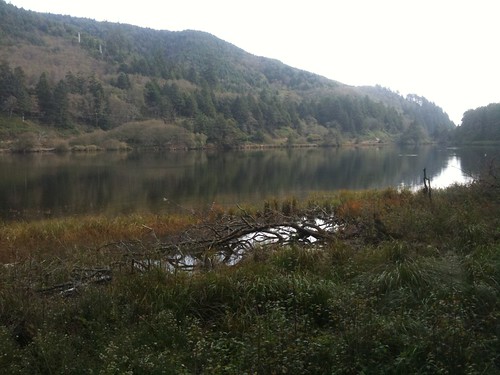
Smith Lake during the last week of camp
Daylight savings that week made the transition all that much more abrupt. It is now the dark, cold, wet time of the year. 

The end of the Sorting Moon also the end of my fourth year of blogging at The Wheel and the Disk. Holy cow! Really, four years? As I look back over my work this year I see that the 2011-2012 lunar year was a busy (er, totally crazy) one, but there is a lot here that I am very proud of.

At the beginning of the year I was struggling heavily with my work as a student teacher. I struggled with that hard work and other hard work that came up over the winter. At the beginning of the lunar year, I set the goal of working with material from Jessica Prentice's book Full Moon Feast and some of my best writing this year came out of my engagement with that material. The posts about the Wolf Moon and the Sap Moon are shining examples of the kind of writing I do best - an eclectic mix of explanation, spiritual musing and connection making. In the deep winter I did some gwishing and set a theme for 2012 - Grabbing the Tiger By the Tail - which has manifested itself in all sorts of ways I didn't even imagine were possible. The craziness of the rest of the year was foreshadowed by my messing up on the naming of my moons in the winter and having to realign the posts and dates months later. As the spring waxed my focus shifted outward and my posts tended to get shorter, more full of poetry, and more full of pronoic epiphanies. It simply was not a season for digestion or self reflection. It was a time for adventures! In the summer I told you about my adventures in dogs, men, soccer and theme parties. Man, I sure had fun this summer. The fun didn't end, though, as I moved to Outdoor School and enjoyed autumn 
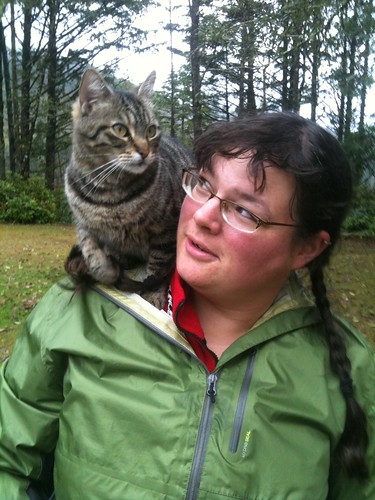
Wondering what tha?
on the Oregon coast. I may not have posted twice for each month, but I did post once for every moon and considering how much else got pushed aside this year I consider that an accomplishment. 

I'm not sure what I see in the future of this blog. It is clearly a very important tool for me in my self reflection and continued spiritual practice. I look forward to spending the winter really digesting the work (and play!) that I engaged in over this last warm season. I would like to continue to incorporate stories and poetry to help illuminate my findings as well as to highlight the science of the seasons as they come and go. I expect to have another very fruitful winter of blogging and hope that I can sustain that into the spring and summer next year. Again, I promise to post for every moon and every festival. That commitment keeps me on track in a very real way. 

I have been enjoying this change in the season and the beginnings of this season of dark. This soli-lunar calendar that I follow allows for a generous season of end before the birth of the new year and I have grown accustomed to using it for all it is worth. Reviewing, putting things to rest, sorting through and making ready to let go or spend the winter working of what needs to stay. It is a fruitful season for inner work and I need some of that brand of medicine right now. How is the year winding down for you? What have you accomplished since last fall? What of that is worth keeping and what of that is ready to be transformed into something worth keeping? How is winter beginning to show itself where you live?

**** **** **** **** **** **** ****

This post is labeled Old Sorting Moon because it was written so late in the month. Here are previous Full Sorting Moon posts. 

Full Sorting Moon 2011: Snow Moon: Connecting with our Food

Full Sorting Moon 2010: The Rains Have Come and Year Two Complete

Full Sorting Moon 2009: Full Sorting Moon


Monday, October 22, 2012

I Make Bad Decisions

New Sorting Moon

**** **** **** **** **** **** ****


Oswald West State Park by Tapestry Dude
At the beginning of each week at camp we have a staff meeting where everyone does a body, mind and spirit check in. We get to report on how we are doing in the different aspects of our lives, and how we are feeling about the upcoming week. It is a fun and meaningful way to debrief from our weekend away, keep in touch with each other and share the things about our lives that are so important to share when living and working together so closely. Often people say things like "I had a great weekend, I got so much sleep" or "I had fun on the beach/in town/reading". Not me, though. It has become a bit of a running joke that I start my check in with a "I made a lot of bad decisions this weekend." We all laugh, I tell my tale and we move on with our morning.

Over the years I have learned that when a phrase comes to me often in a period of time it is probably important. Yes, "I make bad decisions" is a joke, but the fact that it keeps coming up means I should probably examine the sentiment a bit more closely. This week is the start of the Sorting Moon, the last month in Annette Hinshaw's calendar. It is the end of the cycle and the time to look at what we have done, make choices about what to keep and what to let go of, and get ready for the beginning of the next cycle. As I read through the Sorting Moon chapter in Earth Time, Moon Time I noticed that she talks a lot about decision making style during that chapter. Ultimately, the Sorting Moon is asking us to look at not just what we are making decisions about, but about how we make those decisions at all.

About the Trees by Dead Air
My work schedule is grueling these days and my weekends are short. In my 24 or 48 hours off I have to fit in seeing my friends, walking my dog, doing my laundry and taking care of my self care needs for sleep, alone time and reflection. There is literally no time during the week for any of these activities. The "bad decisions" keep coming in the form of choosing the seeing friends portion of the to-do list over the self care portion of the list, and that usually involves alcohol, late nights and other debauchery. When you add in the 2 hour drive from camp to town, that has turned into short nights and busy days when my body and spirit really need the rest. That being said, I don't regret the time spent with my friends or the fun we've had. Last weekend I went to a rock n' roll show, ate amazing Egyptian food at a late night cart and laughed with friends new and old. These memories are the mortar that holds the bricks of friendship together, and as I am spending so much energy here at camp I realize just how important having those strong friendships is to me.


Incoming Surfy by surfonaut
So maybe I'm not making bad decisions. I'm just making a decision. I am valuing my friendships and the (admittedly debaucherous) fun we have over self care. I am quite confident that these decisions will have impacts on my future choices and maybe even my future abilities or health - you can only burn the candle at both ends for so long. But what decisions don't? One of Annette Hinshaw's questions for consideration during the Sorting Moon is "what decision do you feel was most important in getting you where you are today?" I suspect it is rarely a lack of options that makes that question so thought provoking. Every decision we make puts us on the path that leads us to the current moment and into one of an infinite number of futures. I think, like is the case with so many things in life, it is not what you actually do but how you do it that is most important. How am I going about making these decisions? Maybe I'm just justifying gut level decisions, but I think I'm doing some thinking, too. 

As the autumn season builds to a crescendo here in Western Oregon the days are getting wet and dark. We begin to honor the seasonal impetus to turn inwards and to reflect on our choices. What have we done this year we like? What decisions do we regret? Were we able to gather the resources, physical and emotional, necessary for the coming winter? When have you made bad decisions, and how did that turn out for you? What process do you like for making decisions? What does deep autumn look like where you are?

**** **** **** **** **** **** ****

New Sorting Moon 2011: Sorting it All Out 

New Sorting Moon 2010: Useful, Beautiful or Loved

New Sorting Moon 2009: New Sorting Moon


Sunday, November 13, 2011

Snow Moon: Connecting with Our Food

Full Sorting Moon

**** **** **** **** **** **** ****


The moon a month before the winter solstice in Jessica Prentice's book, Full Moon Feast, is called the Snow Moon. In a pre modern society, this is the time of the year when the larders are full and people are beginning to live off their stored food rather than fresh food. It is fascinating for us, modern people with modern conveniences, to ponder life without refrigeration or electric freezers. What exactly does it take to make sure your household has enough food stored in a way that it will keep until fresh food becomes available again? And what does it mean to us and our connection with our food, with our food producers and with our larger community of spiritual beings that we don't have to think about where our food comes from?

Like most Americans, I get most of my food from grocery stores. On any day of the year I can easily get to a store and bring home almost any kind of fruit or vegetable, hygienic foods preserved in cans, bottles or frozen and even any number of prepared foods for a rather reasonable price. It is a rare week when I have to think about what I am going to eat further in advance than a couple of hours or maybe a day or two. Jessica Prentice points out that Americans tend to act like big babies when it comes to their food. We expect it to be available to us at any time with very little thought or effort on our own part. She notes that we are aghast when people claim they don't know how to drive but hardly bat an eye when people say they don't know how to cook.

Our ancestors, and many people all over the world, put infinitely more care into their food than we generally need to. Many people need to spend hours of the day for months of their year to collect, prepare and preserve enough food to meet their needs. These people are intimately in touch with their food from the exact part of the garden or field that it came from or which individual animal provided the food, through to what it looks and feels like in the kitchen through how it acts when it is prepared and preserved. They have an deep, visceral connection with their food.

Over the past few years I have been making small, spiraling movements towards this kind of connection with my food. I grow a garden each year and revel in my own small harvests of snow peas, snap beans, cherry tomatoes and radishes. My garlic crop is my pride and joy and I relish the yearly rhythm of planting it right around Halloween, watching it come up in the February, monitoring it through the spring and deciding exactly when, in late June or early July, to dig up the whole patch. Then there is the process of tying the bunches to dry and checking on them every few days until they are ready to be trimmed, brushed of dirt and sorted into seed garlic and eating garlic. Luckily, garlic is good to eat at every stage from sprout to cured, so there is no wasted garlic out of my garden.

I also have taught myself to make a number of foods that are traditional ways to preserve foods for the winter. I recently made a big batch of yogurt and have made sour cream and kefir, another fermented dairy product, in the past. I occasionally make sourdough breads and really enjoy making fermented vegetable pickles. Sauerkraut, kimchi and other fermented vegetables are, as Jessica Prentice points out, excellent ways to ensure a supply of enzyme and vitamin rich vegetables through a long, dark, cold winter. The fermenting actually increases some vitamin levels and also provides lactic acid, a digestive aid that no doubt helped our ancestors deal with an otherwise plain and coarse winter diet of dried or salted meat, beans and grains. Even today this tradition continues to serve fermented vegetables with heavy foods like sauerkraut with sausages and cornichons with pate. In Korea, kim chi could provide up to half the food intake for a family during the winter and is especially full of healthful food compounds thanks to the garlic, onions, ginger and chilies that usually spice the potent cabbage dish.

This autumn I finally gave in to the giant "sauerkraut cabbages" for sale at my favorite pumpkin patch farm. For less than 4 dollars I was able to take home 18 pounds of cabbage to turn into as much lacto fermented goodies as I could fit in my fridge. I used some of it to make a giant batch of coleslaw and another goodly pile of it became a braised cabbage dish but the rest became three kinds of sauerkraut, a fusion kim chi and three jars of cortido. My fermented cortido is based on the Latin American cabbage salad with pineapple, onion, garlic, chiles and oregano spicing the cabbage. It took me over a week to process the entire head of cabbage but now I have enough kraut to last at least through the winter.

*** *** ***

2011 Fusion Kim Chi

Check out my other blog for some more detailed instructions for making fermented vegetables like sauerkraut, pickled vegetables or kim chi.

Shred a pile of green cabbage and put it in a large mixing bowl. Fill it up about half way.

When you get sick of shredding cabbage, wash out a couple jars with lids, maybe two quart jars, or four pint jars, or whatever old spaghetti sauce jars you have. Slice 2 carrots into thin coins, planks or match sticks and toss them in with the cabbage.

Slice half an onion into longitudinal planks and toss that in two. Add in two handfuls of pineapple chunks, if you happen to have some sitting around like I did. You could add firm apples, pears or jicama instead, or leave that out all together.

Sprinkle about a tablespoon of salt over the cabbage and toss it. Peel a big ole knob of ginger and about 10 cloves of garlic. Chop them all up together into a fine mince, or slice them into planks. Toss that in with the vegetables. Doesn't it smell delicious?

Add a big shake of ground red chiles. (I usually use New Mexico chiles because I like the warmth and flavor but this time I used Aleppo pepper, a middle eastern variety. You can buy ground pepper for kim chi at an asian store, but every brand I've found has added MSG or other flavorings.) Add a little pepper flakes if you want more heat, or even some cayenne or fresh peppers if you like your kim chi fiery.

Look at it now. It should be glistening and moist, and bright red. Mix it up -
with your hands, of course.

Taste a piece of cabbage and add some more salt if you need to. When it is good and salty, good and red, good and tasty start packing it into jars. Press the vegetables down until the brine comes up over top of the veggies. Pack the jars full but not over the threads of the jar. Close them up,
let them ferment and then move to the fridge. Enjoy with macaroni and cheese, rice or anything else you serve at your winter table.

*** *** ***

Our spiritual connection with food is a huge topic that I intend to explore more fully this year but even this vast topic starts with the daily actions of eating and preparing food. We are adult beings who are able to take responsibility for feeding ourselves and do not need to abdicate that to restaurants or food manufacturers. Taking back our connection to our food starts with making dinner, with an pot of herbs on the windowsill, with an experiment in making jam or pickles or yogurt. I certainly don't claim any special knowledge on what is the most healthful or most ecologically sound diet, I just know it is important to care about what goes into our mouths. That food becomes us, it is our vital, physical, chemical, energetic link with the rest of creation. That shouldn't come out of a box.

What foods or dishes are you most connected with? Have you ever done any food preserving or growing food in a garden? Does what food you serve change as the seasons change or do you continue to take full advantage of our modern food distribution system (or both, like in my house)? What food means winter to you?

**** **** **** **** **** **** ****

Full Sorting Moon 2009: Full Sorting Moon


Full Sorting Moon 2010: The Rains Have Come


A number of posts from my first year of blogging here contain recipes. At the Harvest Moon 2010 I shared a recipe for another of my favorite preserves, plum ketchup.

Friday, October 28, 2011

Sorting it All Out

New Sorting Moon

**** **** **** **** **** **** ****


Oh you may not think me pretty,
But don't judge on what you see,
I'll eat myself if you can find
A smarter hat than me.
You can keep your bowlers black,
Your top hats sleek and tall,
For I'm the Hogwarts Sorting Hat
And I can cap them all.

There's nothing hidden in your head
The Sorting Hat can't see,
So try me on and I will tell you
Where you ought to be.

You might belong in Gryffindor,
Where dwell the brave at heart,
Their daring, nerve, and chivalry

Set Gryffindors apart;
You might belong in H
ufflepuff,
Where they are just and loyal,
Those patient Hufflepuffs are true
And unafraid of toil;
Or yet in wise old Ravenclaw,
if you've a ready mind,
Where those of wit and learning,
Will always find their kind;
Or perhaps in Slytherin
You'll make your real friends,
Those cunning folks use any means
To achieve their ends.


So put me on! Don't be afraid!
And don't get in a flap!
You're in safe hands (though I have none)

For I'm a Thinking Cap!

*** *** ***

It is the new Sorting Moon, the time just before the end of the cycle when we reflect, analyze and decide what to do with what we have learned. One of the amazing things about the cycles Annette Hinshaw has tapped into with this calendar is that they happen at different scales, from micro moment to moment decisions all the way to macro life and civilization scale systems, all at the same time. I feel like I am currently dealing with issues at many different levels of experience these days ranging from family and friends, church community and larger community all the way up to my global community. It feels overwhelming and thrilling and difficult and useful. How can I even begin to evaluate my experiences?

I love astrology, tarot, oracle decks, personality indexes, temperament systems and all other forms of archetypal sorting systems. I love thinking about how a person or an event has "Scorpio" elements or "is so 4 of cups, right now." I find these short hand notations for a whole slew of images, thoughts and stories to be immensely helpful in sorting through my experiences. This is very much one of the reasons I was drawn to Annette Hinshaw's calendar. After following it for as many years as I have, I can totally say "this issue is totally a Sorting moon issue, isn't it?"

I finally saw the last
Harry Potter movie the other week and it reminded me of how I view the Hogwarts house system in this same way. Like some other archetypal sorting methods, it is a rather crude system of polar elements that does not reflect the spectrum of humanity that actually exists, but it can be helpful in categorizing experiences. As the Sorting Hat song quoted above notes, students at Hogwarts School of Witchcraft and Wizardry belong to one of four houses. They live in dormitories with their housemates, have classes with other members of their house, play sports together and generally form close social and friendship bonds. Each of the four houses have their own traits, colors, insignia and stereotypes. The song here is from Harry's first year at Hogwarts and gives a basic introduction to the four houses.

Interestingly, as you read the stories you see very clearly that the four houses align with the four ancient elements of Fire, Air, Earth and Water and thus with all kinds of other archetype systems (four humors, four temperaments, tarot suits, astrology elements, etc). There are online quizzes to find out which house you belong in, but for many people it is so self evident that the Sorting Hat would hardly have to touch your head before shouting out your new home. Wanna guess which house I belong it? It's not really hard, is it? We hufflepuffs, loyal and true, patient and kind are very good finders ;)

Hufflepuff, the Hogwarts house associated with the earth element (like my sun sign, Virgo, and my favorite tarot suit, pentacles) and is symbolized by a badger rampart on a black and yellow field. This badger has actually been a real help for me in sorting through some of the issues I have been facing lately. Badgers, and other burrowing mammals, look cuddly and lumbering but they really can be quite stubborn and tenacious when
they need to. I think of Badger from The Wind in the Willows as an excellent example of this. During the winter he was quite sedate, napping and giving young hedgehogs all the warm food they needed, but when spring came, woe be unto the weasel that got between Badger and justice for his friend, Mr. Toad.

The other day I had a tiff with someone close to me and realized that my reactions in the situation were a classic badger move. I saw the straight line to my just cause and I barreled right towards it. When my friend blocked my way with her own needs and preferences I snarled and swatted and continued barreling right through. It was not a terribly effective way of getting what I wanted, which included not damaging my relationship with my friend. Both of us were able to talk about our situation and work out both our actual needs and our relationship needs. And people think Hufflepuffs are pushovers. Hah!

How is your autumn going? What are you sorting out these days and what systems really help you with that task? Have you made any pumpkin desserts yet or gone to the pumpkin patch? What Hogwarts house would you be sorted into?

**** **** **** **** **** **** ****


New Sorting Moon 2009: New Sorting Moon

New Sorting Moon 2010: Useful, Beautiful or Loved

Monday, November 8, 2010

Year Two Complete!

Can you believe it? I've been blogging at The Wheel and the Disk for two who years! I am so proud of myself for seeing this project through so far. I am also really excited to continue on this next year and excited to learn more about those of you who are here with me on this journey.

I feel like I have learned so much and the blog has been a really valuable creative outlet for me. In this second year of blogging I have been successful in posting for every month and every festival, sometimes more than the "required" new moon, full moon and festival posts. I love all the stories and poems I have included this year, and am especially proud of my own creative writing. Lovely Luz, my February First story from last winter, is one I am especially proud of. I learned all 8 festival names years ago when I was first learning about neo-pagan practice and am happy to report that I can now name all 13 months in this Soli-Lunar calendar as well. 

The third time through anything is the time when you really feel you have mastery of something. I am excited to draw on my writings from the last two years and do some more synthesis of my thoughts about each month and festival this year, while leaving room for whatever comes up or whatever perks my interest. My Ramadan post, though not strictly within the structure of this calendar, is one of my favorite posts from last year. Starting with the New Death Moon post later this week I will be adding links to each post to the corresponding posts from previous years. This should be an easy way to let all of us look back on my past thoughts on the moon or festival and start to see reoccurring themes.


I would also, this year, learn more about who is out there reading this blog. Last month as I went through the process of writing a personal mission statement I wrote the statement "I will develop and nurture relationships with people I can be open with about my relationship with god and who are actively cultivating their own relationship." Just the fact that you are reading my blog you are someone I want to connect with and nourish a relationship with. I am not writing this blog to you or specifically for you, but I am also not just writing it for myself. If I was doing that I would make it private and not risk baring my personal thoughts to the world.

If you are a follower of my blog, or even a casual reader of my blog, I would love to hear from you! Comment on this post and let me know what you love about my blog and what you want to see more of. Leave me a link to your blog and I will be sure to read it and comment. Share what nourishes your connection with the natural cycles and divine influences. Share your favorite recipe or a beloved poem.

So here we go, year three. The wheel turns, and moon waxes and wanes, the sun's energy ebbs and flows. And I keep writing.

Sunday, October 24, 2010

The Rains Have Come

I am the autumnal sun
by Henry David Thoreau

Sometimes a mortal feels in himself Nature
-- not his Father but his Mother stirs
within him, and he becomes immortal with her
immortality. From time to time she claims
kindredship with us, and some globule
from her veins steals up into our own.

I am the autumnal sun,
With autumn gales my race is run;
When will the hazel put forth its flowers,
Or the grape ripen under my bowers?
When will the harvest or the hunter's moon
Turn my midnight into mid-noon?
I am all sere and yellow,
And to my core mellow
.The mast is dropping within my woods,
The winter is lurking within my moods,
And the rustling of the withered leaf
Is the constant music of my grief....


When I was back east earlier this autumn my brother in law accused western Oregon of not having real seasons. I retorted that we do so - the early wet season, the wet and cold season, the wet with flowers season, the dry with green grass season and dry with yellow grass season. In fact, that's five seasons which makes one more than your lame Mid-Atlantic climate can claim. He was not terribly impressed. The seasons have shifted in what seems like the blink of an eye and it is no longer the dry with yellow grass season. The rains have come and it is now, very much, the wet season.

This part of the wet season, though, is spectacular in Portland. The wooded hills above town are a mix of Douglas fir and western red cedars, which don't change color, with big leaf maple which turn bright golden yellow this time of year. The street trees in town turn a wide mix of fantastic colors. There are many deep purple leaved plums, sweet gums turning yellow and red, oaks turning blue and even a good number of Japanese and red maples adding their reds to the mix. Across the street from my work are some trees, and I don't know what they are, that are exhibiting this amazing range of colors that seem to fade across the tree - still green on the lower branches and the north side of the tree, yellow and orange in the middle fading up to scarlet on the top and southern side. Even some individual leaves seem to shade from green to yellow or yellow to red. We may not have colors like they do in New England, but we have colors enough for me.

One of my favorite things to look for in the mid to late autumn is the way the light changes. It is coming in at a lower angle so the reds and yellows of the foliage seem that much brighter. It bounces off the dew and mist, made all the more dramatic by the late sunrise that no coincides with my morning dog walk. Even the light at night is more dramatic. The full moon this month lit up the park like daylight one night and two nights later the fields were almost as bright with city light bounced off low clouds. In the spring it seems like the colors are coming out of the ground as the earth itself wakes up from it's slumber. Low flowers are the first to show color and then it creeps up into the higher branches of trees. In the autumn the colors are streaming down out of the heaven tinting the tops of trees first and only later the ground as the leaves fall.

With the change in the weather comes a change in eating habits. Gone are the salads and light snacks of late summer and come back are stews, baked goods and hearty braised meats. Last week I went to the local health food store and came away with a dozen apples, a pound of bacon and a pie crust. The checker guessed I was going to make an apple pie that afternoon and she was right, but there's more. It was a bacon apple pie. Oh, yes, what better way to combine the fruits of the field with the fruits of the pig farm. It was, indeed, everything I could have asked for and more.

Bacon Apple Pie

1 double pie crust recipe - home made or store bought
4-6 apples, peeled and sliced into 1/4 inch thick pieces
Lemon juice - about a tbs
3/4 lb of bacon, smokey and salty
1/3 cup white or brown sugar
1 tbs cinnamon plus other spices, if you would like
1/4 tsp salt
4 tbs butter

* Preheat oven to 350 degrees. Chop the bacon into 1/4 inch chunks and fry until quite done but not crispy. Remove from pan with a slotted spoon and drain on paper toweling. Reserve grease for another use.

*If using home made pastry lay half of it into a pie pan and roll out and then cut the other half into strips to use for lattice. If using store bought pastry defrost it completely and then turn one of the pans worth out onto a cutting board. Roll the pastry flat with a rolling pin and slice into strips for the lattice top.

* As you slice the apples toss them with lemon juice to keep them from browning. When you are ready to assemble the pie drain the apple of any extra lemon juice and then toss with the sugar, cinnamon and salt. Some recipes call for a tablespoon of flour to get tossed in here too. I don't use it but you might like it.

*Start to layer the apple slices into the bottom pie crust. When one layer of spiced apples is in sprinkle some of the bacon bits on top. Add another layer of apples, more bacon and then a third layer of apples and bacon. You can pile the apples quite high in this pie, tucking them in and laying them well to form a solid mound. Dot the top of the pile of apples with butter cut into pea sized pieces. Sprinkle some sharp cheddar cheese over this if you are being really decadent.

*Follow these instructions to create a lattice crust on top of the pile of apples. Crimp all the edges well and place the pie pan on a baking sheet and then place in the preheated oven. Bake for about 45 minutes or until the pie is very fragrant, you can see bubbly juice coming up through the lattice crust and the crust itself is nicely browned. Poke the pie with a knife to make sure the apples are tender then remove the pie and let it cool a bit. All pies are just as good at room temperature or cold and it will hold together better if you let it cool a bit. It will be worth the wait.

Note: a key to this pie, besides the copious amounts of smokey bacon, is to pile the apples really high in the pie pan. The lattice crust does a great job of sinking down on top of the apples as they cook and decrease in volume so it is important to start with what seems like too many apples. Nobody wants a too-skinny bacon apple pie.

How is the season changing where you are? Have you noticed the change in the light, or in foliage or in the rains? How do you stay warm these days? Have you ever tried a bacon apple pie or created some other brilliant baked concoction?

Wednesday, October 13, 2010

Useful, Beautiful or Loved

It is the Sorting Moon, the time of year when the harvests are being brought in and it is time to decide what to keep and what to get rid of so that limited resources can be used well in the coming months. In agricultural communities this would be a time to harvest livestock so the winter hay supply could feed the breeding stock through the winter. In other communities it would be the time to check and re-check everything in the root cellar to make room for the new harvest and ensure that no "one bad apple spoils the barrel." On a larger scale, like that of a project or a business it is time to go over what success and failure came out of the plan and decide what to keep for the next cycle. On more macrocosmic level it is a time to look over what your life has been like and what you have learned from your lessons recently so you can meet new challenges with a full understanding of what you already know.

I've been feeling the energies of the Sorting Moon in a very real and insistent way. I have been on a serious stuff purge this last week. I have sent bags of stuff to the thrift store donation center and composted or tossed a fair amount of stuff out of my fridge and cupboards as well. A core principle of both Waldorf Education and Quakerism - two movements I've been finding a lot of inspiration from lately - is simplicity of living. People are often drawn to Waldorf education because of all the beautiful things like wooden play kitchens and hand knit toys. All of these things are, indeed, lovely but Rudolph Steiner was quite adamant that the best things for children to play with were natural, found materials. Quakers can also get bogged down in stuff, though those do tend to be things like books or free trade coffee varieties. Both Quakers and Waldorf teachers know that a house or room full of things is not very conducive to being present, calm or creative. Just last night I cleared off a shelf in my bedroom that had become cluttered with junk. When I got home from work today I felt a great sense of peace just looking at that shelf. Like a part of my brain that had previously been busy looking at all that stuff now got to rest and just be.

I've also been thinking about junk and treasure in a larger perspective - my whole life. Carrie over at The Parenting Passageway is adamant that a family vision statement helps families stay on the right track of mindful parenting and not get tossed around by fads or urgent but less important things. Steven Covey, author of 7 Habits of Highly Effective People, says that a personal mission statement gives us a foundation to make "daily decisions in the midst of the circumstances and emotions that affect our lives." At first I felt really lost in the idea of writing a personal vision statement but a few google hits later and I had some good ideas. My favorite resource has been another Steven Covey website, the Franklin Covey Mission Statement Builder. Its free and appears to have no strings attached and most importantly, is good. It walks you through some really deep questions about your life and gives you a good rough draft of a personal statement.

The next step is the real Sorting Moon work; taking all those words and values and thoughts and winnowing them down into a concise piece you can really live with. I've been working on mine for days and am not down to a one page letter yet. Its a process of deciding what is really important and that is hard work. During the summer we were washed in the light of the universe as we worked and played outside. As the days get shorter and colder it is appropriate to bring the spiritual insights gleaned to work at this gargantuan task of identifying what is really important in our lives.

There is that old saying in self help circles that you shouldn't keep anything that isn't useful, beautiful or loved. It may sound cliche, but I think it is a useful measuring tool for deciding what really is worth holding on to. This time of year even the trees are getting rid of the outworn and unnecessary. What are you sorting out this month?
*** *** ***
The photos show of the pure simplicity found inside traditional Quaker meeting houses. The top photo, taken by Pete Reed, is of the Jordans Meeting House in the U.K. The second photo is of the Ramallah Meeting House in the Palestinian West Bank, one of the only Quaker Meetings in the middle east. The photo is by delayed gratification. Please check out these photographers' other photos.

Monday, November 2, 2009

Full Sorting Moon

Look, here it is. The last full moon of the year. The Sorting Moon, being the end of the cycle, is a time for reviewing what has been done and choosing what to keep and what not to keep. It is the time of ripping the summer plants out of the garden and readying the beds for winter. It is the time to go through the stored food and toss any bad or rotting things so they don't spoil everything. In fact, just last week I pulled out all the tomato plants from my garden and now have a table full of green tomatoes to deal with. In an agricultural society this would also be the time of choosing which animals will be kept as breeding stock for the next year and which would be slaughtered for the winter's meat. It is a time when death, the ultimate end of the cycle, is on people's minds. It is the season of Halloween, the first dark days, knowing winter is here.

It also means that I have been blogging the Wheel of the Year for one full turn now. Wow. Time flies. In line with the energy of the Sorting Moon I have been looking over and thinking about what I have done this year in this blog. I am really happy, for the most part, with my writings and observations this year. I did succeed in becoming more concious of the signs of the seasons and my relationship to the year as it turns and found many new ways to celebrate as the year passes.

I am excited about continuing to blog through the year next year. I look forward to extrapolating on what I wrote this year and exploring different facets of each moon and festival next year. By the end of this year I was not getting posts written by the actual date of the moon or festival and would really like to get back on track with this during the next year. Another goal of mine for the upcoming year is to incorporate more stories and poems into my posts. I am very good at expository writing but enjoy the posts from last year that include with poems the most. Also, incorporating stories fits with my evolving ideas of how humans learn and remember best. Stories illustrate while words simply tell. I'll keep my eyes open over the course of the year for poems and stories that fit with the mood of the moons and festivals and if you have any suggestions, please do pass them along. A few original fiction pieces may show up as well.

A perfect meal for this time of year is a good beef stew. The meat and gravy give us strenght to face these dark days and nothing warms you up like a big bowl of stew. Give thanks to the cow who gave his life during this time of culling and sorting while you stew over the things you need to sort and cull in your life.

*** *** *** ***


*2 1/2 lb chuck roast
*1/3 cup flour
*1 tsp salt, plus more
*1/2 tsp pepper
*3/4 tsp ground sage
*cooking fat of your choice (bacon grease?!? or lard or coconut oil)
*1 onion, chopped
*2 stalks celery, chopped
*1 cup red wine
*1 cup chicken stock
*1 1/2 - 2 cups beef broth
*2 tbs tomato paste
*1 1/2 cups chopped carrots
*2 bay leaves
*Small sprig of rosemary
*1/2 cup frozen peas
*1 tsp red wine vinegar
*A pan full of chopped root vegetables - I used 3 smallish potatoes, 1 turnip and 1 1/2 large parsnips. Onions, carrots, garlic and sweet potatoes would all be wonderful.
*Oil, salt and pepper for the vegetables

The night before:
Trim and cut beef into fork sized chunks. Remove most of the gristle and fat, but some will add texture and flavor to the stew. In a zip bag or pie plate combine flour, 1 tsp salt, 1/2 tsp black pepper and ground sage. Taste to make sure it is salty enough to not just taste like flour. Mix beef chunks into flour mixture and coat well. Heat cooking oil in a cast iron skillet and cover the bottom of the pan with beef chunks. Make sure to not crowd the pan and brown until at least a couple sides of each chunk are good and browned. Remove to a bowl that will fit all the beef, easily be covered and can go in your refrigerator. Repeat with the rest of the meat.

When all the meat is browned deglaze the pan with red wine, stir and scrape the browned bits off the bottom and simmer for a minute or two to reduce the liquid. Scrape the liquid into the bowl with the beef. (I did two batches of meat in my 12 inch cast iron and then deglazed the pan, rinsed it and did a third batch. I didn't want the browned bits to get too burned but your pan/stove/etc may be different).

Wipe or rinse the pan and heat up another tablespoon or so of fat. Sautee the onions and celery until tender, seasoning with salt, pepper and maybe some thyme, or ground rosemary or even more ground sage. Deglaze or scrape the pan and add the vegetables to the bowl of beef. Place the bowl in the fridge. Wash and chop root vegetables into 1 1/2 - 2 inch chunks. Place in a zippy bag or large covered container in the fridge.

In the morning:
Place the carrots in the bottom of your crock pot. Pour beef, onions and all the juice from the bowl in the crock pot. Combine the tomato paste with some of the stock and stir to combine. Pour the tomato and all the stock into the crock pot. I added beef broth until it was just under the level of the beef. Tuck the bay and rosemary in the liquid. I wrapped my rosemary in cheesecloth so I wouldn't have to fish out individual rosemary leaves. Turn heat to low and cook for 8-10 hours. Mine cooked for 9 hours and was perfect.

In the evening:
Turn the oven to 375. Place chopped root vegetables in a baking pan and coat with olive or coconut oil. Salt and pepper liberally and stir to combine everything. Roast until the veggies are tender and browned. Feel free to crank the heat to 425 if they are tender but not yet brown and you are hungry. Should take 20-30 minutes depending on how big your chunks are.

Add the frozen peas to the stew and stir it, removing the bay and rosemary and taste for seasonings. Mine didn't need any more salt but yours might. I did add a tsp of red wine vinegar and it really perked things up. I recommend you do the same. I also left the cover off while the veggies roasted to allow everything to thicken up a bit more. and add them to the stew. Serve by putting veggies in each bowl and pouring stew over top. Serve with buttered bread, red wine and maybe some pickled carrots or a salad.

Alternative if you don't own or don't use a crock pot:Instead of putting beef and carrots and stock in a crock pot, put it in a heavy stock pot. Simmer on the stovetop for a couple hours, or bring to a boil and then place in a 350 degree oven for a couple hours. Proceed as above.

*** *** *** ***
What is ending for you? What do you need to sort out? What do you like about my blog and what could make it better? Whats your favorite stew recipe? Enjoy your winter evenings!

Sunday, October 18, 2009

New Sorting Moon

This week marks the beginning of the last month of Annette Hinshaw's lunar calendar, the Sorting Moon. She brings to mind the central image theme of this month - animal herds being thinned so they can be cared for with the farm's limited resources during the winter. This is the time, at the end of the year, to sort through what has been done and learned, and to cull out that which is no longer useful or can not be supported. I'll meditate on that thought more as the month progresses but something else is taking up my thinking these days.

All of a sudden it is truly autumnal in this neck of the woods. It feels like just days ago I was enjoying the Indian Summer of Michaelmas time and now it is dark, wet and even getting a little cold at night. The leaves aren't that lovely yellow they were a month ago, they are now a riot of orange, brown and gold. I remember the awe I felt when my high school biology teacher taught us about why leaves change. It was one of the first of many times I have felt that sense of awe when learning or contemplating facts about the natural world. He told us about the different types of plant pigments - chlorophyll that looks green, carotenoids that look orange or brown and the xanthophyll that is yellow - and how they are all present all year. During the growing season the chlorophyll is so prominent that the plants look green but in the fall chlorophyll production slows and eventually stops. This leaves the plants true colors, the yellows, oranges and reds, to show in a glorious blaze before the tree sheds it's leaves for the winter. The yellows and reds are always there, we just can't see them. How cool is that??

The other marker of the turning seasons is how dark and wet it has become. We had our first big rainstorms last week and I have had to start wearing my dog walk shoes and pants for our morning walks. In the summer I can get away with wearing work clothes because the ground is dry and I don't get muddy but that is just not the case in the winter. This week also marked the first time the sun was down and the sky was dark when I got off work at 6:30. I've been working hard to adjust to the new winter rhythm in my life - morning dog walks, warm dinners waiting in the crock pot, nights by the fire or radio with crochet or hand sewing - but it's hard work! I'm tired tired and frustrated. Until the sun comes up the next morning and the sky is misty, the grass dewy and the trees bronze and copper colored. I do love autumn.

Speaking of dinners in the crock pot, nothing is quite so lovely as a warm dinner waiting when you get home. This week I made chili with cornbread in the crock pot and have been eating it all week. Blessed be the crock pot that cooks my food while I work!

**** ***** *****

Crock Pot Tamale Pie

Chili (make the night before)

1 lb ground bison or beef or turkey or whatever - I used bison
2 cans beans - I used black and kidney
1/2 onion, chopped
2, 3, 4 cloves of garlic, minced
dried chile powder and cumin - at LEAST a tbs each
other leftover veggies - I diced up two carrots fine and added a little leftover cooked corn
spicy stuff - I had some canned jalapenos, two kinds of salsa and some chipotle in adobo sauce that all got thrown in
tomato stuff - in addition to the salsa I added some tomato paste thinned to sauce consistency
liquid stuff - chicken broth or water as necessary

Fry up the ground meat with a little extra fat to keep things from sticking if necessary. When it's starting to brown add the onions, dry spices and other veggies and cook until browned and softened. Stir in the garlic and cook another minute before starting to toss tomatoey and spicy stuff in. Keep adding what you've got until the chili is a consistency a little thinner than you would like. Add a little salt if necessary and simmer until it has thickened a bit. Pour into storage containers and cool overnight.

Cornbread (Start the night before)

3/4 cup cornmeal
1/4 cup white or whole wheat flour
1 cup kefir or buttermilk or yogurt thinned to buttermilk consistency
2 eggs
Up to 3 tbs honey or maple syrup
Up to 1/4 cup melted butter, coconut oil or olive oil
1 tsp salt
2 tsp baking powder

Stir together the cornmeal, flour and sour dairy and let sit overnight.
In the morning, stir in everything else and mix well to combine.

Pour the cold chili into a 4 quart crock pot and pour the cornbread batter over top. Cook for 6 hours on low or until the cornbread is set and everything is hot.

**** ***** *****

What signs of the season are you noting as the wheel turns to deep autumn? Is it frosty and cold where you are, or are the fall rains a blessing? How are you settling into your cold season rhythm? What do you like to cook on a cold, dark night?