Showing posts with label growth. Show all posts

Monday, June 23, 2014

Walk Cheerfully Over the World

Full Journey Moon

**** **** **** **** **** **** **** 

This was written as a first word for my Quaker community, West Hills Friends. First words are a 3-5 minute report on how god is moving in your life right now. As the school year ends I have been thinking about my first year as a teacher, and this is definitely how god is moving in my life right now  :)


I made it. The last days of the school year are over and done with, grades entered, last paperwork filed and it is summer time! My first year teaching was hard. I mean, everyone said it was going to be hard, I knew it was going to be hard, but I had no idea it was going to be HARD. Like, really, really hard. Looking back on my year I am left with ambivalent feelings about how our public schools work, but I came away crazy in love with my students and with the science I have been trying to introduce them to this year. We go into teaching, especially teaching middle school, in the hopes of changing our students and changing the world but I walked out of my school that June afternoon knowing that I had been changed as well. In 1656 George Fox wrote a letter from jail in which he reminded Friends to "be patterns, be examples in all countries, places, islands, nations, wherever you come; that your life and conduct may preach among all sorts of people, and to them. Then you will come to walk cheerfully over the world, answering that of God in every one; whereby in them ye may be a blessing, and make the witness of God in them to bless you" 


I did not walk as cheerfully as I would have liked to through this first year of teaching. I showed up at school the same day the students did and felt like I was behind the curve every day. The schedule and pace of a modern middle school are grueling and I didn't yet know how to hold time and space for the kind of human interactions I always wanted to. I got tired, depressed and even angry sometimes. But that of God in each of my students cheerfully stepped forward and blessed me each day.

Middle schoolers are intense people. They are growing so quickly that their abilities, preferences and priorities change daily. Their emotions are right under the surface, but their defenses are high. Each and every one of them was a strange, amazing and special spark of light in my life this year. S--, a beautiful, tall girl who was so worried about failing that she wrote notes to me on each test about how sorry she was that she didn't know anything and was going to fail - and got As on all her tests. C--, a guy with a round freckled face and dark hair who came dressed as a zombie baseball player at Halloween and cried when I told him I was going to email his mom because a big project was still missing. Mom was not pleased, but didn't make a big deal out of it - just made him do the work and show it to me even though I said I wouldn't score it. D--, who couldn't sit still or control his voice for even 10 minutes at the beginning of the year and by the end of the year sat quietly while other's spoke, raised his hand and waited his turn, and shared his very thoughtful comments on natural resource use and robots. I love these kids in a way that I can't even understand, like the way I love god.

I might not have been the pattern or example I wanted to be every day. Modern public schools can be inhumane places where the schedule is more important than the people. I told kids to sit down and be quiet more often than I would like - but what are my alternatives when I have 38 thirteen year olds in a room with exactly 40 seats and twelve learning targets to "get through" in 9 months. But I must have been pattern enough to be a blessing and be blessed. Late in the spring, A--, a smiling faced, touseled hair guy who was always full of "did you know..."s, held the door for me one morning. I thanked him and he replied "Anything for my favorite science teacher!" I waited a beat, and then mock exclaimed "hey! I'm your ONLY science teacher!" M--, a tall, studious and quiet sixth grader blossomed socially this year in my class. At the beginning of the year she had a really hard time being in a group with a couple rowdy kids and at parent teacher conferences her mom said "You really saw Miranda and that made all the difference for her." By the end of the year she was holding her own against all the rowdies in the room. E--, a troubled young man who also loved science but shut down with any pressure to do work, agreed to a deal with me at the end of the year. If he wrote a paper on a topic of his choice I could give him a passing grade. He did, much to everyone's surprise - and it was good, and on time. His support teacher complimented me, "He has done more work for you this year than for any other teacher in this school this year or last."

George Fox wrote "Be patterns, be examples in all countries, places, islands, nations, wherever you come; that your life and conduct may preach among all sorts of people, and to them. Then you will come to walk cheerfully over the world, answering that of God in every one; whereby in them ye may be a blessing, and make the witness of God in them to bless you" I guess this is why we become teachers, right? To be the kind of teacher we hope every kid can have, to change the world one person at a time. To be a human oriented person in a schedule oriented system. There's no guarantee that it is going to be easy, but in all the countries, places, islands and nations we can, with our life and conduct, walk cheerfully over the world and answer that of God in every one. Everyone, like B--, and L--, and O--, S--, and K--. George Fox claims it will bless them, and I know it has blessed me just to try.


**** **** **** **** **** **** ****

Full Journey Moon 2012: Splendiferous Adventures

Full Journey Moon 2011: June is Pagan Values Blogging Month

Full Journey Moon 2010: The Journey Moon

Full Journey Moon 2009: A Journey for the Journey Moon


This post is very much about my Quaker identity. Check out my other posts labled Quakers for more on that aspect of my spirituality and life.


Saturday, May 3, 2014

Differences and Oneness

 May Day

**** **** **** **** **** **** ****

When God created everything, God said, "it is good." And God put God's own image in the creatures that walk on the earth. In the midst of the create there was a wonderful garden. It was God's garden. Everything was there, but everything was so close it was all together. God was with the rocks and plants and animals, and they were with God and each other.
All the people were also together in one person who was called "Everyone", or in their language, "Adam." Eve was there, too. She was always there, for she came from Adam. She and Adam were a kind of AdamEve.

In the middle of the garden grew two trees. God told AdamEve that they should not eat the fruit from those trees. One tree was about difference and one tree was about forever. If you ate the fruit of the tree of difference, you would know about differences, and if you ate from the forever tree, you would live forever.

Now the serpent was more clever than any other creature that the Lord God made. And he suggested that AdamEve taste the fruit from the tree of differences. And they did. AdamEve ate from the tree of differences and things fell apart for them. They became Adam and Eve. The difference between them and God also came apart. And the difference between good and evil did, too. 

God called for them and they hid, but God found them. They did not know how to be with God anymore, because of all the difference. There were: good and evil, close and far, high and low, God and people, Adam and Eve... and many more. 

The differences also did something wonderful. Now Adam and Eve could take things apart and put them back together again. They could be creators, almost like God. The couldn't make something out of nothing, but they could make something out of differences.

After the differences, Adam and Eve could not go back to when everything was all together in the Garden. They could only go forward and they did. God sent Adam and Eve out of the Garden. An agel and a sword was put at the edge of the Garden so they could not go back, but only go forward. God went with them on their journey to help them be the best creators they could be, and to be with God in a new way, and to stay one with God.


*** *** *** 

This is the story of Genesis 2 as told in the Godly Play curriculum. My Quaker church uses this story based Sunday school curriculum because we know that sharing stories and talking about stories together is the best way to talk about god. The Godly Play stories are always followed by a set of wondering questions where those who heard the story can think together, out loud and silently, about what is important and meaningful in the story. Word fail us when we try to talk about god, but the pictures and metaphors in stories help us express what we know and what we are learning.

When our amazingly gifted story teller gave us this story at West Hills Friends last weekend, most of us brought with us baggage about this story. In the Bible as it is usually interpreted, this story is a story of bad news - deceit, falling from grace, being cast out of the garden, the pain of childbirth, original sin. In Christian theology Genesis 2 is usually seen as a set up for the redeeming nature of Christ's birth and an explanation for why life is so hard. It doesn't feel very redeeming. But interpreting the story just a little differently, as this version does, opens the story up in previously unthinkable ways. Like a flower in May, the story unfolds, revealing layer after layer of meaning to each visitor. 

This week, the layer I am seeing most clearly is the story of differences. They ate from the tree of differences and things fell apart. That line resonates with me right now. When things are different, when you are separated, when you see the differences between this and that, thou and I, now and then, things feel like they are falling apart. But the story has redemption! Out of the differences Adam and Eve learn to take things apart and put them back together, to create something out of the differences. 

As I sat in church, literally on the edge of my seat, and heard those words "create something out of differences" my very first thought was about literally making babies. We just wrapped up a unit on heredity in my 7th grade class and we talked a fair amount about how organisms that use sexual reproduction need one of each sex and the resulting offspring are similar but different from their parents in vital ways. Organisms that use asexual reproduction create offspring that are identical to their parents with genetic variation happening in different, possibly slower and less responsive ways. Without that core difference of biological sex, humans can not create the new thing that is babies. AdamEve were together and they were together with God, but they could not create new humans in that state. 

I also thought a lot about what state of mind AdamEve might have had in the garden, before the differences. There is a spectacular TED talk by brain researcher Jill Bolte Taylor recounting her experience of having a massive stroke. She says that when her left hemisphere, the side of our brain responsible for linear thought, categorizing, autobiographical memories and language (ya know, differences), went offline she was left in a state of timeless connection with the universe, of joy and love and energy. I wonder if this is what life was like in the garden for AdamEve. As Jill Bolte Taylor says, "in this moment we are perfect, we are whole, and we are beautiful." 

But being a whole, perfect and connected piece of the Universal Flow does not allow us to be creative. We just are. When she realized she was having a stroke and needed help, Jill Bolte Taylor could not effectively dial a phone or communicate her need. She was too busy feeling vast and limitless. Babies, in their sense of moment to moment pleasure, pain and wonder do not have the capacity to build or create. It is only when we step into the discreteness of ourselves, when we see the differences between Thou and I, between male and female, light and dark, good and evil, that we can make anything new in the world. 

My pagan theology holds at its center the sacredness of the ebb and flow of the differences in life. Lightness flows and ebbs into darkness, winter into summer, growth into decay and as these differences dance around each other life is created and sustained. In my creation story in the beginning there was One, one Goddess. She could do nothing but Be Goddess until she woke up and realized she was lonely. She, like AdamEve, tasted the fruit of difference, found her world lacking and went about the work of creating what she needed to be connected and happy.

Our job as humans is to dance the ebb and flow of differences. To know that sometimes we must feel differences, painful and separating as they may be, in order to know how to proceed in our creation of a better life. I continue to struggle with anxiety and dark emotions this spring as I work through realizations about my separateness and singularity in the world. The angel and the sword were placed at the entrance to the garden and we can not really go back, only forward. But the path forward also has room for us to dance back into that expansive, connected place of oneness with God and with each other. My walks in the woods this spring have left me more than one mouth agape at the sheer fecundity and beauty of nature. Flowers and leaves, flowing water and animals and compost. And I am a part of it! It is there in that place of connectedness that we can reclaim a memory of Eden and know what we are trying to create out of the differences. 

What differences are you dancing with this May Day?

What stories do you know or can think of that might explain how AdamEve lived in the garden?

What are you working on creating out of differences right now?

**** **** **** **** **** **** ****

May Day 2012: The Dauntless Youth of the Year


May Day 2010: Glory Days

May Day 2009:  May Day

Sunday, March 2, 2014

Evolution Sunday

New Seed Moon 

**** **** **** **** **** **** ****
 
I was asked to give the message at my Quaker church for Evolution Sunday 2014. This is usually celebrated the second weekend in February in honor of Charles Darwin's birthday but a rare Portland snowpocalypse postponed it until the first weekend in March. Here is what I wrote. What I said was slightly different, but for details and impressions from the gathered crowd you'll have to ask someone who was there. Enjoy!

**** **** **** **** **** **** ****
It is interesting to contemplate an entangled bank, clothed with many plants of many kinds, with birds singing on the bushes, with various insects flitting about, and with worms crawling through the damp earth, and to reflect that these elaborately constructed forms, so different from each other, and dependent on each other in so complex a manner, have all been produced by laws acting around us..... There is grandeur in this view of life, with its several powers, having been originally breathed into a few forms or into one; and that, whilst this planet has gone cycling on according to the fixed law of gravity, from so simple a beginning endless forms most beautiful and most wonderful have been, and are being, evolved.
Charles Darwin's The Origin of Species, Chapter 14, Concluding Remarks

Today is evolution Sunday, a day when we reaffirm that science and religion or spirituality are not enemies but both ways that we humans find meaning in a world that all too often seems meaningless. I have always been a nature girl. My mom took me and my friends out on nature hikes all around the San Franscisco bay area from the time I was very little and there was always a sense of awe and wonder in those natural places. From climbing on redwood logs as tall as a house to catching newts and bugs in creeks and playing in the ocean, I was always most happy outside. As a teenager I spent hours wandering by myself through the forested parks in this neighborhood and my sense of wonder grew as my awareness and understanding grew. My studies of natural history and science in high school and college led to some of my first explicitly spiritual experiences - laying on a log overwhelmed with awe at xylem and phloem one year, stunned at the intricacies of the body systems of the starlings flying above me another year, grinning with joy and awe at the migrating vultures overhead another year. I watched the moon and saw the face of god there. I climbed mountains and swam in rivers and studied the workings of the earth and her inhabitants and I was in awe.


Like so many students of science before me I found wonder and awe in the theories that scientists have used to explain and understand the world, too. Mathematicians and physicists often describe equations as beautiful and I don't quite get that, but I do see stunning beauty in Darwin's Theory of Evolution by Natural Selection. It is beautiful because it is simple, but out of that simplicity comes immense variation and flexibility. It is beautiful because it is based on observed evidence and it is beautiful because it allows me to make some sense out of an otherwise rather senseless world. 

The theory of evolution by natural selection says that over time populations of organisms change because some of the organisms have heritable traits allow them to survive more easily and thus have more offspring. A classic example of this is the story of the peppered moth, a standard sort of moth found in England. The typical variety seen before the Industrial revolution was a pretty white grey with some darker specks, allowing the moth to blend in perfectly with the white grey and speckled tree bark and lichen found in its forest home. As coal burning became more prevalent during the Industrial revolution the trees in England became stained with soot, making the pretty white grey with speckles colored moths easy targets for the birds who wanted to eat them. Luckily for the moth population, some small number of moths were born with darker wings and they blended in well with these new, darker trees. In recent decades, with stricter air quality standards and cleaner trees, the lighter speckly variety is again more common. Other classic examples of populations that change because some traits are more adaptive that we all know and love are things as mundane as dog breeds and as important as antibiotic resistant bacteria.

Evolution by Natural Selection is beautiful because it is simple, but out of that simplicity comes immense variation and flexibility. It shows a biological universe where just a few simple rules, carried out with novelty, creativity and fecundity, lead to stable ecosystems where every creature's needs are met. The rules of natural selection really basic: gather enough food and evade becoming food long enough to create the next generation. The ways creatures fulfill these rules are staggeringly varied and the results it allows for are mind boggling. Dandilions grow in any patch of soil and quickly flower, sending out millions of seeds on fluffy parachutes into the world in the hopes that just one or two will survive. Coast redwood trees, however, don't even begin to produce seeds until they are 10 or 15 years old and only about 15 percent of those seeds are viable. Cheetahs and antelope have honed each other into lean running machines though countless generations of "arms race" competition. Slightly less fast antelopes get eaten by slightly more fast cheetahs while slightly less fast cheetahs are outrun by the slightly more fast antelope. Each generation slightly faster than the last until we find in the plains of Africa today these amazing creatures. Sometimes the sheer number of types and individual living things overwhelms me. We get blase about it but our entire planet is covered in living things. Grass and weeds, ants and bugs, sea gulls and pigeons. There is so much variety of life. All I can do some days is gawk in awe.


Evolution by Natural Selection is beautiful because it is based on observed evidence and it is beautiful because it allows me to make some sense out of an otherwise rather senseless world. Charles Darwin spent twenty years studying and compiling evidence for his theory and scientists have spent 150 years continuing that work. Darwin himself saw evidence for evolution by natural selection in the distribution of species such as his famous finches in the Galapagos islands, in fossils and in the comparative anatomy he studied for most of his adult life. The story told in every biology text book of the bones in the forelimb of mammals is classic for a reason - my human hand has the same bones as the flipper of a whale, the wing of a bat and the paw of a cat. Common descent with modification explains that fact in a simple, logical, sense making way. North American paleontologists have discovered a well preserved series of fossils showing the change over time of a little forest dwelling leaf eater with four toes into a large, grassland dwelling single hoofed and long necked horse many of love today. Not all lines show such well preserved evidence, but exciting discoveries in fossil whales and feathered dinosaurs support the theory with evidence. Darwin knew nothing about genetics but we know lots about the biochemical mechanisms of inheritance today, and all of it shows that vastly different kinds of living things are related to each other. People talk about "believing" in evolution but that seems to me completely besides the point. It's not a matter of faith to me, it is simply the best explanation for the evidence observed. Every new way we question nature with scientific methods we see patterns of common descent and patterns of change in populations over time due to environmental pressures. I have to believe that scientists know what they are talking about, but scientific thinking provides evidence for conclusions. The overwhelming variety of life on earth makes sense when we understand evolution. There is a pattern, there is order in this chaotic complexity. And that is beautiful.

The theory of evolution by natural selection is beautiful because it is simple, but out of that simplicity comes immense variation and flexibility. It is beautiful because it is based on observed evidence and it is beautiful because it allows me to make some sense out of an otherwise rather senseless world. I see in our Quaker community a similar, beautiful system of variety out of simplicity and order out of chaos with evidence to support it. 

Here at West Hills I see a system of just a few rules carried out with creativity and novelty that lead to a stable system with room for all who want to be here. We don't have a long list of rules rigidly enforced to keep the good from the bad, we let the equilibrium of the system that is in touch with it's source do that heavy lifting for us. Our rules really are few: the Inward Teacher is within every person, listening for that Still Small Voice together allows us better access than seeking alone, and we must love each other and God in the same way for they are the same thing. In this very room right now we have people who have widely varying beliefs about the figure of Jesus Christ, about the best ways to live a moral life and the best way to sing Happy Birthday. But all of us together make for a forest full of variety and adaptability. 


I also see at West Hills a system of practice based in the evidence of what actually works. George Fox, in his journal, told of his first opening to understanding that the spirit of god could speak directly to his condition. He finished his report with the words "and this I knew experimentally". He had tried listening to the priests and the preachers, he had examined the paths of soldier and tradesman and none gave him the peace and understanding he sought. But listening to his inward teacher, "who enlightens, and gives grace, and faith, and power" worked, he had evidence for a fruitful path. The earliest of Quaker advice and queries such as the Balby Letter of 1656 admonish Friends to gather regularly and "speak the word of the Lord at such meetings, that it be done in faithfulness, without adding or diminishing". They reminded each other to care for those in need in their community and "all be subject one to another, and be clothed with humility". These weren't rules just to be followed because those 17th century Friends liked rules, they were advice given based on what they had experienced to work. They saw in their meetings that Friends who spoke the words of the Lord clearly and faithfully contributed to the life of their meetings. They saw that taking care of each other, walking with humility and grace and being discrete in their confrontations of straying Friends made their lives together better and made it easier to hear those words of the Lord. Quaker practice is an evidence based practice. I don't need to take it on faith that it will work, I've seen it work for four years and three centuries of Friends before me have seen it work. And that is beautiful.

The theory of evolution by natural selection is beautiful because it is simple, but out of that simplicity comes immense variation and flexibility. It is beautiful because it is based on observed evidence and it is beautiful because it allows me to make some sense out of an otherwise rather senseless world. Quaker practice is beautiful because it is simple, but out of that simplicity comes the adaptability to accept all who want to come. It is beautiful because just as George Fox before us "knew it experimentally", we see the fruits of our work, we see evidence for our best practice. And that is pretty darn beautiful.


What do you see in the human life of the mind as beautiful? What is your experience with waking up to the beauty of the natural world?

Where in Quaker practice do you see flexibility and adaptability coming out of simple rules? How has Quaker practice taught you, experimentally, to hear the still small voice?

What signs of spring are showing you the beauty of life all around us? 

**** **** **** **** **** **** ****

New Seed Moon 2012: The Seed Moon

New Seed Moon 2011: Johnny Appleseed (one of my all time favorite posts!)

New Seed Moon 2010: To Everything there is a Season

New Seed Moon 2009: The Seed Moon Is New 

Also, check out my other posts labeled Quaker for more I've written addressed to and about my Quaker community.


Monday, November 25, 2013

Changing our Stories

-->
This is a First Word I presented to my Quaker community, West Hills Friends. A First Word is a time to share a story of how God's spirit is moving in your life and through sharing these stories we can more fully understand the world of the spirit in the world. I hope this story can shed some light on this big crazy world for you. Writing it helped me. 

*** *** ***

Hi, my name is Alyss and I am a middle school teacher. As far as I can see, the only thing on earth harder than being a middle school teacher is being a middle school student. Some of my students come into my cramped but well appointed classroom with worried faces, and folded, tight body language of those trying to be unobtrusive. Others show up with manic grins, big bouncing steps, drawing attention to themselves with wild gestures and loud words. Not a single one of them is sure of themselves or how they fit in this world and in that, I feel a great kinship with them. Being twelve is really, really hard… but it turns out being an adult is almost just as hard. Actually, I think it’s just hard to be a people.

I teach science and my main objectives as a science educator are to introduce kids to great minds that have come before them and to give their minds the tools they need to see the great world in front of them. We just started a unit on the Solar System and so, fittingly, we started with an introduction to how astronomers have viewed the solar system throughout the history of western civilization. I should not have been so surprised at their eagerness for these stories – stories of men who looked and saw, were confused and then made sense.

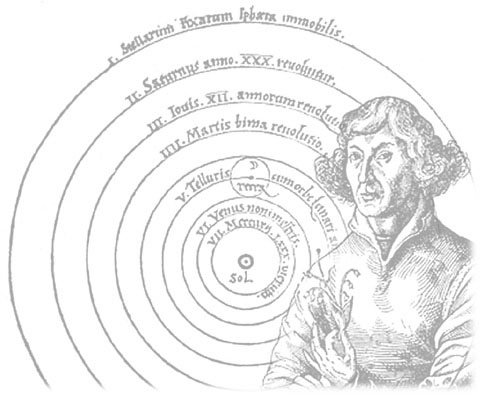
One of their favorites and mine is that well-known Polish astronomer Copernicus. 500 years ago he spent his life watching the stars trying to understand what was going on in this big crazy world. My sixth graders love it when I tell them that the world is crazy and we’re all just trying to understand it…. Copernicus, me and them in the same boat of having no idea what is going on. After years of dedicated watching, Copernicus realized that the observations he was making about the heavens did not fit with story he had been taught about how the solar system worked.  For over 1000 years western culture had been sure that the earth stood still in the center of the solar system and the rest of the heavenly bodies moved around it. But Copernicus’ data just wouldn’t fit that model. He had to change his story to make sense of his observations.

He had to change his story to make sense of his observations. I probably said that 25 times this week and at some point it dawned on me – I’m not just talking about astronomy, or science even. When Copernicus realized that his new information didn’t fit this old story he most likely felt the excitement of discovery but I suspect he also felt confused, insecure, anxious and maybe even more intense emotions like fear, dread, sadness or grief. Or maybe I’m just projecting.

We have to change our story to make sense of our observations. We tell ourselves lots of stories about how the world works – that the earth stands still, that God created heaven and earth in 6 days, that those people are taking our jobs, that that person will always act like this, or I will always do this or someday my prince will come. So many of these stories were built on outdated information but humans are meaning making machines and we hold onto our narratives like a drowning man, even when we know how to swim.

We have to change our story to make sense of our new observations. Hah, if only it were so easy. The child psychologist Piaget recognized that when humans get new information they can either ignore it, assimilate it seamlessly into their old story or reshape their understanding. Fundamentalists, hack scientists and addicts of all kinds are prime examples of the ignoring strategy, but we are all guilty. Piaget called the reshaping strategy disequilibrium, recognizing how uncomfortable and complex this process is.

Disequilibrium. Yeah, I know about that. Feeling like the ground is shifting under your feet. Like nothing makes sense anymore. Like all the old rules and old stories are a bunch of garbage and you are left with…. Well, you have no idea what you are left with. Anxiety and fear, sadness and grief are marking my disequilibrium. I see confusion and distress in the disequilibrium that my students are going through – because what is middle school if not a time when you are learning new things that don’t make sense in your old world order. Their bodies are changing, their brains are changing, their social networks are changing and nothing makes sense anymore. Yep, I know all about disequilibrium.

Piaget says that disequilibrium is a motivator for intellectual growth and creating schema, understandings, that are ever more adequate for dealing with reality. The astronomers we studied eventually came to a schema about the solar system that has allowed us to send men to the moon and probes to the worlds throughout our solar system. I have faith that my 6th graders will some day be generally functional adults and I’m sure I will come to an “ever more adequate schema” though I have no idea what that will look like. And none of these disequilibrium events are easy or comfortable. But as my Zen Buddhist friend says, with that very serious look Zen Buddhists so often have – what’s wrong with being uncomfortable? You just want to tell them to shut it, but he’s probably right.

I have to change my story to make sense of my observations. I’m anxious, uncomfortable, upset scared and sad these days. I’m in a state of disequilibrium. I’m not miserable, though… a new thing is rising or else I would still be happy in my old understanding. Its hard, it’s not fun, there are a lot of tears. But I guess one of those stories that doesn’t really work is the one that says life will be simple, comfortable and pleasant at all times.

Friday, November 30, 2012

Mushroom Season

Full Death Moon

**** **** **** **** **** **** ****

It is distinctly winter here in Portland. I spent these weeks around Thanksgiving dog sitting for a number of families and have been very busy getting a whole pack of dogs tired, work that means hiking in the woods and fields every day. The days have been cold and wet, but some more cold and more wet than others. Some even sunny lately. They say if you don't like the weather in Oregon just wait a few minutes. With about five weeks of rainy weather behind us, the ground is getting saturated and the trails are starting to get muddy - muddy trail season is a distinct time of year in my lived calendar. The days are short with the sun coming up just after 7 and it being quite dark by 5pm but my "work" has had me outside about as much as I want each day, a real luxury this time of year. 


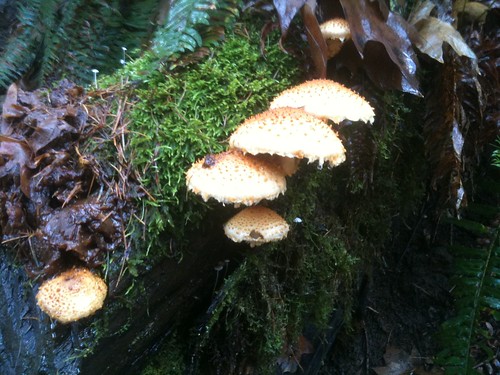
Hoyt Arboretum Mushrooms
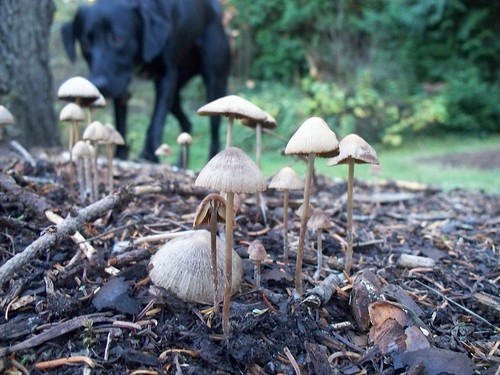
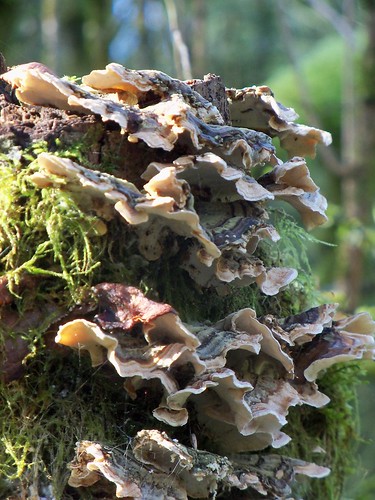
The cool and wet weather is bringing out a special kind of wildlife in the woods of Western Oregon - the mushroom. Every walk this last week has brought me strange and amazing visions of the fungal world. Tall and skinny mushrooms, fat little toadstools, shelf fungus firm, frilly, white and brown, entire logs covered in mushrooms and mushrooms shooting out of the leaf litter under the trees. Some logs have patches of fungus growing on them that seem to ooze a deep red liquid and others collect drops of water like a jeweled crown. The diversity of forms is really mind blowing even just in the small areas and single ecosystem I have been exploring.

What we call mushrooms are the fruiting bodies of fungus that live in soil, rotting wood or some other substrate. Fungus is one of the five major categories of life (the others being bacteria, protists, plants and animals) and despite their outward similarity with plants, they are actually more closely related to animals in many ways. Mushrooms, a specific kind of fungus, can be found in an astonishing array of habitats and are vitally important parts of their ecosystems. They are decomposers, breaking down plant and animal material to get at the nutrients inside and in the process release those nutrients back into the environment for other plants and animals to use. The mushrooms we see sprouting out of logs and forest duff are actually just a tiny part of a huge organism that impregnates the wood or soil. The mycelium, the internal filament like structure of the fungus, spreads out and eats away at the material the fungus is growing in and only creates the fruiting body for a couple days or a couple weeks at most. 
Shelf Fungus in Forest Park

Mushrooms fascinate me. They are mysterious and unlike other living creatures I know in really fundamental ways. Many of the websites I've checked out recently to learn about them use the word cryptic to discuss their life cycle and habits. They inhabit the deep part of the forest but create these amazing and beautiful bodies that push out into the light and they do that so quickly that the English language uses their name, mushroom, to describe something that multiplies almost too fast to be measured. They are an important part of cleaning up the detritus of a forest, making sure nutrients are recycled for reuse and many are eaten by other forest creatures. Some species are even eaten by humans while others are important medicines, some are so poisonous they kill almost instantly and some do other crazy things to our brain chemistry. They are deep, dark forest magic. Not like us at all, but vital members of their communities.

*** *** ***

Mushrooms Berkeley 


A classic recipe from the Vegetarian Epicure by Anna Thomas. Described as such "The mushrooms and peppers will be very dark and evil looking, but irresistible in flavor and aroma."


1 lb mushrooms, halved

1 medium bell peppers, cut in 1-inch squares
1 onion, peeled and chopped
1/2 c butter

Sauce

2 T Dijon mustard
2 T Worcestershire sauce
1/2 c brown sugar (or less)
3/4 c mellow red table wine
Fresh ground black pepper
Seasoned salt

Melt butter and saute onions till clear.

While sauteing make sauce. Mix together mustard, brown sugar, and Worcestershire sauce till perfectly smooth. Add the wine, season with lots of fresh ground pepper, seasoned salt to taste. Stir well

When onion is clear, add the mushrooms and peppers and saute. As the mushrooms begin to brown and reduce in size, add the sauce.

Now simmer at medium for about 45 minutes or till sauce is reduced and thickened. Serve over steak, polenta, pasta or as a vegetable side dish. 


*** *** ***
 

Mushrooms remind us of the hidden and dark parts of life. They grow in the dark, sometimes literally but always the figurative dark of wet forests and short days. The mycelium remind me that even when things look dead, like the spongy rotting logs that litter my beloved temperate rain forests, there is often much going on under the surface. The fruit will pop up only when it is ready and then it might just "mushroom" out, being so prolific we can't even believe that was just a pile of dry leaves three weeks ago. Mushrooms have completely unusual and fantastical shapes, colors, uses and jobs. They are, in short, simply unexpected and simply amazing. 
Forest Park Mushrooms

What unexpected and amazing things are popping up in your life right now? Are there mushrooms sprouting in your yard or some other neat natural growth in these dark days of winter? Do you have a favorite mushroom recipe or do you generally stay away from the fungus? Is this a time of hidden growth deep inside the rotting log of your life or are ideas or projects ready to mushroom out? Happy winter!

**** **** **** **** **** **** ****


Death Moon 2011:
The End of the Year, Favorites and Living in Relationship

Death Moon 2010:
Night and Day , Wear it As Long as Thou Canst, and Doggy Heaven (still makes me cry years later) 

Death Moon 2009: 
The Soldier and Death (one of my all time favorite posts!) and Moving From the Season of the Dead

Death Moon 2008: Full Moon in Taurus and Time is a Circle

Saturday, September 8, 2012

Discerning No


Full Nesting Moon
**** **** **** **** **** **** ****


Summer is winding to an end and that always means my favorite holiday - my birthday! I had such a crazy summer that I didn't plan the annual camping trip like I have done for the last couple of years but I knew I needed to do something. I declared the whole week Alyss' Birthday Week and set about celebrating. The big party came on Friday night when I met friends at Chapman School to see the Vaux's Swifts come in to roost and then moved the party to one of my favorite Southeast Portland hipster dive bars. The swifts were fantastic as ever, putting on a really great show with spirals and swirls of birds. Anywhere a thousand people get together to be in awe of nature is a place I want to be. 

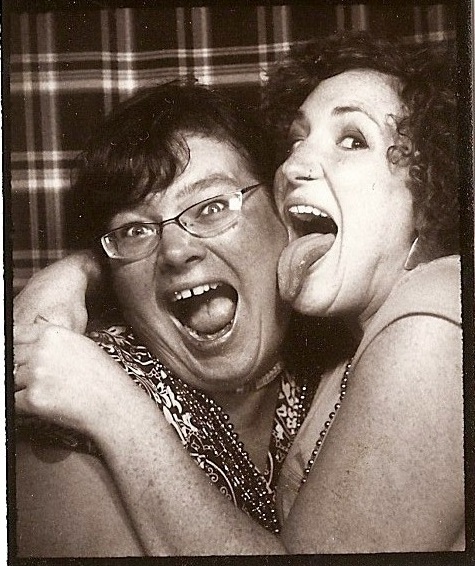
My friends and I are theme party people. Actually, my sister and I made a pact one year in college that every party we threw that year would be a theme party. We were successful even to the point of making our impromptu black out party a hurricane and rum themed get together. One of my best friends has a tradition of organizing a scavenger hunt on her birthday that has her guests running around Northwest Portland in teams finding things like a photo of someone in a tree, a fortune cookie and photo booth pictures. I knew I could not let my birthday party go on without some kind of theme or activity so I racked my brain for a week. Finally inspiration hit and I got myself to the dollar store for a pile of Mardi Gras beads.
 
The game I had my friends play was a simple one. Everyone starts out with some beads and if someone makes you refuse something or makes you say no or not, you give up one of your strings beads. If you lose all of your beads you can steal them back and keep playing by making someone refuse you something and I had prizes for the first person to lose all their beads and the person to have the most at the end of the game. It was perfect - some people loved it and played hard, others let their beads go quickly and enjoyed their evening. Everyone had a few good laughs.

After the party, one of my friends asked me why I had chosen that game. I thought for a minute and then did something I do rather often - said something I know to be true, but didn't know until the minute it comes out of my mouth. "Well," I said, "I have been having a difficult relationship with 'no' lately, so it seemed appropriate." Yup, hit the nail on the head with that one, Birthday Girl. 

This full moon is the Nesting Moon, the moon that asks questions about how we prepare for the future, how we help our community and how we relate to physical, emotional and social resources. Preparing for the challenges ahead, be they winter or other hard times, requires both the acknowledgement of resources and the discernment to recognize things that are a burden rather than helpful. When stocking a root cellar, you need to be able to toss out the apples and squash that are not going to keep - one bad apple ruins the barrel is not just a pithy saying. When getting ready for an adventure, you need to choose your companions and supplies with care. When going through hard times it is important to spend your physical and emotional energy on activities and people that help you, not those that burden you with their own problems or insensitivity words. 

I suspect I have not been doing a very good job of discerning the things I should say no to from the things I should say yes to recently. Rob Breszny, my personal hero and astrologer, challenged me earlier in the summer to say yes at least 51% of the time. I find this an interesting challenge because I tend to be a knee jerk no person. New things are scary and I tend to build a schedule for myself and then not want to change it. At the same time, there are plenty of things in our culture, and my life in particular, that do not need yes said to them. They are draining, harmful and distracting despite their ubiquity and downright pleasure. The Nesting Moon is asking me these questions and more, and it is the season to examine the answers.

What is the Nesting Moon asking you? Do you have a healthy relationship with "no" or do you tend to excel at discerning useful from draining? What is your favorite theme party or party game? How is Autumn showing herself in your neighborhood? Happy Nesting Moon!

**** **** **** **** **** **** ****

Full Nesting Moon 2011: Weddings
 
Full Nesting Moon 2010: Spider Moon

Full Nesting Moon 2009: Hey.. It's My Birfday!

Tuesday, May 8, 2012

Happy Hours and Pirate Queens

The Full Mating Moon

**** **** **** **** **** **** ****

The Mating Moon is here! The spring of the year is in full swing and every living thing out there is rocking and rolling, making the most of the longer days and fairer weather.

Danny Perez Photography
In Annette Hinshaw's calendar, the Mating Moon reminds us not just of physical mating, the coming together of two bodies to create a new life, but the intellectual bringing together of ideas that is so essentially human. This spring I have been so very busy, but out of that activity has come a flowering of realizations about my life, physical, emotional and spiritual. The Mating Moon is doing it's work!

As this crazy month has rolled through I have been doing something I've never done before - dating. I have been active on an online site popular here in Portland have met a bunch of people for drinks, meals, conversations and whatever else might come up. What a strange ritual we go through in this culture! I have stories of boring dates and brilliant dates, but among all of that I have been able to do so much thinking about myself through my conversations with these other people. Every time I meet someone new I have to retell my own story and get to hear their story and that exchange is amazingly fruitful. It has been fun to come away from each new encounter with a new person knowing something a little more about myself, what I like, what I know, what I am good at and bad at. I know more about myself, my life and my world because I have been rubbing up against others who know different things, and that is the main point the Mating Moon is trying to make.

Danny Perez Photography
It's been an interesting ride this last month, being pulled into a very physical and emotional state rather than the intellectual and spiritually focused state I feel I've been in for the last few months or even years. I have had some interesting epiphanies and realizations, mostly along the lines of encouraging me to keep going and exploring. One morning I woke up seeing a giant, flashing neon sign in my minds eye saying YES. Yes, what? I sensibly asked. My response was simply more yes. I laughed and said, sure, whatever. Yes! Bring it on, bring it all in and on and on! Shortly after that, though, I was faced with one of the perils of "mating", or of bringing Other into Self; the risk that you might lose track of who Self is. As I wrestled with this, Havi Brook's image of sovereignty, the Pirate Queen, came to me. It was such a pleasure to see her and be reminded that though I can reach out and say yes to every thing that comes my way, I am expected to stay strong and centered in my own awesomeness, too. A Pirate Queen is not going to send an "I miss you" text at midnight on a Tuesday, is she now? :)

Lilacs and tulips, horse chestnuts, snails, salamanders and bumble bees. The whole world is out and buzzing around. Saying yes and enjoying what this glorious spring time world has to offer. And I'm right there with them.

How are you feeling the energies of the Mating Moon? Did you get out to see the Super Moon or have you been observing more terrestrial miracles like blooming flowers and leafing trees? What encounters with Other are making you smarter, happier and wiser?

**** **** **** **** **** **** **** 

Full Mating Moon 2011: The Green Month

Full Mating Moon 2010: Mercurial

Full Mating Moon 2009: The Flower Moon

Thursday, April 26, 2012

National Poetry Month

New Mating Moon 
**** **** **** **** **** **** ****

It is the new moon in the Mating Moon but National Poetry Month is almost over. Like last year, I have been finding and sharing poems on my Facebook page all month. Finding this poetry has introduced me to new ideas, and given me words to express what I didn't have a way to talk about before. These are key elements of the Mating Moon, a time when we are asked to think about how we interact with the other, the outside, the different and how we can integrate that other into a bigger, better us. 


 The Mating Moon this month is calling me to embody my theme for 2012, Grabbing the Tiger By the Tail. It's asking me to be authentically me, authentically open and curious. It's reminding me that I am pretty awesome and worth sharing what I have with others.


The Mating Moon is reminding me that it all comes and goes. Nice spring weather is here for a day, then gone again. Partners, friends, ideas, even this body and life I call my own, they are just here for now. But what a glorious now it is.


Happy National Poetry Month! Happy Mating Moon!


**** **** **** **** **** **** ****


New Mating Moon 2011: The New Mating Moon

New Mating Moon 2010: A Flower Story for the Flower Moon

New Mating Moon 2009: The Lusty Month of May

Sunday, November 20, 2011

The End of the Year

New Death Moon

**** **** **** **** **** **** ****


I just started my student teaching this week, or my "pre service teaching" as my University likes to call it (student teaching sounds too wimpy, they argue), and have been placed at a very small school in a rural community about an hour from my house. The early morning wake up is hellish, and the predawn drive a bit harrowing, but the school is very good and my cooperating teachers are going to work out really well. The real upside, besides finally getting into a classroom and beginning to actually teach, is my afternoon drives back through the farming country of the Willamette Valley. This is the land people crossed the mountains and deserts to get to, and still are, in fact (the town of Woodburn, about 40 minutes south of Portland, is the largest community in Oregon with over 50% of the population claiming Hispanic heritage). It is a beautiful country full of farms, fields and forests.

As I have been driving back and forth this week I have been noticing just how "done" the agricultural year is in the Willamette Valley. At the hop farms north of Woodburn the vines are all down and the tall support structures empty for the winter. There are many small farm stands along the way with signs up that say "Closed for the Winter", their vegetable patches empty and muddy. Alfalfa fields are mown and the rows of berry bushes are turning crimson and gold in the chilly nights. Higher up, closer to my school, most of the fields are either Christmas tree farms or horse, sheep or cattle pastures which are changing their character for the winter, too. The tall weeds are blackening and the grass is low and wet, just hanging on until spring. Horses have blankets on to ward off the chill and the sheep are woolly with their thick winter coats. One field of sheep has a guard llama in it and it took me two days to figure out exactly what that giant, woolly beast was. Everything is done growing and either dying back or just settling in for the winter. The people who work the land are settled in, too, or have moved on to other places where harvests are still happening. The land is just holding it's breath until the storms of winter come and, later, the renewal of spring.

It's the end of the cycle here at The Wheel and the Disk, too. This post marks the beginning of my fourth year of blogging. Again, this year, I posted for the new and full moon of every single month of the year plus at least one post for each eight solar holidays. In fact, I posted quite a few more posts than that, including two posts that were published in my Quaker Meeting's journal (here, and here) and two posts for Pagan Values Blogging Month (here, and here). Again, I celebrated Ramadan by finding meaningful information about Muslims, Islam and Ramadan and sharing it with my Facebook friends and then with you here at The Wheel and the Disk. My writings this year did an excellent job of highlighting the eclectic mix of inspiration I gather my own thinking from, including Quakers (and here, too), Catholics (and here, too), Buddhist stories, Greek mythology, Waldorf thought and practice and more modern stories, to name just a few. Some of my favorite posts from this year are the stories I wrote about Johnny Appleseed and Krishna and the Gopis. Neither of these stories are truly original - the plot and characters are as old as old can be - but I took them into my own self and brought them back out as original retellings.

This next year will be hard for me. One week into student teaching and I am already exhausted and overwhelmed. I wonder how this blog will fare when my time is so much more dedicated to teaching. I hope to keep writing both for myself and for you. I have seen my own thinking about the topics I explore deepen and broaden over the course of these three years and I want to keep exploring as long as I can. Next year, I would love to incorporate thoughts from another excellent book I have that is organized around the lunar months, Jessica Prentice's Full Moon Feast. She talks about seasonal food, community and connection through the lens of the seasonal round of moons. I think bringing this focus to my thinking, practicing and writing would be a wonderful challenge to align my life with my ideals about safe, sustainable and healthful food. I will take the year of blogging one step at a time, but promise to post something for each full and new moon, even if it is just a note or a photo.

As the land readies itself for the deep of winter, so do we. It is time to light our lanterns off the spark Michael took off the dying sun just those few weeks ago. It is time to bundle up, cuddle up and turn inward. Our season in the sun, expanded out towards the cosmos, has brought us a treasure trove of knowledge, now is the time to spend time working that into wisdom, as the gnomes work the sun's sparkling light into crystals during the winter.

How are you noticing the end of the year? What did you do in the last 12 months that you are most proud of, or from the last cycle you completed whether it took shorter or longer than 12 months? What wisdom did you bring back from your journeying and how are you lighting your lantern for the winter ahead? How has this blog touched you and your thinking? What would you like to see me think about, change or add next year? What was your favorite post from this last year?

**** **** **** **** **** **** ****


** This winter was tough and I got messed up in my calendar. This post was written at the right time for the right moon, but there are other posts dated the same time about a differen moon. What tha? Where was I?? For more on my thoughts about this, see this post. **
New Death Moon 2008: Time is a Circle

New Death Moon 2009: The Soldier and Death (another one of my all time favorite posts. I absolutely love this story, and am quite fond of my own retelling of it :)

New Death Moon 2010: Night and Day

I reviewed my first year of blogging at The Full Sorting Moon and my second year a Year Two Complete!