Showing posts with label recipe. Show all posts

Friday, November 30, 2012

Mushroom Season

Full Death Moon

**** **** **** **** **** **** ****

It is distinctly winter here in Portland. I spent these weeks around Thanksgiving dog sitting for a number of families and have been very busy getting a whole pack of dogs tired, work that means hiking in the woods and fields every day. The days have been cold and wet, but some more cold and more wet than others. Some even sunny lately. They say if you don't like the weather in Oregon just wait a few minutes. With about five weeks of rainy weather behind us, the ground is getting saturated and the trails are starting to get muddy - muddy trail season is a distinct time of year in my lived calendar. The days are short with the sun coming up just after 7 and it being quite dark by 5pm but my "work" has had me outside about as much as I want each day, a real luxury this time of year. 
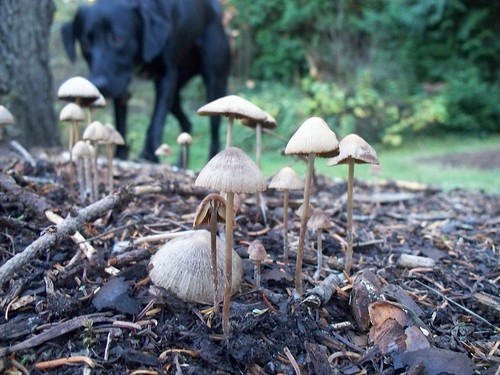

Hoyt Arboretum Mushrooms
The cool and wet weather is bringing out a special kind of wildlife in the woods of Western Oregon - the mushroom. Every walk this last week has brought me strange and amazing visions of the fungal world. Tall and skinny mushrooms, fat little toadstools, shelf fungus firm, frilly, white and brown, entire logs covered in mushrooms and mushrooms shooting out of the leaf litter under the trees. Some logs have patches of fungus growing on them that seem to ooze a deep red liquid and others collect drops of water like a jeweled crown. The diversity of forms is really mind blowing even just in the small areas and single ecosystem I have been exploring.

What we call mushrooms are the fruiting bodies of fungus that live in soil, rotting wood or some other substrate. Fungus is one of the five major categories of life (the others being bacteria, protists, plants and animals) and despite their outward similarity with plants, they are actually more closely related to animals in many ways. Mushrooms, a specific kind of fungus, can be found in an astonishing array of habitats and are vitally important parts of their ecosystems. They are decomposers, breaking down plant and animal material to get at the nutrients inside and in the process release those nutrients back into the environment for other plants and animals to use. The mushrooms we see sprouting out of logs and forest duff are actually just a tiny part of a huge organism that impregnates the wood or soil. The mycelium, the internal filament like structure of the fungus, spreads out and eats away at the material the fungus is growing in and only creates the fruiting body for a couple days or a couple weeks at most. 
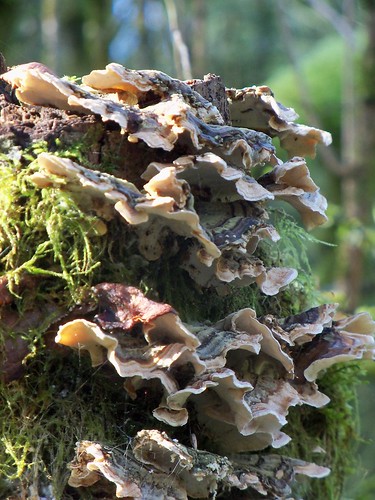
Shelf Fungus in Forest Park

Mushrooms fascinate me. They are mysterious and unlike other living creatures I know in really fundamental ways. Many of the websites I've checked out recently to learn about them use the word cryptic to discuss their life cycle and habits. They inhabit the deep part of the forest but create these amazing and beautiful bodies that push out into the light and they do that so quickly that the English language uses their name, mushroom, to describe something that multiplies almost too fast to be measured. They are an important part of cleaning up the detritus of a forest, making sure nutrients are recycled for reuse and many are eaten by other forest creatures. Some species are even eaten by humans while others are important medicines, some are so poisonous they kill almost instantly and some do other crazy things to our brain chemistry. They are deep, dark forest magic. Not like us at all, but vital members of their communities.

*** *** ***

Mushrooms Berkeley 


A classic recipe from the Vegetarian Epicure by Anna Thomas. Described as such "The mushrooms and peppers will be very dark and evil looking, but irresistible in flavor and aroma."


1 lb mushrooms, halved

1 medium bell peppers, cut in 1-inch squares
1 onion, peeled and chopped
1/2 c butter

Sauce

2 T Dijon mustard
2 T Worcestershire sauce
1/2 c brown sugar (or less)
3/4 c mellow red table wine
Fresh ground black pepper
Seasoned salt

Melt butter and saute onions till clear.

While sauteing make sauce. Mix together mustard, brown sugar, and Worcestershire sauce till perfectly smooth. Add the wine, season with lots of fresh ground pepper, seasoned salt to taste. Stir well

When onion is clear, add the mushrooms and peppers and saute. As the mushrooms begin to brown and reduce in size, add the sauce.

Now simmer at medium for about 45 minutes or till sauce is reduced and thickened. Serve over steak, polenta, pasta or as a vegetable side dish. 


*** *** ***
 

Mushrooms remind us of the hidden and dark parts of life. They grow in the dark, sometimes literally but always the figurative dark of wet forests and short days. The mycelium remind me that even when things look dead, like the spongy rotting logs that litter my beloved temperate rain forests, there is often much going on under the surface. The fruit will pop up only when it is ready and then it might just "mushroom" out, being so prolific we can't even believe that was just a pile of dry leaves three weeks ago. Mushrooms have completely unusual and fantastical shapes, colors, uses and jobs. They are, in short, simply unexpected and simply amazing. 
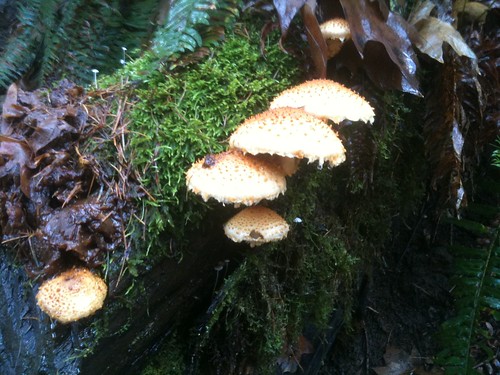
Forest Park Mushrooms

What unexpected and amazing things are popping up in your life right now? Are there mushrooms sprouting in your yard or some other neat natural growth in these dark days of winter? Do you have a favorite mushroom recipe or do you generally stay away from the fungus? Is this a time of hidden growth deep inside the rotting log of your life or are ideas or projects ready to mushroom out? Happy winter!

**** **** **** **** **** **** ****


Death Moon 2011:
The End of the Year, Favorites and Living in Relationship

Death Moon 2010:
Night and Day , Wear it As Long as Thou Canst, and Doggy Heaven (still makes me cry years later) 

Death Moon 2009: 
The Soldier and Death (one of my all time favorite posts!) and Moving From the Season of the Dead

Death Moon 2008: Full Moon in Taurus and Time is a Circle

Monday, February 13, 2012

The Bone Moon

Full Milk Moon

**** **** **** **** **** **** ****
It is the full moon (er.. a little past) of the month that Annette Hinshaw calls the Milk Moon and Jessica Prentice calls the Hunger Moon. It is late in the winter and in milder climates spring may be hinting at it's arrival, but it is not yet here. There is an old saying in New England, though, "half the wood and half the hay you should have left on Candlemas day." In those northern places winter is only half over. Both Annette Hinshaw and Jessica Prentice write about how we can manage our resources during these hard times through our choices and our connections in order to nourishing what is growing in our lives.

In our post industrial, urban world many of us don't even notice that there is a seasonality to the abundance or lack of food. The farmers markets may not be open this time of year, and we may be missing tasty peaches and strawberries, but everything else is still available in our local mega mart. I visited a small produce market near my new school last week that focuses on local foods and found a vast abundance of good looking produce. As expected they had lovely apples from this autumn's harvest stacked in crates out front and piles of local hardy greens but they also had bell peppers, celery, fresh herbs and even a few hot house tomatoes. We never have to fast to conserve resources and when people in our country are hungry it is from lack of money, not the unavailability of food.

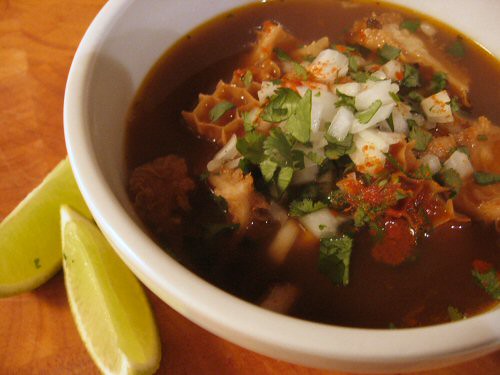
Menudo by scaredy_kat
Traditional cultures knew the value of foods that stretch resources and can provide nourishing food even when the stores are low.  Dried grains, root crops, fermented vegetables, hard cheeses and soups are the staple foods of most European cultures and the winter foods of Asia and North America are similar. The hearty soups that people across the globe eat during hard times to keep nourished and elevate into high cuisine in the good times are all based on one important food source - animal bones. Chinese egg drop soup, Korean gomguk, Thai tom yum, Norweigian cabbage soup, Russian shchi, Irish mutton stew, French onion soup, Mexican menudo and Cherokee pepper pot stew are all traditional soups that start with animal bones and end with a warm, nutritious meal perfect for late winter. In the Cherokee calendar, this month of the year is called the Bone Moon. I think that is fitting.

I make stock out of chicken, beef and whatever other bones make their way through my kitchen on a regular basis. I collect bones, both raw and cooked, along with vegetable scraps in a plastic zip bag in the freezer and make stock when I have about a gallon of scraps. The stock can simmer for a few hours, or a few days before you have to deal with it again, and the finished stock can stay in your fridge for a few days or your freezer for a few months. We use it to make soup, stew, polenta, rice and many other dishes that are infinetly more delicious and nutritious when made with home made stock. In fact, last weekend, my sister made a most delicious white bean and kale soup with homemade stock. 

*** *** *** 

Home Made Bone Stock
1/2 -1 gallon of assorted chicken, pork, beef or other bones (use mostly chicken, with some others... for beef stock see these instructions)
4-6 cups of assorted vegetable scraps from carrots, onions, garlic, celery, mushrooms or other non-cruciferous (cabbage family) vegetables
1 onion, cut in half with skin (if not enough onion in the veggie scraps)
2-4 cloves of garlic, smashed with skins (if not enough garlic in the veggie scraps)
2 tbs cider vinegar or 1/4 cup white wine1 tsp whole pepper corns
1-2 tsp salt
fresh or dried herbs including thyme, rosemary, sage or bay (optional)

Put the bones and veggies in a large stock pot (spaghetti pot or larger) and cover with cold water. Add the vinegar or wine and slowly bring the pot to a boil. If your bones are frozen, you can turn the heat to medium until everything is defrosted and warm, then up to high to boil. As it comes to a boil, skim any foam that rises to the top off and discard (don't skim too much fat off if you have it on top of the pot, that's good stuff!). Add the salt, peppercorns and optional herbs. Put a lid on the pot, turn the heat down to low or medium low to maintain a slow simmer.

Kale and White Bean Soup by little blue hen
Chicken stock is ready to strain and use after 4-6 hours, but can also be cooked considerably longer. I often simmer for a few hours, put the lid on and turn the heat off, then bring back to a boil and simmer again the next day. I've never gotten sick, yet, but if you are worried, just strain and refridgerate your stock whenever you are done letting it simmer. I strain my stock through a colander with or without a wire sieve in it (depending on how lazy I am feeling - I don't mind a cloudy stock) and pour it into various sized plastic containers to go into the freezer. 

White Bean and Kale Soup
2 quarts home made chicken stock, or a mix of stock and water
2 tbs olive oil, chicken fat or bacon fat
1 linguica sausage, chopped
1 onion, chopped fine
3 cloves of garlic, sliced, chopped or pressed
2 tsp red pepper flakes
1 tsp Italian seasoning
Salt and pepper to taste
1 can white beans, drained and rinsed or 2 cups homemade white beans
1 quart of kale, trimmed and chopped 
1-3 tsp lemon juice or cider vinegar

In 4 quart soup pot, heat the oil and fry the linguica until it has rendered it's fat and is starting to brown. Add the onion, pepper flakes and Italian seasoning along with some salt and pepper. Fry until the onion is soft and golden and add the garlic, frying another minute or so until fragrant.

Add the chicken stock and bring to a boil. Lower the heat to a simmer and add the white beans and kale. Cook for at least 10 minutes or until the beans are hot and the kale is wilted and soft. Adjust the seasoning with salt, pepper and lemon juice. Serve with cheese toasts, croutons, sauer kraut or whatever garnishes you like on soup. 

*** *** ***

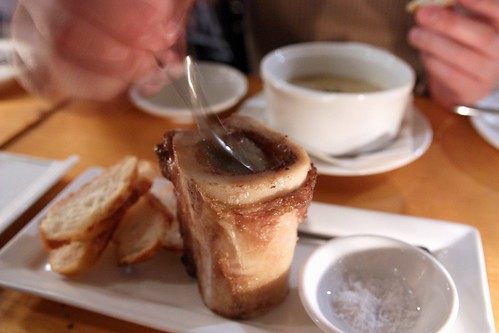
Every Jewish grandmother knows that chicken soup will cure what ails you, from colds and flu to a broken heart or wrinkley face. Modern science is piling up more and more evidence that she is right. The connective tissue in bones and carcasses is full of gelatin and other nutrients that support healthy bones, joints, skin and hair. Gelatin is also a very nutritious and soothing protein that people of all ages and health levels can digest. Bone marrow, the fatty middle part of long bones, is an especially nutritious food that might support immune function but definitely supports a delicious meal. You can ask your butcher to cut long bones into
Silky Healthful Fat by Sifu Renka
2-3 inch slices, roast the bones and then pull the marrow out and spread it on toast. The marrow course was the highlight of my sister and I's recent trip to a fancy restaurant in downtown Portland. 

In addition to being good for the body, making stock is good for the soul and spirit, too. It is recycling at it's best and a truly respectful way to treat the animals we use for food. Bart Everson speaks eloquently of this transformation and what it means to him on the blog Humanistic Paganism. I know, too, that there is magic in taking the leftovers, the scraps and the ends and turning them, through long simmering, into a wonderful elixer of health and flavor. This can be a hard, hard time of the year especially if we are disconnected from our community and support. Using ancient and wise techniques like fasting, sharing or making bone soup reminds us that we do have the resources to nourish ourselves and each other, even when it looks like all we have is a picked over plate. 

How do you nourish yourself and your community during this dark time of late winter? Do you make stock at your house or have any memories of a lovingly made soup? What other recipes do you like for turning leftovers and left-behinds into loving nourishment? Do you prefer tom yum or french onion soup?

**** **** **** **** **** **** ****

Full Milk Moon 2009: Nourishing Self As Well As Others

Full Milk Moon 2010: The Full Wolf Moon

Full Milk Moon 2011: The Positive Feedback Loop of Love

Check the recipes and soup tags for more posts with yummy food. 

** This winter was tough and I got messed up in my calendar. I wrote this thinking it was the Fasting Moon but it was really the Milk Moon. Since the post itself is more about the the Bone Moon, I just changed the tags and labels. For more on my thoughts about this, see this post. **

Wednesday, February 8, 2012

Brigid's Red Soup

February First

**** **** **** **** **** **** ****

Hello everyone, 

I know I owe you two posts, a February First post and a full Fasting Moon post. I have great posts ready to go. I just have to write them. Unfortunately, writing blog posts has fallen to the bottom of my very long to-do list just below taking a shower, cleaning the kitchen or getting an oil change but well below writing lesson plans, showing up for middle school every day and designing an action research project. Oy vey! 

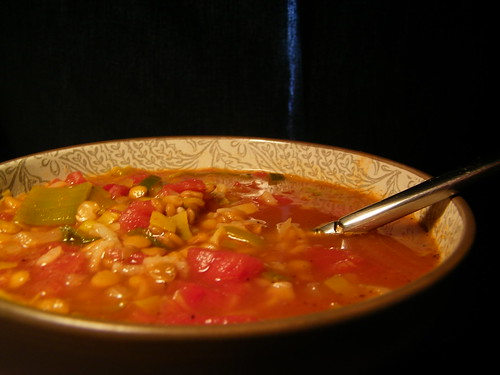
But today I can give you a little tidbit, the recipe for this year's Brigid's Red Soup. I have made a red lentil soup with red, orange and yellow ingredients in the first week of February for about five years now. Red is a sacred color to Brigid, the color of transforming birth and the color of transforming fire. This year's soup was super
Michael W. May's Red Lentil Soup
easy and particularly delicious, if I do say so myself. Feel free to change it anyway you would like by adding more vegetables, changing the seasoning or switching things up as your tastes desire. This soup is between you and the Goddess, after all.

*** *** ***

Crock Pot Brigid's Red Soup

1/2 yellow onion, chopped
3 golden beets, peeled and chopped
2 carrots, washed and chopped
1 parsnip, washed and chopped
3 garlic cloves, peeled and coarsely chopped
1 1/2 cups red lentils
1 14.5 oz can of Muir Glen fire roasted tomatoes, diced or crushed (or other tomatoes)
2 cups chicken broth (or more)
2 tsp curry powder
1 tsp seasoned salt
1 tsp chile flakes
1/2 tsp garlic powder
1 bay leaf
Water to cover

Put the vegetables, lentils, spices, tomatoes and chicken broth in a crock pot and add enough water to cover the ingredients by at least an inch. Cook on low for 9 hours or more, until the lentils are completely soft and the vegetables are cooked through. Serve with sour cream or yogurt, sauerkraut or the garnish(es) of your choice. Praise the Goddess, and bless the spring!

**** **** **** **** **** **** **** 

February First 2009: February the First

February First 2010: Lovely Luz and Sweet Bridgit
This happens to be my all time favorite post from all two plus years of blogging. Please go check it out. 

Feburary First 2011: Brigid - The Goddess of Poetry

Wednesday, January 25, 2012

Year of the Dragon

New Milk Moon

**** **** **** **** **** **** ****
 
I am the unquenchable Fire,
  The center of all energy,
  The stout heroic heart.
  I am truth and light,
  I hold power and glory in my sway.
  My presence
  Disperses dark clouds
  To tame the Fates.

  I am the Dragon.

Year of the Dragon

Gung Hay Fat Choy! January 23 is the new Fasting Moon in Annette Hinshaw's calendar and the first day of the lunar new year, a huge celebration all over Asia. The festival is called Tet Nguyen Dan in Vietnam, Chaul Chnam Thmey in Cambodia and Chun Jie, or the Spring Festival, in Chinese speaking communities. When I was a little kid in San Francisco Chinese New Year was almost as big of a holiday at my elementary school as Thanksgiving or Spring Break. We made red envelopes to fill with chocolate coins and watched lion dancers at school and parades in Chinatown. 

Every year in the Chinese calendar is ruled by an animal, creating the Chinese zodiac. The year 4710, or 2012 in the Gregorian calendar, is a Year of the Dragon, a headstrong, charismatic, and enthusiastic animal who's luck just never stops. Dragon is known for being a free spirited doer who always wins people's admiration and never accepts defeat. Though my theme for 2012 is Grabbing the Tiger By the Tail, the Chinese Dragon is a perfect poster child for the kind of year I want to have. Bright, buoyant, active and adventurous. There is a caution, though, with Dragon because they can tend towards being a bit brash, abrasive or prone to power-over dynamics. I am liable to fall into these patterns myself so I will be calling on the Water Dragon, this year's elemental dragon, to help me remain more open minded, to see other people's points of view and weigh all the options before rushing into action. Martin Luther King, Jr., Woodrow Wilson and John Lennon were all born in the Year of the Dragon. I wonder what will be born this year?

Dragon and Mandarins

Food plays a central role in the celebration of the Chinese New Year and there is much symbolism on the banquet table. Oranges and tangerines are given as gifts and eaten at meals both because they are so deliciously in season this time of year, but also because their names sound like the words for luck and gold in Chinese. Whole fish are often served to represent the beginning and end of a lucky year and sweets of various kinds bring a sweetness to the year. The local Asian newspaper here in Portland printed the following recipe and I hope to try it sometime this season. Long beans or long noodles represent long life and lobster represents the dragon of the zodiac. Shrimp or chicken can be substituted for the lobster, or combined with the dragon of the sea. Combining lobster and chicken is another traditional food, symbolizing the lucky union of the dragon and the phoenix.

*** *** ***

Dragon Beans
1 tbs oil (vegetable, peanut, or lard)
1/4 tsp Sichuan peppercorns, crushed
1/2 tsp Chinese five-spice powder
2 cloves garlic, minced
1 1/2 pounds Chinese long beans (also called yard long beans, string beans can be used)
1/2 cup water
1/4 cup oyster sauce
1 tbs soy sauce
1 tbs toasted sesame oil
splash of Sriracha sauce
7 oz cooked lobster meat, chopped (substitute/combine shrimp or chicken)
1 tbs toasted sesame seeds

In a wok or deep skillet over medium-high, heat the vegetable oil. Add the peppercorns, five spice powder, and garlic. Heat, stirring constantly for 30 seconds.

Add the beans and toss to coat. Add the water, oyster sauce, and soy sauce and cover. Allow the beans to stem for five minutes, or until just tender. Add the sesame oil, Sriracha, lobster meat, and sesame seeds. Toss together and cook until just heated through. Serve immediately. 

*** *** ***

Lion Dance

How are you celebrating this ancient and global festival? Do you have family or community traditions around the Chinese New Year or is all of this new to you? What foods bring good luck and wealth in your home? How is the dragon going manifest its optimistic, exuberant and charming energies into your life this year?

**** **** **** **** **** **** ****

New Milk Moon 2009: New Milk Moon


New Milk Moon 2011: The Quaker Year

This post is about Chinese New Year, which I mention in the Full Fasting Moon 2009 post and The Nian.

** This winter was tough and I got messed up in my calendar. I wrote this thinking it was the Fasting Moon but it was really the Milk Moon. Since the post itself is more about the the Chinese New Year I just changed the tags and labels. For more on my thoughts about this, see this post. **

Sunday, November 13, 2011

Snow Moon: Connecting with Our Food

Full Sorting Moon

**** **** **** **** **** **** ****


The moon a month before the winter solstice in Jessica Prentice's book, Full Moon Feast, is called the Snow Moon. In a pre modern society, this is the time of the year when the larders are full and people are beginning to live off their stored food rather than fresh food. It is fascinating for us, modern people with modern conveniences, to ponder life without refrigeration or electric freezers. What exactly does it take to make sure your household has enough food stored in a way that it will keep until fresh food becomes available again? And what does it mean to us and our connection with our food, with our food producers and with our larger community of spiritual beings that we don't have to think about where our food comes from?

Like most Americans, I get most of my food from grocery stores. On any day of the year I can easily get to a store and bring home almost any kind of fruit or vegetable, hygienic foods preserved in cans, bottles or frozen and even any number of prepared foods for a rather reasonable price. It is a rare week when I have to think about what I am going to eat further in advance than a couple of hours or maybe a day or two. Jessica Prentice points out that Americans tend to act like big babies when it comes to their food. We expect it to be available to us at any time with very little thought or effort on our own part. She notes that we are aghast when people claim they don't know how to drive but hardly bat an eye when people say they don't know how to cook.

Our ancestors, and many people all over the world, put infinitely more care into their food than we generally need to. Many people need to spend hours of the day for months of their year to collect, prepare and preserve enough food to meet their needs. These people are intimately in touch with their food from the exact part of the garden or field that it came from or which individual animal provided the food, through to what it looks and feels like in the kitchen through how it acts when it is prepared and preserved. They have an deep, visceral connection with their food.

Over the past few years I have been making small, spiraling movements towards this kind of connection with my food. I grow a garden each year and revel in my own small harvests of snow peas, snap beans, cherry tomatoes and radishes. My garlic crop is my pride and joy and I relish the yearly rhythm of planting it right around Halloween, watching it come up in the February, monitoring it through the spring and deciding exactly when, in late June or early July, to dig up the whole patch. Then there is the process of tying the bunches to dry and checking on them every few days until they are ready to be trimmed, brushed of dirt and sorted into seed garlic and eating garlic. Luckily, garlic is good to eat at every stage from sprout to cured, so there is no wasted garlic out of my garden.

I also have taught myself to make a number of foods that are traditional ways to preserve foods for the winter. I recently made a big batch of yogurt and have made sour cream and kefir, another fermented dairy product, in the past. I occasionally make sourdough breads and really enjoy making fermented vegetable pickles. Sauerkraut, kimchi and other fermented vegetables are, as Jessica Prentice points out, excellent ways to ensure a supply of enzyme and vitamin rich vegetables through a long, dark, cold winter. The fermenting actually increases some vitamin levels and also provides lactic acid, a digestive aid that no doubt helped our ancestors deal with an otherwise plain and coarse winter diet of dried or salted meat, beans and grains. Even today this tradition continues to serve fermented vegetables with heavy foods like sauerkraut with sausages and cornichons with pate. In Korea, kim chi could provide up to half the food intake for a family during the winter and is especially full of healthful food compounds thanks to the garlic, onions, ginger and chilies that usually spice the potent cabbage dish.

This autumn I finally gave in to the giant "sauerkraut cabbages" for sale at my favorite pumpkin patch farm. For less than 4 dollars I was able to take home 18 pounds of cabbage to turn into as much lacto fermented goodies as I could fit in my fridge. I used some of it to make a giant batch of coleslaw and another goodly pile of it became a braised cabbage dish but the rest became three kinds of sauerkraut, a fusion kim chi and three jars of cortido. My fermented cortido is based on the Latin American cabbage salad with pineapple, onion, garlic, chiles and oregano spicing the cabbage. It took me over a week to process the entire head of cabbage but now I have enough kraut to last at least through the winter.

*** *** ***

2011 Fusion Kim Chi

Check out my other blog for some more detailed instructions for making fermented vegetables like sauerkraut, pickled vegetables or kim chi.

Shred a pile of green cabbage and put it in a large mixing bowl. Fill it up about half way.

When you get sick of shredding cabbage, wash out a couple jars with lids, maybe two quart jars, or four pint jars, or whatever old spaghetti sauce jars you have. Slice 2 carrots into thin coins, planks or match sticks and toss them in with the cabbage.

Slice half an onion into longitudinal planks and toss that in two. Add in two handfuls of pineapple chunks, if you happen to have some sitting around like I did. You could add firm apples, pears or jicama instead, or leave that out all together.

Sprinkle about a tablespoon of salt over the cabbage and toss it. Peel a big ole knob of ginger and about 10 cloves of garlic. Chop them all up together into a fine mince, or slice them into planks. Toss that in with the vegetables. Doesn't it smell delicious?

Add a big shake of ground red chiles. (I usually use New Mexico chiles because I like the warmth and flavor but this time I used Aleppo pepper, a middle eastern variety. You can buy ground pepper for kim chi at an asian store, but every brand I've found has added MSG or other flavorings.) Add a little pepper flakes if you want more heat, or even some cayenne or fresh peppers if you like your kim chi fiery.

Look at it now. It should be glistening and moist, and bright red. Mix it up -
with your hands, of course.

Taste a piece of cabbage and add some more salt if you need to. When it is good and salty, good and red, good and tasty start packing it into jars. Press the vegetables down until the brine comes up over top of the veggies. Pack the jars full but not over the threads of the jar. Close them up,
let them ferment and then move to the fridge. Enjoy with macaroni and cheese, rice or anything else you serve at your winter table.

*** *** ***

Our spiritual connection with food is a huge topic that I intend to explore more fully this year but even this vast topic starts with the daily actions of eating and preparing food. We are adult beings who are able to take responsibility for feeding ourselves and do not need to abdicate that to restaurants or food manufacturers. Taking back our connection to our food starts with making dinner, with an pot of herbs on the windowsill, with an experiment in making jam or pickles or yogurt. I certainly don't claim any special knowledge on what is the most healthful or most ecologically sound diet, I just know it is important to care about what goes into our mouths. That food becomes us, it is our vital, physical, chemical, energetic link with the rest of creation. That shouldn't come out of a box.

What foods or dishes are you most connected with? Have you ever done any food preserving or growing food in a garden? Does what food you serve change as the seasons change or do you continue to take full advantage of our modern food distribution system (or both, like in my house)? What food means winter to you?

**** **** **** **** **** **** ****

Full Sorting Moon 2009: Full Sorting Moon


Full Sorting Moon 2010: The Rains Have Come


A number of posts from my first year of blogging here contain recipes. At the Harvest Moon 2010 I shared a recipe for another of my favorite preserves, plum ketchup.

Sunday, October 24, 2010

The Rains Have Come

I am the autumnal sun
by Henry David Thoreau

Sometimes a mortal feels in himself Nature
-- not his Father but his Mother stirs
within him, and he becomes immortal with her
immortality. From time to time she claims
kindredship with us, and some globule
from her veins steals up into our own.

I am the autumnal sun,
With autumn gales my race is run;
When will the hazel put forth its flowers,
Or the grape ripen under my bowers?
When will the harvest or the hunter's moon
Turn my midnight into mid-noon?
I am all sere and yellow,
And to my core mellow
.The mast is dropping within my woods,
The winter is lurking within my moods,
And the rustling of the withered leaf
Is the constant music of my grief....


When I was back east earlier this autumn my brother in law accused western Oregon of not having real seasons. I retorted that we do so - the early wet season, the wet and cold season, the wet with flowers season, the dry with green grass season and dry with yellow grass season. In fact, that's five seasons which makes one more than your lame Mid-Atlantic climate can claim. He was not terribly impressed. The seasons have shifted in what seems like the blink of an eye and it is no longer the dry with yellow grass season. The rains have come and it is now, very much, the wet season.

This part of the wet season, though, is spectacular in Portland. The wooded hills above town are a mix of Douglas fir and western red cedars, which don't change color, with big leaf maple which turn bright golden yellow this time of year. The street trees in town turn a wide mix of fantastic colors. There are many deep purple leaved plums, sweet gums turning yellow and red, oaks turning blue and even a good number of Japanese and red maples adding their reds to the mix. Across the street from my work are some trees, and I don't know what they are, that are exhibiting this amazing range of colors that seem to fade across the tree - still green on the lower branches and the north side of the tree, yellow and orange in the middle fading up to scarlet on the top and southern side. Even some individual leaves seem to shade from green to yellow or yellow to red. We may not have colors like they do in New England, but we have colors enough for me.

One of my favorite things to look for in the mid to late autumn is the way the light changes. It is coming in at a lower angle so the reds and yellows of the foliage seem that much brighter. It bounces off the dew and mist, made all the more dramatic by the late sunrise that no coincides with my morning dog walk. Even the light at night is more dramatic. The full moon this month lit up the park like daylight one night and two nights later the fields were almost as bright with city light bounced off low clouds. In the spring it seems like the colors are coming out of the ground as the earth itself wakes up from it's slumber. Low flowers are the first to show color and then it creeps up into the higher branches of trees. In the autumn the colors are streaming down out of the heaven tinting the tops of trees first and only later the ground as the leaves fall.

With the change in the weather comes a change in eating habits. Gone are the salads and light snacks of late summer and come back are stews, baked goods and hearty braised meats. Last week I went to the local health food store and came away with a dozen apples, a pound of bacon and a pie crust. The checker guessed I was going to make an apple pie that afternoon and she was right, but there's more. It was a bacon apple pie. Oh, yes, what better way to combine the fruits of the field with the fruits of the pig farm. It was, indeed, everything I could have asked for and more.

Bacon Apple Pie

1 double pie crust recipe - home made or store bought
4-6 apples, peeled and sliced into 1/4 inch thick pieces
Lemon juice - about a tbs
3/4 lb of bacon, smokey and salty
1/3 cup white or brown sugar
1 tbs cinnamon plus other spices, if you would like
1/4 tsp salt
4 tbs butter

* Preheat oven to 350 degrees. Chop the bacon into 1/4 inch chunks and fry until quite done but not crispy. Remove from pan with a slotted spoon and drain on paper toweling. Reserve grease for another use.

*If using home made pastry lay half of it into a pie pan and roll out and then cut the other half into strips to use for lattice. If using store bought pastry defrost it completely and then turn one of the pans worth out onto a cutting board. Roll the pastry flat with a rolling pin and slice into strips for the lattice top.

* As you slice the apples toss them with lemon juice to keep them from browning. When you are ready to assemble the pie drain the apple of any extra lemon juice and then toss with the sugar, cinnamon and salt. Some recipes call for a tablespoon of flour to get tossed in here too. I don't use it but you might like it.

*Start to layer the apple slices into the bottom pie crust. When one layer of spiced apples is in sprinkle some of the bacon bits on top. Add another layer of apples, more bacon and then a third layer of apples and bacon. You can pile the apples quite high in this pie, tucking them in and laying them well to form a solid mound. Dot the top of the pile of apples with butter cut into pea sized pieces. Sprinkle some sharp cheddar cheese over this if you are being really decadent.

*Follow these instructions to create a lattice crust on top of the pile of apples. Crimp all the edges well and place the pie pan on a baking sheet and then place in the preheated oven. Bake for about 45 minutes or until the pie is very fragrant, you can see bubbly juice coming up through the lattice crust and the crust itself is nicely browned. Poke the pie with a knife to make sure the apples are tender then remove the pie and let it cool a bit. All pies are just as good at room temperature or cold and it will hold together better if you let it cool a bit. It will be worth the wait.

Note: a key to this pie, besides the copious amounts of smokey bacon, is to pile the apples really high in the pie pan. The lattice crust does a great job of sinking down on top of the apples as they cook and decrease in volume so it is important to start with what seems like too many apples. Nobody wants a too-skinny bacon apple pie.

How is the season changing where you are? Have you noticed the change in the light, or in foliage or in the rains? How do you stay warm these days? Have you ever tried a bacon apple pie or created some other brilliant baked concoction?

Monday, September 20, 2010

Harvest Moon

The new moon that occurred on Sept 8 is called the Harvest Moon in Annette Hinshaw's calendar. It is the time when all that you have worked for since the start of the cycle with the Death and Birth moons last winter are coming ready to harvest. It is a time of ripening apples and pumpkins to be stored over the winter, of putting up preserves and drying fruit as well as a time of assessing what other resources and accomplishments you have to stockpile against the upcoming dark season. It might even be a time to think about the lessons learned from longer cycles of planting and growth like seasons of a life or the lives of past generations.

This month has been a magical one all around. It started with the festival of Eid al-Fitr, the end of the holy month of Ramadan. Eid is the biggest festival in most Muslim communities and the convention center near my work was the site of a large prayer meeting. It was neat to see people from so many different backgrounds dressed in their Friday Finest walking to and from the morning prayers. The full moon this month coincided with the Autumn Equinox, a conjunction that hasn't happened in 19 years. It was a little cloudy the night of the full moon but both nights before and after I saw the enormous yellow moon rising above the trees. Jupiter also showed up, looking quite large because it is at the closest point in it's orbit to the Earth. Jupiter tends to bring wisdom, tolerance and plenty as well as a jovial, cheerful spirit - all trademarks of a good harvest season.

Photo by Paladin27.

This month was also a big month for me on a more personal level. My 30th birthday was just before the new moon and I have been celebrating for the entire month. I figure thirty days to celebrate thirty years is appropriate, right? I also had the wonderful opportunity to travel to the East Coast to visit two of my sisters. I spent a couple days with my little sister who is my best friend in the world, and a couple more days with my older sister and her family. It was great to see everyone and our conversations were deep and meaningful, when they weren't silly and lighthearted.

I have been thinking a lot lately about the harvests we can gather in from the seeds planted not only by our own selves, but by our family and ancestors before us. Its interesting to think that we can benefit, or be hindered, by things we didn't have any control over the beginning of. My aunt once reminded me of the ancient wisdom of the seventh generation. Every action reverberates through at least that many generations of a family and healing takes at leas that long as well. She brought it up in the context of how proud she is of the children of my generation in our family, how much healthier and happier we are than the previous generations she knew. Sometimes we forget that, lost in the overwhelming harvest of brokenness and hardship we have to deal with today. In Percy Jackson and the Olympians: The Sea of Monsters, Hermes tell Percy, the half human son of Poseidon "Families are messy. Immortal families are eternally messy. Sometimes the best we can do is to remind each other that we're related, for better or worse... and try to keep the killing and maiming to to a minimum."

Harvests, like families, are often messy. But they are exactly and only what we make of them - 15 pounds of plums can be a fruit fly party ground, or the best ketchup you've ever tasted.

Plum Ketchup
based on The Cottage Smallholder's recipe, but made my own

3 - 4 pounds of plums, preferably the small Italian plums, but a mix of whatever you can find
1 or 2 tart apples
1 onion
3-4 cloves of garlic
1 - 2 inch knob of ginger
2 cups vinegar, cider or wine
1/2 cup mixed dried fruit - raisins, cranberries, apricots, etc.
2 tbs dehydrated onion
1 tbs balsamic vinegar
1 tbs garlic powder
1 tbs honey
2 tsp mild new mexico chile powder
2 tsp ground mustard
2 tsp salt
1 tsp ground black pepper
1 tsp cinnamon
1 tsp cayenne
1/2 tsp cloves
a dash of Worcestershire sauce

Remove the pits from the plums, chop the onion and apples fine, mince the garlic and slice the ginger into big slabs. Throw the fruit, vinegar and seasonings in a big pot and raise the heat slowly, stirring regularly to keep things from burning.

Keep stirring and mashing and simmering over as high a heat as it will take and not burn for, oh, three or four or five hours. You can put a lid on the pot, turn the heat off and leave it overnight if you need to. In the morning just bring it back up to a good boil for a minute or two, stirring to keep it from sticking.

Simmer until it gets to the consistency of a thin applesauce, not watery. Run everything through a food mill and then put back on the heat.

Check for seasoning at this point - or at any point. The seasoning above is approximately what I did this time but should just serve as a guide for you. Add more sweetner if you need, more salt, more garlic, etc. Keep simmering until it has a consistency just a little thinner than ketchup.

Pour into clean jars - my batch made about 2 1/2 pints - and either process in a water bath to seal or just let cool and store in the refrigerator. This ketchup is phenomenal with eggs, on a cheese sandwich or hamburger and makes the best barbecue sauce west of the Mississippi.


What are you harvesting this month and what are you doing with that harvest? Did you see the big full moon or celebrate the appearance of the new crescent moon? What's your favorite thing to do with Too Much Fruit?

Thursday, December 17, 2009

Advent, Awaiting the Birth

I didn't grow up going to church. My mother gave up religion early when she realized that history books and the bible don't jive and no one could give her a good enough answer as to why. My father was raised Irish Catholic, was a Hare Krisna for a while before I was born and, though I believe he has a personal faith and spirituality, never shared it with his family or pursued organized religion. For a while when I was in middle school my mom tried out a local Unitarian Universalist church but though it provided a community for us for a while it never quite stuck. I attended UU churches in college and afterwards but as my personal spirituality grew I found those churches lacking. One year in college my sister and I attended a "modern/evangelical/charismatic" Christian church for an Easter service and I attended a Catholic service that same spring. The Christian service gave me a sense of communal worship I enjoyed, and the Catholic service the sense of tradition I craved, but I couldn't deal with the theology of either.

This winter I started attending a Friends church in my neighborhood. The Friends, or Quakers, are a Christian community most known for their work in social justice and peace as well as their unique, silent worship. I finally quit thinking about going and just went and you know what? I love it. Really, really love it. This church uses a mix of standard churchy stuff like singing, readings and out-loud prayer along with time of silent worship. I found it amazingly refreshing, friendly and welcoming. It has really enhanced my Advent celebration and given me lots to think about this winter.

In the Christian tradition, Advent is the season of waiting and preparing before the birth of Jesus at Christmas. In my evolving eclectic pagan tradition, Advent is a season of waiting and preparing for the birth of the New Year's sun at Solstice. Considering the Bible doesn't say anything about December 25, lights, trees, cookies or hot toddies, I see no reason not to celebrate Advent just because it's been coopted by the Christians for the last thousand years.

Like I noted last post, I am decorating my advent creche again this year specifically using the Waldorf/Steiner tradition of decorating it according to the four realms of the natural world. It was quite bare the first week but it now has stones and crystals, evergreen boughs and animal figurines interspersed between the candles. Next week comes the fairy god mothers, wise men and goddesses and finally, on Solstice and Christmas eves, the baby Son and Sun.

In addition to decorating my creche and lighting candles I have been working towards being mindful of the four realms of creation during each week of Advent. During the second week I walked in the woods on a windy day and was very, very aware of the trees above me. I truly feared that a limb or a tree would come down on me and that fear kept the trees present in the front of my mind the whole afternoon. I collected fallen fir and cedar branches that day and took some holly from a tree in my yard to decorate my creche. The third Sunday of Advent included a trip to a dog park and making gingerbread cookies in the shapes of woodland creatures. Gingerbread hedgehogs are possibly the cutest things ever. I also filled all the bird feeders that week. This last week of Advent will include parties with my friends and more gingerbread men (and women).

Spicy Gingerbread Cookies

1 cup butter, softened
1 cup light brown sugar
1 cup molasses
2 egg yolks
2 tsp grated fresh ginger
4 1/4 cups flour (any mix of white and whole wheat you would like)
1 tsp cinnamon
1 tsp allspice or nutmeg
2 tsp cloves
2 tsp ground ginger
1/2 tsp finely ground black pepper
1 tsp salt
1 tsp baking soda
1 tsp baking powder
more flour for rolling out

*Combine butter and sugar and cream until fluffy and well combined. Add molasses, egg yolks and grated fresh ginger and stir until well combined. I recommend using an electric mixer.

*Stir the spices, salt and leavening with the first cup of flour with a fork. Using a wooden or metal spoon stir the flour into the molasses mix one cup at a time. You will probably need to knead the last half cup in with your hands.

*Lay the dough ball onto a piece of plastic wrap or parchment paper and spread into a thick disk. Wrap completely in plastic wrap or put the parchment wrapped disk in a plastic bag and refrigerate for at least three hours.

*When ready to shape cookies cut or pull baseball sized hunks of dough off the disk and using flour and your hands or a rolling pin roll the dough out into 1/4 inch thick slabs. Use cookie cutters of your choice to shape the dough, place at least 1 inch apart on an ungreased cookie sheet and bake at 350 for 10-12 minutes. I found that drier dough makes sharper edges on your cookies. Decorate with cinnamon candies or sprinkles before baking or icing after baking,

This new moon is the new moon of the birth moon. We are awaiting the birth of the new year's sun, or of the Son of God. We are celebrating the birth of gingerbread people, of love in our homes and of traditions new and old. What are you doing to mark the path towards the darkest days of the year? What are your deep winter traditions? What's the cutest gingerbread cookie you have ever eaten or made?

Monday, November 2, 2009

Full Sorting Moon

Look, here it is. The last full moon of the year. The Sorting Moon, being the end of the cycle, is a time for reviewing what has been done and choosing what to keep and what not to keep. It is the time of ripping the summer plants out of the garden and readying the beds for winter. It is the time to go through the stored food and toss any bad or rotting things so they don't spoil everything. In fact, just last week I pulled out all the tomato plants from my garden and now have a table full of green tomatoes to deal with. In an agricultural society this would also be the time of choosing which animals will be kept as breeding stock for the next year and which would be slaughtered for the winter's meat. It is a time when death, the ultimate end of the cycle, is on people's minds. It is the season of Halloween, the first dark days, knowing winter is here.

It also means that I have been blogging the Wheel of the Year for one full turn now. Wow. Time flies. In line with the energy of the Sorting Moon I have been looking over and thinking about what I have done this year in this blog. I am really happy, for the most part, with my writings and observations this year. I did succeed in becoming more concious of the signs of the seasons and my relationship to the year as it turns and found many new ways to celebrate as the year passes.

I am excited about continuing to blog through the year next year. I look forward to extrapolating on what I wrote this year and exploring different facets of each moon and festival next year. By the end of this year I was not getting posts written by the actual date of the moon or festival and would really like to get back on track with this during the next year. Another goal of mine for the upcoming year is to incorporate more stories and poems into my posts. I am very good at expository writing but enjoy the posts from last year that include with poems the most. Also, incorporating stories fits with my evolving ideas of how humans learn and remember best. Stories illustrate while words simply tell. I'll keep my eyes open over the course of the year for poems and stories that fit with the mood of the moons and festivals and if you have any suggestions, please do pass them along. A few original fiction pieces may show up as well.

A perfect meal for this time of year is a good beef stew. The meat and gravy give us strenght to face these dark days and nothing warms you up like a big bowl of stew. Give thanks to the cow who gave his life during this time of culling and sorting while you stew over the things you need to sort and cull in your life.

*** *** *** ***


*2 1/2 lb chuck roast
*1/3 cup flour
*1 tsp salt, plus more
*1/2 tsp pepper
*3/4 tsp ground sage
*cooking fat of your choice (bacon grease?!? or lard or coconut oil)
*1 onion, chopped
*2 stalks celery, chopped
*1 cup red wine
*1 cup chicken stock
*1 1/2 - 2 cups beef broth
*2 tbs tomato paste
*1 1/2 cups chopped carrots
*2 bay leaves
*Small sprig of rosemary
*1/2 cup frozen peas
*1 tsp red wine vinegar
*A pan full of chopped root vegetables - I used 3 smallish potatoes, 1 turnip and 1 1/2 large parsnips. Onions, carrots, garlic and sweet potatoes would all be wonderful.
*Oil, salt and pepper for the vegetables

The night before:
Trim and cut beef into fork sized chunks. Remove most of the gristle and fat, but some will add texture and flavor to the stew. In a zip bag or pie plate combine flour, 1 tsp salt, 1/2 tsp black pepper and ground sage. Taste to make sure it is salty enough to not just taste like flour. Mix beef chunks into flour mixture and coat well. Heat cooking oil in a cast iron skillet and cover the bottom of the pan with beef chunks. Make sure to not crowd the pan and brown until at least a couple sides of each chunk are good and browned. Remove to a bowl that will fit all the beef, easily be covered and can go in your refrigerator. Repeat with the rest of the meat.

When all the meat is browned deglaze the pan with red wine, stir and scrape the browned bits off the bottom and simmer for a minute or two to reduce the liquid. Scrape the liquid into the bowl with the beef. (I did two batches of meat in my 12 inch cast iron and then deglazed the pan, rinsed it and did a third batch. I didn't want the browned bits to get too burned but your pan/stove/etc may be different).

Wipe or rinse the pan and heat up another tablespoon or so of fat. Sautee the onions and celery until tender, seasoning with salt, pepper and maybe some thyme, or ground rosemary or even more ground sage. Deglaze or scrape the pan and add the vegetables to the bowl of beef. Place the bowl in the fridge. Wash and chop root vegetables into 1 1/2 - 2 inch chunks. Place in a zippy bag or large covered container in the fridge.

In the morning:
Place the carrots in the bottom of your crock pot. Pour beef, onions and all the juice from the bowl in the crock pot. Combine the tomato paste with some of the stock and stir to combine. Pour the tomato and all the stock into the crock pot. I added beef broth until it was just under the level of the beef. Tuck the bay and rosemary in the liquid. I wrapped my rosemary in cheesecloth so I wouldn't have to fish out individual rosemary leaves. Turn heat to low and cook for 8-10 hours. Mine cooked for 9 hours and was perfect.

In the evening:
Turn the oven to 375. Place chopped root vegetables in a baking pan and coat with olive or coconut oil. Salt and pepper liberally and stir to combine everything. Roast until the veggies are tender and browned. Feel free to crank the heat to 425 if they are tender but not yet brown and you are hungry. Should take 20-30 minutes depending on how big your chunks are.

Add the frozen peas to the stew and stir it, removing the bay and rosemary and taste for seasonings. Mine didn't need any more salt but yours might. I did add a tsp of red wine vinegar and it really perked things up. I recommend you do the same. I also left the cover off while the veggies roasted to allow everything to thicken up a bit more. and add them to the stew. Serve by putting veggies in each bowl and pouring stew over top. Serve with buttered bread, red wine and maybe some pickled carrots or a salad.

Alternative if you don't own or don't use a crock pot:Instead of putting beef and carrots and stock in a crock pot, put it in a heavy stock pot. Simmer on the stovetop for a couple hours, or bring to a boil and then place in a 350 degree oven for a couple hours. Proceed as above.

*** *** *** ***
What is ending for you? What do you need to sort out? What do you like about my blog and what could make it better? Whats your favorite stew recipe? Enjoy your winter evenings!

Sunday, October 18, 2009

New Sorting Moon

This week marks the beginning of the last month of Annette Hinshaw's lunar calendar, the Sorting Moon. She brings to mind the central image theme of this month - animal herds being thinned so they can be cared for with the farm's limited resources during the winter. This is the time, at the end of the year, to sort through what has been done and learned, and to cull out that which is no longer useful or can not be supported. I'll meditate on that thought more as the month progresses but something else is taking up my thinking these days.

All of a sudden it is truly autumnal in this neck of the woods. It feels like just days ago I was enjoying the Indian Summer of Michaelmas time and now it is dark, wet and even getting a little cold at night. The leaves aren't that lovely yellow they were a month ago, they are now a riot of orange, brown and gold. I remember the awe I felt when my high school biology teacher taught us about why leaves change. It was one of the first of many times I have felt that sense of awe when learning or contemplating facts about the natural world. He told us about the different types of plant pigments - chlorophyll that looks green, carotenoids that look orange or brown and the xanthophyll that is yellow - and how they are all present all year. During the growing season the chlorophyll is so prominent that the plants look green but in the fall chlorophyll production slows and eventually stops. This leaves the plants true colors, the yellows, oranges and reds, to show in a glorious blaze before the tree sheds it's leaves for the winter. The yellows and reds are always there, we just can't see them. How cool is that??

The other marker of the turning seasons is how dark and wet it has become. We had our first big rainstorms last week and I have had to start wearing my dog walk shoes and pants for our morning walks. In the summer I can get away with wearing work clothes because the ground is dry and I don't get muddy but that is just not the case in the winter. This week also marked the first time the sun was down and the sky was dark when I got off work at 6:30. I've been working hard to adjust to the new winter rhythm in my life - morning dog walks, warm dinners waiting in the crock pot, nights by the fire or radio with crochet or hand sewing - but it's hard work! I'm tired tired and frustrated. Until the sun comes up the next morning and the sky is misty, the grass dewy and the trees bronze and copper colored. I do love autumn.

Speaking of dinners in the crock pot, nothing is quite so lovely as a warm dinner waiting when you get home. This week I made chili with cornbread in the crock pot and have been eating it all week. Blessed be the crock pot that cooks my food while I work!

**** ***** *****

Crock Pot Tamale Pie

Chili (make the night before)

1 lb ground bison or beef or turkey or whatever - I used bison
2 cans beans - I used black and kidney
1/2 onion, chopped
2, 3, 4 cloves of garlic, minced
dried chile powder and cumin - at LEAST a tbs each
other leftover veggies - I diced up two carrots fine and added a little leftover cooked corn
spicy stuff - I had some canned jalapenos, two kinds of salsa and some chipotle in adobo sauce that all got thrown in
tomato stuff - in addition to the salsa I added some tomato paste thinned to sauce consistency
liquid stuff - chicken broth or water as necessary

Fry up the ground meat with a little extra fat to keep things from sticking if necessary. When it's starting to brown add the onions, dry spices and other veggies and cook until browned and softened. Stir in the garlic and cook another minute before starting to toss tomatoey and spicy stuff in. Keep adding what you've got until the chili is a consistency a little thinner than you would like. Add a little salt if necessary and simmer until it has thickened a bit. Pour into storage containers and cool overnight.

Cornbread (Start the night before)

3/4 cup cornmeal
1/4 cup white or whole wheat flour
1 cup kefir or buttermilk or yogurt thinned to buttermilk consistency
2 eggs
Up to 3 tbs honey or maple syrup
Up to 1/4 cup melted butter, coconut oil or olive oil
1 tsp salt
2 tsp baking powder

Stir together the cornmeal, flour and sour dairy and let sit overnight.
In the morning, stir in everything else and mix well to combine.

Pour the cold chili into a 4 quart crock pot and pour the cornbread batter over top. Cook for 6 hours on low or until the cornbread is set and everything is hot.

**** ***** *****

What signs of the season are you noting as the wheel turns to deep autumn? Is it frosty and cold where you are, or are the fall rains a blessing? How are you settling into your cold season rhythm? What do you like to cook on a cold, dark night?

Sunday, October 4, 2009

The Moon When Squirrels Throw Acorns At You

As I have more closely watched the wheel of the year turn and gotten to know the major signs of the seasons I have started to notice the more subtle signs as well. It's fun to make up my own names for the seasons. There is a time in the spring I refer to as The Season When Little Birds Chase Big Birds. Starlings harass crows who get to close to their nests, crows harass hawks and hawks harass eagles. It's pretty funny to watch. In the summer there is the Season of Late Nights on Porches when it is too hot to hang out inside so all of our socializing happens outside. We have recently just moved into the Season When Squirrels Throw Acorns At You. The squirrels are busy and active building up their stores for the winter, and always seem to be chucking nuts at me as I walk under the trees they are working in. No one ever said squirrels were polite woodland creatures. Photo by Bourbon Familia.

There are some other fantastic signs of the season readily apparent as we settle fully into autumn. The sunlight continues to change, to get thinner. I met some friends for afternoon drinks the other day and we sat out on the deck and wore our sunglasses, but where I parked my car in the shade was still quite cool. The evenings and mornings are distinctly cold and I my dog is spending more and more hours under the covers with me rather than sleeping on her own dog bed as she prefers in the summer. The leaves on the trees are changing color and I am seeing more and more reds along with the common yellows and browns. The hills behind downtown Portland are starting to look golden green instead of just green as they do during the growing season.

Autumn is soup season, and root vegetable season. Here's a recipe from last autumn that combines the best of both worlds, and was made with turnips I harvested myself.

Harvest Moon Turnip Soup


4 or so cups of washed and chopped turnips
2 small potatoes, washed and chopped
1 small white sweet potato, peeled, washed and chopped
1/2 an onion, chopped
Couple tablespoons butter and olive oil
Salt, pepper, garlic powder and thyme
3 cups chicken stock, plus some more water
3 tbs butter
3 tbs flour
3/4 cup milk
Grated cheddar cheese
Croutons (bought oh, so long ago and finally getting used up)
Black pepper
  • Sautee the vegetables in the butter and oil in a big soup pot along with the seasonings until they are starting to get soft or color or both.

  • Add the chicken stock and scrape to get the crusties off the bottom of the pot. Bring to a boil, drop to a simmer and check for seasonings. Simmer until the vegetables are well cooked.

  • Puree the soup in batches in a blender (being very careful! Volcanic hot spewing soup is not fun for girls or boys! Cover the blender with a dishtowel, and use the low setting on your blender!) or with a stick blender if you are cool like that. Keep the soup warm in the pot once it is all blended to your desired consistency.

  • In another small pot heat the butter and when melted add the flour. Cook a few minutes until it is a little golden in color. Slowly add the milk, stirring until the sauce is thickened. Add the sauce to the soup and stir to combine.

  • Grate a generous portion of cheese into each soup bowl (you could add cheese to the pot, but it makes reheating difficult, so I didn't) and ladle hot soup over the cheese. Stir to combine. Garnish with croutons, a little more cheese, and black pepper.
What season is it where you are? What creatures do you see being more active now and which do you notice by their absence? What are you cooking for dinner?