Showing posts with label wrong moon. Show all posts

Tuesday, February 28, 2012

Realigning


 New Fasting Moon

**** **** **** **** **** **** ****

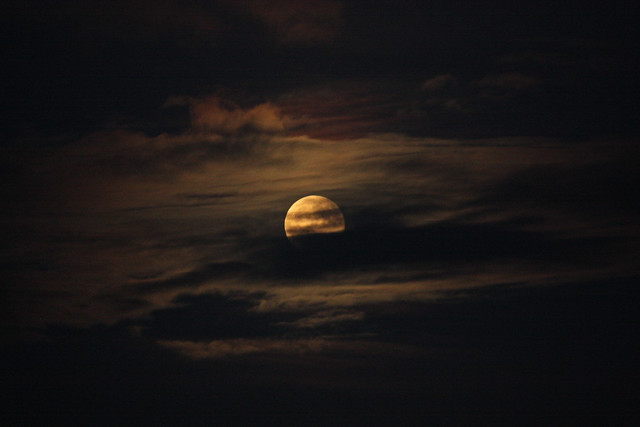
Have you seen the moon these last few nights? We're a week into the new moon and it has been a lovely little crescent hanging in the western sky in the early evenings. I had a rough day at school early this week but when  I walked out of the building at 5pm, I saw the fingernail moon peeking out from between some fluffy clouds. I watched it all evening as I drove home and took the dog for a walk and it was like a beacon to remind me of the beauty of the day even in the midst of all the hard. Last night I was treated to an even better show; the crescent moon and two bright planets! Venus and Jupiter were shining out the haze of an
by Pierre J.
approaching storm. Apparently, Venus and Jupiter will be getting closer and closer together as the month goes by and Mercury can be seen right behind the setting sun, and soon Mars will be visible rising in the East in the early evenings. What a great way to start a month!

As I was preparing to write the blog post I went back to review my posts from the winter and read the chapter in Annette Hinshaw's Earth Time Moon Time for the upcoming month. I couldn't figure out why the months in the book weren't lining up with the months in my blog and then I realized - I messed up my calendar! Sometime during the Sorting Moon I skipped a month and have been off all winter. When I thought it was the Birth Moon it was really the Death Moon. Eep!

To fix the mess I reviewed all my posts and decided which I could just put new tags on, and which I needed to just call a mess and leave it at that. All the posts that are tagged incorrectly or talk about a month that is not the actual month it was written in are now labeled with the tag "wrong moon." 

by meglet247
Besides being embarrassing that I messed up, this situation brings to the forefront the question of how real are the moon energies anyway? I just saw a video of Bill Nye discrediting astrology by invoking the fact that the axis of the earth has wobbled in the last 3,000 years. This means that the sun rise on your birthday is in a different constellation than your astrological sign. That is true, but it discounts the non-material truth of the astrological archetypes. Being a Virgo is a way of thinking about the complexity that is my personality and life, not some material truth like the fact that every gold molecule has 79 protons or water freezes at 0 degrees centigrade. The moon energies of Annette Hinshaw's calendar are archetypes too, not astronomical truths.

This winter I had a really rough time with school and student teaching. I had to do a lot of searching in the deep truths of my moral and theological universe to find ways to cope with the challenges I was facing. The archetype of the Birth Moon, a time when the new year is very young and faces all the challenges of a new born baby, helped me find some meaning in my own challenges. Does it matter that the time I was going through these challenges was actually the Death Moon? My answer is no, it does not. 

Archetypes, myths, stories and images are tools for thinking that are not strictly aligned with the physical, material world. Would it have mattered if I looked to tarot or Sabian symbols instead of moon energies? What if I'd been looking at the Parables of Jesus or Koranic suras for my inspiration? Can you only look at the story of the passover during the spring and it holds no meaning at other times of the year? In my way of thinking, the moon energies are well aligned with the 
Earthrise, a NASA photo
seasons they occur in, like the passover story, but they are not rigidly linked. The story of Yaweh choosing his people and letting his plague pass them over is a powerful one, even when you tell it in the deep winter.

So, yes, it's disconcerting to think that I was getting ready to celebrate the spring joy of the Seed Moon when in fact I have a whole Fasting Moon to get through. I have never been fond of the Fasting Moon, but I guess that means I have some more work to do with these archetypical energies. It's leap day this week, a time for readjusting our thinking about time. I'll be readjusting to thinking about the Fasting Moon for another few weeks and letting spring creep slowly on instead of rushing full force into it. 

When have you made a mistake that made you think more deeply about what you were doing? When have you had to readjust your thinking about something? How have you been enjoying the astronomical show in the sky, or the botanical show starting to make itself known in the garden?

**** **** **** **** **** **** ****


New Fasting Moon 2010: Spring is Springing

New Fasting Moon 2011: The Nian

Monday, February 13, 2012

The Bone Moon

Full Milk Moon

**** **** **** **** **** **** ****
It is the full moon (er.. a little past) of the month that Annette Hinshaw calls the Milk Moon and Jessica Prentice calls the Hunger Moon. It is late in the winter and in milder climates spring may be hinting at it's arrival, but it is not yet here. There is an old saying in New England, though, "half the wood and half the hay you should have left on Candlemas day." In those northern places winter is only half over. Both Annette Hinshaw and Jessica Prentice write about how we can manage our resources during these hard times through our choices and our connections in order to nourishing what is growing in our lives.

In our post industrial, urban world many of us don't even notice that there is a seasonality to the abundance or lack of food. The farmers markets may not be open this time of year, and we may be missing tasty peaches and strawberries, but everything else is still available in our local mega mart. I visited a small produce market near my new school last week that focuses on local foods and found a vast abundance of good looking produce. As expected they had lovely apples from this autumn's harvest stacked in crates out front and piles of local hardy greens but they also had bell peppers, celery, fresh herbs and even a few hot house tomatoes. We never have to fast to conserve resources and when people in our country are hungry it is from lack of money, not the unavailability of food.

Menudo by scaredy_kat
Traditional cultures knew the value of foods that stretch resources and can provide nourishing food even when the stores are low.  Dried grains, root crops, fermented vegetables, hard cheeses and soups are the staple foods of most European cultures and the winter foods of Asia and North America are similar. The hearty soups that people across the globe eat during hard times to keep nourished and elevate into high cuisine in the good times are all based on one important food source - animal bones. Chinese egg drop soup, Korean gomguk, Thai tom yum, Norweigian cabbage soup, Russian shchi, Irish mutton stew, French onion soup, Mexican menudo and Cherokee pepper pot stew are all traditional soups that start with animal bones and end with a warm, nutritious meal perfect for late winter. In the Cherokee calendar, this month of the year is called the Bone Moon. I think that is fitting.

I make stock out of chicken, beef and whatever other bones make their way through my kitchen on a regular basis. I collect bones, both raw and cooked, along with vegetable scraps in a plastic zip bag in the freezer and make stock when I have about a gallon of scraps. The stock can simmer for a few hours, or a few days before you have to deal with it again, and the finished stock can stay in your fridge for a few days or your freezer for a few months. We use it to make soup, stew, polenta, rice and many other dishes that are infinetly more delicious and nutritious when made with home made stock. In fact, last weekend, my sister made a most delicious white bean and kale soup with homemade stock. 

*** *** *** 

Home Made Bone Stock
1/2 -1 gallon of assorted chicken, pork, beef or other bones (use mostly chicken, with some others... for beef stock see these instructions)
4-6 cups of assorted vegetable scraps from carrots, onions, garlic, celery, mushrooms or other non-cruciferous (cabbage family) vegetables
1 onion, cut in half with skin (if not enough onion in the veggie scraps)
2-4 cloves of garlic, smashed with skins (if not enough garlic in the veggie scraps)
2 tbs cider vinegar or 1/4 cup white wine1 tsp whole pepper corns
1-2 tsp salt
fresh or dried herbs including thyme, rosemary, sage or bay (optional)

Put the bones and veggies in a large stock pot (spaghetti pot or larger) and cover with cold water. Add the vinegar or wine and slowly bring the pot to a boil. If your bones are frozen, you can turn the heat to medium until everything is defrosted and warm, then up to high to boil. As it comes to a boil, skim any foam that rises to the top off and discard (don't skim too much fat off if you have it on top of the pot, that's good stuff!). Add the salt, peppercorns and optional herbs. Put a lid on the pot, turn the heat down to low or medium low to maintain a slow simmer.

Kale and White Bean Soup by little blue hen
Chicken stock is ready to strain and use after 4-6 hours, but can also be cooked considerably longer. I often simmer for a few hours, put the lid on and turn the heat off, then bring back to a boil and simmer again the next day. I've never gotten sick, yet, but if you are worried, just strain and refridgerate your stock whenever you are done letting it simmer. I strain my stock through a colander with or without a wire sieve in it (depending on how lazy I am feeling - I don't mind a cloudy stock) and pour it into various sized plastic containers to go into the freezer. 

White Bean and Kale Soup
2 quarts home made chicken stock, or a mix of stock and water
2 tbs olive oil, chicken fat or bacon fat
1 linguica sausage, chopped
1 onion, chopped fine
3 cloves of garlic, sliced, chopped or pressed
2 tsp red pepper flakes
1 tsp Italian seasoning
Salt and pepper to taste
1 can white beans, drained and rinsed or 2 cups homemade white beans
1 quart of kale, trimmed and chopped 
1-3 tsp lemon juice or cider vinegar

In 4 quart soup pot, heat the oil and fry the linguica until it has rendered it's fat and is starting to brown. Add the onion, pepper flakes and Italian seasoning along with some salt and pepper. Fry until the onion is soft and golden and add the garlic, frying another minute or so until fragrant.

Add the chicken stock and bring to a boil. Lower the heat to a simmer and add the white beans and kale. Cook for at least 10 minutes or until the beans are hot and the kale is wilted and soft. Adjust the seasoning with salt, pepper and lemon juice. Serve with cheese toasts, croutons, sauer kraut or whatever garnishes you like on soup. 

*** *** ***

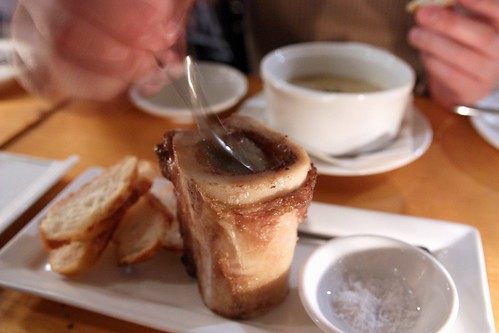
Every Jewish grandmother knows that chicken soup will cure what ails you, from colds and flu to a broken heart or wrinkley face. Modern science is piling up more and more evidence that she is right. The connective tissue in bones and carcasses is full of gelatin and other nutrients that support healthy bones, joints, skin and hair. Gelatin is also a very nutritious and soothing protein that people of all ages and health levels can digest. Bone marrow, the fatty middle part of long bones, is an especially nutritious food that might support immune function but definitely supports a delicious meal. You can ask your butcher to cut long bones into
Silky Healthful Fat by Sifu Renka
2-3 inch slices, roast the bones and then pull the marrow out and spread it on toast. The marrow course was the highlight of my sister and I's recent trip to a fancy restaurant in downtown Portland. 

In addition to being good for the body, making stock is good for the soul and spirit, too. It is recycling at it's best and a truly respectful way to treat the animals we use for food. Bart Everson speaks eloquently of this transformation and what it means to him on the blog Humanistic Paganism. I know, too, that there is magic in taking the leftovers, the scraps and the ends and turning them, through long simmering, into a wonderful elixer of health and flavor. This can be a hard, hard time of the year especially if we are disconnected from our community and support. Using ancient and wise techniques like fasting, sharing or making bone soup reminds us that we do have the resources to nourish ourselves and each other, even when it looks like all we have is a picked over plate. 

How do you nourish yourself and your community during this dark time of late winter? Do you make stock at your house or have any memories of a lovingly made soup? What other recipes do you like for turning leftovers and left-behinds into loving nourishment? Do you prefer tom yum or french onion soup?

**** **** **** **** **** **** ****

Full Milk Moon 2009: Nourishing Self As Well As Others

Full Milk Moon 2010: The Full Wolf Moon

Full Milk Moon 2011: The Positive Feedback Loop of Love

Check the recipes and soup tags for more posts with yummy food. 

** This winter was tough and I got messed up in my calendar. I wrote this thinking it was the Fasting Moon but it was really the Milk Moon. Since the post itself is more about the the Bone Moon, I just changed the tags and labels. For more on my thoughts about this, see this post. **

Wednesday, January 25, 2012

Year of the Dragon

New Milk Moon

**** **** **** **** **** **** ****
 
I am the unquenchable Fire,
  The center of all energy,
  The stout heroic heart.
  I am truth and light,
  I hold power and glory in my sway.
  My presence
  Disperses dark clouds
  To tame the Fates.

  I am the Dragon.

Year of the Dragon

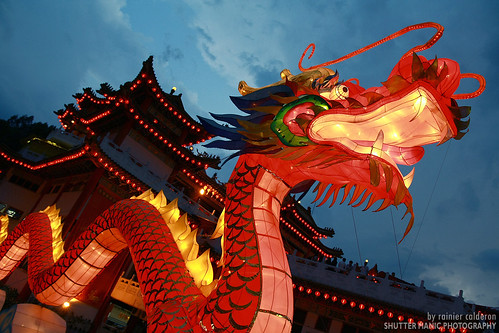
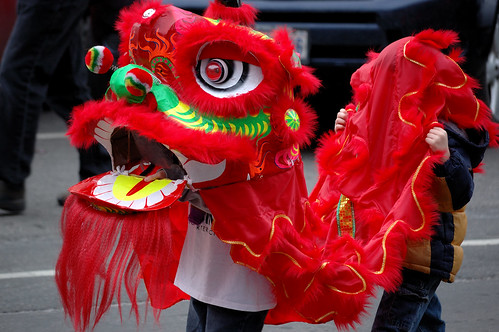
Gung Hay Fat Choy! January 23 is the new Fasting Moon in Annette Hinshaw's calendar and the first day of the lunar new year, a huge celebration all over Asia. The festival is called Tet Nguyen Dan in Vietnam, Chaul Chnam Thmey in Cambodia and Chun Jie, or the Spring Festival, in Chinese speaking communities. When I was a little kid in San Francisco Chinese New Year was almost as big of a holiday at my elementary school as Thanksgiving or Spring Break. We made red envelopes to fill with chocolate coins and watched lion dancers at school and parades in Chinatown. 

Every year in the Chinese calendar is ruled by an animal, creating the Chinese zodiac. The year 4710, or 2012 in the Gregorian calendar, is a Year of the Dragon, a headstrong, charismatic, and enthusiastic animal who's luck just never stops. Dragon is known for being a free spirited doer who always wins people's admiration and never accepts defeat. Though my theme for 2012 is Grabbing the Tiger By the Tail, the Chinese Dragon is a perfect poster child for the kind of year I want to have. Bright, buoyant, active and adventurous. There is a caution, though, with Dragon because they can tend towards being a bit brash, abrasive or prone to power-over dynamics. I am liable to fall into these patterns myself so I will be calling on the Water Dragon, this year's elemental dragon, to help me remain more open minded, to see other people's points of view and weigh all the options before rushing into action. Martin Luther King, Jr., Woodrow Wilson and John Lennon were all born in the Year of the Dragon. I wonder what will be born this year?

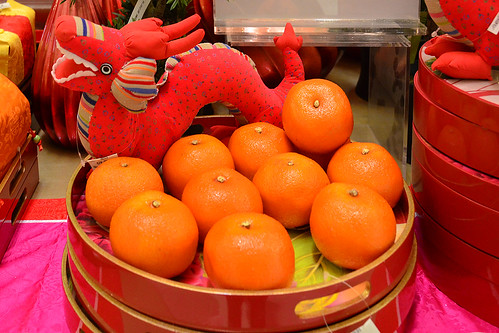
Dragon and Mandarins

Food plays a central role in the celebration of the Chinese New Year and there is much symbolism on the banquet table. Oranges and tangerines are given as gifts and eaten at meals both because they are so deliciously in season this time of year, but also because their names sound like the words for luck and gold in Chinese. Whole fish are often served to represent the beginning and end of a lucky year and sweets of various kinds bring a sweetness to the year. The local Asian newspaper here in Portland printed the following recipe and I hope to try it sometime this season. Long beans or long noodles represent long life and lobster represents the dragon of the zodiac. Shrimp or chicken can be substituted for the lobster, or combined with the dragon of the sea. Combining lobster and chicken is another traditional food, symbolizing the lucky union of the dragon and the phoenix.

*** *** ***

Dragon Beans
1 tbs oil (vegetable, peanut, or lard)
1/4 tsp Sichuan peppercorns, crushed
1/2 tsp Chinese five-spice powder
2 cloves garlic, minced
1 1/2 pounds Chinese long beans (also called yard long beans, string beans can be used)
1/2 cup water
1/4 cup oyster sauce
1 tbs soy sauce
1 tbs toasted sesame oil
splash of Sriracha sauce
7 oz cooked lobster meat, chopped (substitute/combine shrimp or chicken)
1 tbs toasted sesame seeds

In a wok or deep skillet over medium-high, heat the vegetable oil. Add the peppercorns, five spice powder, and garlic. Heat, stirring constantly for 30 seconds.

Add the beans and toss to coat. Add the water, oyster sauce, and soy sauce and cover. Allow the beans to stem for five minutes, or until just tender. Add the sesame oil, Sriracha, lobster meat, and sesame seeds. Toss together and cook until just heated through. Serve immediately. 

*** *** ***

Lion Dance

How are you celebrating this ancient and global festival? Do you have family or community traditions around the Chinese New Year or is all of this new to you? What foods bring good luck and wealth in your home? How is the dragon going manifest its optimistic, exuberant and charming energies into your life this year?

**** **** **** **** **** **** ****

New Milk Moon 2009: New Milk Moon


New Milk Moon 2011: The Quaker Year

This post is about Chinese New Year, which I mention in the Full Fasting Moon 2009 post and The Nian.

** This winter was tough and I got messed up in my calendar. I wrote this thinking it was the Fasting Moon but it was really the Milk Moon. Since the post itself is more about the the Chinese New Year I just changed the tags and labels. For more on my thoughts about this, see this post. **

Thursday, January 12, 2012

Grabbing the Tiger by the Tail

Full Birth Moon

**** **** **** **** **** **** ****

Welcome to the first full moon of 2012, the Birth Moon. Happy New Year! Did you have a wonderful holiday weekend, full of friends, parties and maybe a few more thoughtful moments? Have you been savoring the darkness of this time of year, incubating plans for the coming season of light? Or have you been trying to drown out the dark with lights and liquor, food, parties and go go go, fun fun fun? Yeah, I've been doing some of both, too.

Last year at about this time, I looked over the year before, did some gwishing and came up with a theme for 2011: Building a Better Teacher. As I look back on this last year I see how that theme really filled out the year. I really enjoyed my coursework, did a lot of processing with the deeper themes of equity, child development and how our public schools work, and actually spent some time in a public school classroom. I
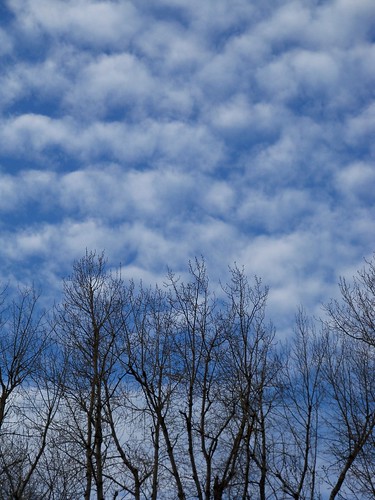
Winter Sky
feel like so much of the rest of what I did this year helped me build a better teacher, too. The play and poetry I engaged in during the spring and summer, my trip to visit my family in Southern California, working through all the hard stuff and then more hard stuff and every bit of reading and writing I did this year all helped me become a stronger, clearer person and more ready to be a friend, mentor and leader to teenagers. 

The days between Christmas and Epiphany are considered the 12 Days of Christmas and there are many esoteric beliefs and traditions associated with these dark nights. Some people believe that the weather of the twelve days associates with the weather of the corresponding months in the upcoming year, and others use that correspondence to do meditation or planning for those months. Other people use the 12 nights to focus on the upcoming year in a more general way, on their own spirituality or on inner work they might want to work on in the coming year. No matter what, it is a time of sinking into the deep dark, bringing the magic of the Christmas rebirth into the new year and getting ready for the Epiphany, the lighting up and insight, that can come if you are ready for it. I spent some of the 12 days, and some before and after, pondering about this upcoming year, 2012.

As I worked through what I want 2012 to look like and listened intently to what the Universe was hinting at, I used some old techniques and some new. I read my Fairy Tale Tarot deck and looked at Sabian Symbols. I prayed in Meeting and in my car. I listened to the conversations I had with my friends and examined what stories were really speaking to me during this time. I brainstormed qualities and imagined scenes from the year. It took a lot of pondering and meditating and thinking, but finally… I am ready to unveil 2012.

Grabbing the Tiger By the Tail

  • 2012 will be a year of saying yes to adventure, of facing the fearsome, of just doing it, no matter what "it" is.
  • 2012 will look ballsy and awesome, effortless and amazing! Sometimes it will look as challenging as it feels, but it will always look real. 
  • 2012 will feel exciting and terrifying, hard but do-able, good like a hard work out or a tricky puzzle. 
  • 2012 will be bright orange and zebra striped. It will smell like cinnamon and snow. It will sound like big bells, the crack of a bat and the roar of a crowd, it will sound like the Rocky Theme song (being played by a Hawaiian marching band... which will follow me everywhere this year. Get ready).

2012 is going to be full of adventures. I am student teaching at a middle school, looking for a job in the spring and summer and good Lord willin’ start as a classroom teacher in the fall. I might have to move and will definitely be meeting new people all along the way. I have no idea what adventures this 
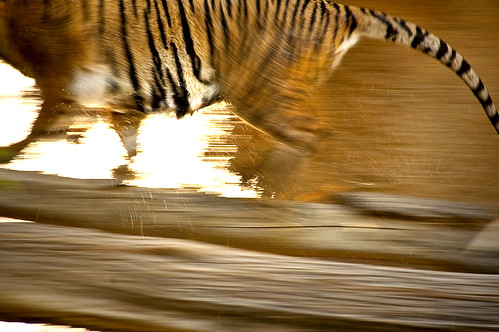
The Tiger's Stripes
summer holds for me, in fact, I don’t even know where June rent is coming from. I am going to need to step up to the plate this year and grab each tiger by the tail as it comes my way or I might miss an opportunity, either material or otherwise as they zoom by.

There are other kinds of tigers lurking in 2012, though, too. The story that I shared with you earlier in the month is a story about a man who runs from a tiger that is more about emotions than about the material world. Stefano is terrified of the columber and spends his whole life running, ending up a sad and lonely man. Almost immediately after my motto for the year came to me I had a situation where I realized that I was running from a columber. Something was scary to admit, hard to feel and I ran away from it through blame and anger. As hard as Grabbing the Tiger of jobs and teaching By the Tail might be, turning to Face the Columber is even harder.

Over the last year I’ve been thinking a lot about courage. Courage is not necessarily not feeling afraid of what you are facing, but it is working through that fear and doing something anyway. The last time I really examined courage, I realized that it is the root of all other virtues. To be generous, or loving, or loyal, kind or grateful all require facing fear of being laughed at, or rejected or judged and acting anyway. This year, I will need to draw on all of my courage to Grab the Tiger and Face the 
By Don Kenn
Columber. The Mission Statement I wrote a couple years ago declares that I am an ambassador of the Universal Divine and ambassadors are always under the protection of those who send them. I have the full backing of god in my work, and I have nothing to fear. 

“My life, glowing with integrity, shines a bright light out into the world. I am filled with the light of god and others around me see it and respond.”

What does 2012 have in store for you? Did you do some gwishing or dream decreeing during the 12 days of Christmas or at some other time this winter? What is your motto for the upcoming year, what is your year going to look like or smell like? Do you have a story about gathering your courage and Grabbing a Tiger by the Tail or Facing a Columber? Happy New Year!

**** **** **** **** **** **** ****
** This winter was tough and I got messed up in my calendar. I wrote this thinking it was the Milk Moon but it was really the Birth Moon. Since the post itself is more about the the new year of 2012, I just changed the tags and labels. For more on my thoughts about this, see this post. **

Full Birth Moon 2008: Outer Darkness and Inner Hope

Full Birth Moon 2009: New Year! and A Story for the Birth Moon 


Full Birth Moon 2010: The Dark of the Dark.

Full Birth Moon 2011: The Columber

Some Birth Moon posts are dated for a Gregorian year but are a part of a lunar year that mostly takes place in the Gregorian year before. Confusing.

This post is about new years, a topic I discussed in the posts The Quaker Year, New Year and New Milk Moon.

Tuesday, January 3, 2012

The Columber

Full Birth Moon

**** **** **** **** **** **** ****
 
The Colomber
Dino Buzzati, translated by Lawrence Venuti

     When Stefano Roi was twelve years old, he asked his father, a sea captain and the owner of a fine sailing ship, to take him on board as his birthday gift. 
     “When I grow up,” the boy said, “I want to go to sea with you. And I shall command ships even more beautiful and bigger than yours.”
     “God bless you, my son,” the father answered. And since his vessel had to leave that very day, he took the boy with him.
     It was a splendid sunny day, and the sea was calm. Stefano, who had never been on a ship, happily wandered around on deck, admiring the complicated maneuvers of the sails. He asked the sailors about this and that, and they gladly explained everything to him. 
    When the boy had gone astern, he stopped, his curiosity aroused, to observe something that intermittently rose to the surface at a distance of two to three hundred meters, in line with the ship’s wake.
     Although the ship was indeed moving fast, carried by a great quarter wind, that thing always maintained the same distance. And though the boy did not make out what it was, there was some indefinable air about it, which attracted him intensely.
     No longer seeing Stefano on deck, the father came down from the bridge, after having shouted his name in vain, and went to look for him.
     “Stefano, what are you doing there, standing so still?” the captain asked his son, finally perceiving him on the stern as he stared at the waves.
     “Papa, come here and see.”
     The father came, and he too looked in the direction indicated by the boy, but he could not see anything.
     “There’s a dark thing that rises in the wake every so often,” Stefano said, “and it follows behind us.”
     “Despite my forty years,” said the father, “I believe I still have good eyesight. But I see absolutely nothing.”
     And the boy insisted, the father went to get a telescope, and he scrutinized the surface of the sea, in line with the wake. Stefano saw him turn pale.
     “What is it? Why do you make that face?”
     “Oh, I wish I had never listened to you,” the captain exclaimed. “Now I’m worried about
you. What you see rising from the water and following us is not some object. That is a colomber. It’s the fish that sailors fear above all others, in every sea in the world. It is a
tremendous mysterious shark, more clever than man. For reasons that perhaps no one will ever know, it chooses its victim, and when it has chosen, it pursues him for years and years, for his entire life, until it has succeeded in devouring him. And the strange this is this: No one can see the colomber except the victim himself and his blood relations.”
     “It’s not a story?”
     “No. I have never seen it. But from descriptions I have heard many times, I immediately
recognized it. That bison like muzzle, that mouth continually opening an closing, those terrible teeth. Stefano, there’s no doubt, the colomber has ominously chosen you, and as long as you go to sea, it will give you no peace. Listen to me: We are going back to land now, immediately; you will go ashore and never leave it again, not for any reason whatsoever. You must promise me you won’t. Seafaring is not for you, my son. You must resign yourself. After all, you will be able to make your fortune on land too.”
     Having said this, he immediate reversed his course, reentered the port, and on the pretext of a sudden illness, he put his son ashore. Then he left again without him.
     Deeply troubled, the boy remained on the shore until the last tip of the masts sank behind the horizon. Beyond the pier that bounded the port, the seas was completely deserted. But looking carefully, Stefano could perceive a small black point which intermittently surfaced on the water: it was “his” colomber, slowly moving back and forth, obstinately waiting for him.

     From then on, with every expedient the boy was dissuaded from his desire to go to sea. His father sent him to study at an inland city, hundreds of kilometers away. And for some time, distracted by his new surroundings, Stefano no longer thought about the sea monster. Still, he returned home for summer vacations, and the first thing he did, as soon as he had some free time, was hurry to the end of the pier for a kind of verification, although he fundamentally considered it unnecessary. After so many years, even supposing that all the stories his father told him were true, the colomber had certainly given up its siege.
     But Stefano stood there, astonished, his heart pounding. At a distance of two to three hundred meters from the pier, in the open sea, the sinister fish was moving back and forth, slowly, raising its muzzle from the water every now and then and turning toward land, as it anxiously watched for whether Stefano was coming at last.
     So the idea of that hostile creature waiting for him day and night became a secret obsession for Stefano. And even in the distant city it cropped up to wake him with worry in the middle of the night. He was safe, of course; hundreds of kilometers separated him from the colomber. And yet he knew that beyond the mountains, beyond the forests and the plains, the shark was waiting for him. He might have moved even to the most remote continent, and still the would have appeared in the mirror of the nearest sea, with the inexorable obstinacy of a fatal instrument.
     Stefano, who was a serious and eager boy, profitably continued his studies, and as soon as he was a man, he found a dignified and well-paying position at a store in the inland city. Meanwhile, his father died through illness, his magnificent ship was sold by his widow, and his son found himself the heir to a modest fortune. Work, friends, diversions, first love affairs- Stefano’s life was not well under way, but the thought of the colomber nonetheless tormented him like a mirage that was fatal and fascinating at the same time; and as the days passed, rather than disappear, it seemed to become more insistent.
     
     Great are the satisfactions of an industrious, well-to-do, and quiet life, but greater still is the attraction of the abyss. Stefano was hardly twenty-two years old when, having said goodbye to his inland friends and resigned from his job, he returned to his native city and told his mother of his firm intention to follow his father’s trade. The woman, to whom Stefano had never mentioned the mysterious shark, joyfully welcomed his decision. To have her son abandon the sea for the city had always seemed to her, in her heart, a betrayal of the family’s tradition.
     Stefano began to sail, giving proof of his sea-worthiness, his resistance to fatigue, and his
intrepid spirit. He sailed and sailed, and in the wake of his ship, day and night, in good weather and in storms, the colomber trudged along. He knew that this was his curse and his penalty, and precisely for this reason, perhaps, he did not find the strength to sever himself from it. And no one on board, except him, perceived the monster.
     “Don’t you see anything over there?” he asked his companions from time to time, pointing at the wake.
     “No, we don’t see anything at all. Why?”
     “I don’t know. It seemed to me…”
     “You didn’t see a colomber, by any chance, did you?” the sailors asked, laughing and
touching wood.
     “Why are you laughing? Why are you touching wood?”
     “Because the colomber is an animal that spares no one. And if it has begun to follow this
ship, it means that one of us is doomed.”
     But Stefano did not slacken. The uninterrupted threat that followed on his heels seemed in fact to strengthen his will, his passion for the sea, his courage in times of strife and danger.
When he felt that he was master of his trade, he used his modest patrimony to acquire a small steam freighter with a partner; then he became the sole proprietor of it, and thanks to a series of successful shipments, he could subsequently buy a true merchantman, setting out with always more-ambitious aims. But the successes, and the millions, were unable to remove that continual torment from his soul; nor did he ever try, on the other hand, to sell the ship and retire to undertake different enterprises on land.
     To sail and sail was his only thought. Just as soon as he set foot on land in some port after a long journey, the impatience to depart again immediately pricked him. He knew that outside the colomber was waiting for him and that the colomber was synonymous with ruin. With nothingness. An indomitable impulse dragged him without rest, from one ocean to another. 

     Until one day, Stefano suddenly realized that he had grown old, very old; and no one around him could explain why, rich as he was, he did not finally leave the cursed life of the sea. He was old, and bitterly unhappy, because his entire existence had been spent in that mad flight across the seas, to escape his enemy. But the temptation of the abyss had always been greater for him than the joys of a prosperous and quiet life.
     One evening, while his magnificent ship was anchored offshore at the port where he was born, he felt close to death. He then called his second officer, in whom he had great trust, and ordered him not to oppose what he was about to do. The other man promised, on his honor.
     Having gotten this assurance, Stefano revealed to the second officer the story of the colomber that had continued to pursue him uselessly for nearly fifty years. The officer listened to him, frightened.
     “It has escorted me from one end of the world to the other,” Stefano said, “with a faithfulness that not even the noblest friend could have shown. Now I am about to die. The colomber too will be terribly old and weary by now. I cannot betray it.”
     Having said this, he took his leave of the crew, ordered a small boat to be lowered into the sea, and boarded it, after he made them give him a harpoon.
     “Now I am going to meet it,” he announced. “It isn’t right to disappoint it. But I shall
struggle, with all my might.”

     With a few weary strokes of the oars, he drew away from the side of the ship. Officers and
sailors saw him disappear down below, on the placid sea, shrouded in the nocturnal shadows. In the sky was a crescent moon.
     He did not have to work very hard. Suddenly the colomber’s horrible snout emerged at the side of the boat.
     “Here I am with you, finally,” Stefano said. “Now it’s just the two of us.” And gathering his
remaining strength, he raised the harpoon to strike.
     “Uh,” the colomber groaned, imploringly, “what a long journey it’s taken to find you. I too
am wasted with fatigue. How much you made me swim. And you kept on fleeing. You never
understood at all.”
     “What?” asked Stefano, with the point of his harpoon over the colomber’s heart.
     “I have not pursued you around the world to devour you, as you thought. I was charged by the King of the Sea only to deliver this to you.”
     And the shark stuck out its tongue, offering the old captain a small phosphorescent
sphere. Stefano picked it up and examined it. It was a pearl of unusual size. And he recognized it as the famous Perla del Mare, which brought luck, power, love, and peace of mind to whoever possessed it. But now it was too late.
     “Alas!” said the captain, shaking his head sadly. “How wrong it all is. I managed to
condemn myself, and I have ruined your life.”
     “Goodbye, poor man,” answered the colomber. And it sank into the black waters forever.
 
     Two month later, pushed by an undertow, a small boat came alongside an abrupt reef. It was sighted by several fisherman, who drew near, curious. In the boat, still seated, was a sunbleached skeleton: between the little bones of its fingers it grasped a small round stone.
     The colomber is a huge fish, frightening to behold and extremely rare. Depending on the sea and the people who live by its shores, the fish is also called the kolombrey, kahloubrha, kalonga, kalu-balu, chalunggra. Naturalists strangely ignore it. Some even maintain that is does not exist.

*** *** ***

I first read this story in the journal Parabola: Myth and the Quest for Meaning. I found their May 1983 edition in a library and the story sang when  I read it. I found it a number of places online (like here, here and here). The images are Gustav Dore prints done in 1876 to illustrate Coleridge's epic The Rime of the Ancient Mariner. I found them at this site, where you can purchase them, if you are into that sort of thing. I clearly don't own any of these pieces of art, and am clearly not making any money off reposting them here.

I will post more about my thoughts on this story soon. I promise. 

**** **** **** **** **** **** ****
** This winter was tough and I got messed up in my calendar. I wrote this thinking it was the Milk Moon but it was really the Birth Moon. Since the post itself is more about the the new year of 2012, I just changed the tags and labels. For more on my thoughts about this, see this post. **
Full Birth Moon 2008: Outer Darkness and Inner Hope

Full Birth Moon 2009: New Year! and A Story for the Birth Moon (these posts are dated 2010, but are for the year that took place mostly in 2009)


 Full Birth Moon 2010: The Dark of the Dark.

Thursday, December 29, 2011

Wolves at the Gate


New Birth Moon

**** **** **** **** **** **** ****

    “Lose the bobcat?” she asked him.
    “No, lost you. For a while.”
    “Not for long, I see.”
    He was wearing his hat again, with the brim pulled low. She found it harder to read his eyes. “You weren’t after that cat today,” he accused. “That trail’s a few days old.”
    “That’s right.”
    “I’d like to know what it is you’re tracking.”
    “You’re a man that can’t hold his horses, aren’t you?”
    He smiled. Tantalizing. “What’s your game, lady?”
    “Coyotes.”
    His eyes widened, only for a second and a half. She could swear his pupils dilated. She bit her lower lip, having meant to give away nothing. She’d forgotten how to talk with people, it seemed – how to sidestep a question and hide what was necessary.
    “And bobcats, and bear, and fox,” she piled on quickly, to bury the coyotes. “Everything that’s here. But especially the carnivores.”
    She shifted, waiting, feeling her toes inside her boots. Wasn’t he supposed to say something after she finished? When he didn’t, she suggested, “I guess you were looking for deer the other day?”
    He gave a small shrug. Deer season was many months over and gone. He wasn’t going to be trapped by a lady wildlife ranger with a badge. “Why the carnivores, especially?” he asked.
    “No reason.”
    “I see. You’re just partial. There’s birdwatchers, and butterfly collectors and there’s gals like you that like to watch meat eaters.”
    He might have known this one thing could draw her talk to the surface: an outsider’s condescension. “They’re the top of the food chain, that’s the reason,” she said coldly. “If they are good, then their prey is good, and its food is good. If not, then something’s missing from the chain.”
    “Oh yeah?”
By Jerolek
    “Yeah. Keeping tabs on the predators tells  you what you need to know about the herbivores, like deer, and the vegetation, the detritovores, the insect populations, small predators like shrews and voles. All of it.”
    He studied her with a confusion she recognized. She was well accustomed to watching Yankee brains grind their gears, attempting to reconcile a hillbilly accent with signs of a serious education. He asked finally “And what you need to know about the shrews and voles would be what, exactly?”
    “Voles matter more than you think. Beetles, worms. I guess to hunters these woods seem like a zoo, but who feeds the animals and cleans up the cage, do you think? Without worms and termites you’d be up to your hat brim in dead tree branches looking for a clear shot.”

 *** *** ***
The new moon this month is the new Birth Moon in Annette Hinshaw's calendar and the new Wolf Moon in Jessica Prentice's. It is the dark of winter, the testing place of the wisdom and support we gathered over the last summer both physically as well as emotionally and spiritually. Did the fields and herds provide enough food for us this year? Did we store enough food to last the winter? Do we have the friend and kin support to get us through the dark times?  

Humans are like other large animals top predators in that we require huge amounts of land to support our needs. Each one of us requires entire armies of farmers and ranchers, crop plants and livestock animals, food packagers, butchers and cooks to meet our food needs. Estimates of how much land a human needs to meet their food needs range from 1/5 of anacre to over 10 square miles, depending on the climate and intensity of agriculture, but no matter what, we are resource intensive creatures. In the last 50 years agriculture in the western world has changed drastically with the input of petroleum fuel and chemical fertilizers, reducing some of the human labor required to feed our growing population that now tops 7 billion souls. Unfortunately, this oil based food system is not sustainable in the long term. Unlike natural ecosystems, it both requires an in put that is not renewable and 
By Ricky NJ
it also produces waste that is not useable by the system. In fact, the waste and destruction caused by our modern agribusiness practices makes the entire ecosystem unhealthy for both humans and many other animal and plant species.

Wolves and other large carnivores were some of the first species to feel the effects of western civilization as we developed the technology to take the land we needed for our agriculture. Wolves were hunted virtually to extinction in Europe and North America as industrial agriculture grew and by the middle of the 20th century there were only remnant populations in the far reaches of their former range. The environmental movement of the last 40 years has changed the way both the public and the government views wolves, however, and in the 1990s there was a program to reintroduce wolves to the northern Rocky Mountain areas of Idaho and Wyoming. By 2004 the original couple dozen wolves relocated from Alberta,Canada to central Idaho had expanded to over 450 animals and some of those were making their way across the Snake River into Oregon. Nearly sixty years after the last wolf bounty was paid in Oregon, the fish and wildlife department confirmed two pups born to the small Imnaha pack, the first in the state. Six more pups were confirmed in the 2009 breeding season and there are two other packs now roam the wilderness of north eastern Oregon.

This autumn big news broke when a young wolf left his home pack and started heading west across Oregon. By December OR 7, as he is known, had traveled over 700 miles and set up camp in the heavily forested land between Medford, OR and Crater Lake. OR 7 is a bit of a celebrity these days and his journey, and the notoriety it is getting, is stirring up the rural/urban, rancher/conservationist divide over the reintroduction of wolves to Western States. Like Eddie Bondo, the Wyoming rancher and hunter in Barbara Kingsolver’s Prodigal Summer which I excerpted above, many people in rural Oregon view wolves as threats to their livelihood. The irony, of course, is that wolves returning to their mountains are in direct opposition to the real threat to their livlihoods.

By Fremlin
In Kingsolver’s beautiful novel, Eddie learns from the forest ranger Deanna about how important large carnivores are to the entire ecosystem they live in. Yes, large carnivores kill young and weak livestock, but another character in the novel notes that there are 10 other ways she might be responsible for the death of her animals. In fact, the land that supports a healthy population of carnivores can support a larger and healthier population of grazing animals. Even crop farmers benefit from the healthy ecosystems that support wolves, coyotes, bobcats and cougars. Those ecosystems provide clean water, balanced insect populations and habitat for pest rodents to live in so they are less likely to harass stored grains. Turns out, healthy ecosystems make for healthy farms, which in turn allow all people to live healthier lives.

I think one of the hardest things to wrap my city born brain around is just how detrimental our culture is to both wild things and to our own lifestyles. Our current practices of mining the earth’s resources are simply not sustainable – and I don’t mean that in the green washed way that Whole Foods or American Apparel mean it. I mean really, really for real, there is not going to be enough food, clean water, breatheable air or fertile soil to support the human population. We are filling our house with garbage and toxic waste, eating everything out of the fridge and refusing to see that things can’t go on like this.

The struggle for me, an environmentalist who cares about food issues and wildlife issues and really knows all about this stuff, is what to do on a daily basis. How do I make changes in my life that make it more sustainable, without abandoning civilization and living off dumpster diving and walking everywhere? I currently live a life that requires a car, and electricity and buying food at the grocery store. How do I take steps towards a life that this earth can actually support? Jessica Prentice quotes Martin Prechtel, the author of the book The Party’s Over, as he talks about the big, mechanized slug of a culture of progress. This “culture crushing mentality” has left behind a homogenized, lifeless civilization of freeways, big box stores and franchise restaurants. My sister went to India and her traveling partner insisted on eating McDonalds and KFC. It is mind boggling that you even can eat that food 
By Eoin C
so far away from the American heartland where it was invented! How do I fight this overwhelming slug without being a total outsider to my culture and community?

Prentice and Prechtel leave us with a simple, yet profoundly life shifting call to action; to recreate the interpersonal relationships found in our ancestral villages. Not to reject modern civilization (I do truly believe that appropriate technology will be profoundly useful in creating a sustainable culture) but building the human community within our civilization that makes life meaningful, valuable and worth honoring. In terms of food, this community is built through becoming a producer as well as a consumer, and trading with other individual producers. Buying eggs from a neighbor or local farmer, shopping for vegetables at the farmer’s market where you can shake the hand of the woman who grew your cauliflower, trading your dried oregano and wild harvested nettles for your neighbors apples or lettuce. These things allow us to see each other as valuable individuals, not just cogs in the wheel or obstacles on the way to our own fulfillment.

By Wiz411
We can create these webs of relationship in ways that don’t involve food, too. Taking the bus or walking allows us to really see our neighbors (and sometimes hear them, and smell them but that’s how we know they are real people). My group of friends is great at having the kinds of parties that allow us to build relationships, like Christmas lights viewing or cheese and wine parties or trips to the pumpkin patch. My church, like so many other places of worship, is another bastion of community relationships. When I was having such a dark time this last fall I realized that the culture of my church community involved explicitly being open with our needs and equally explicit with our ability to help each other both through encouragement and physical or material assistance. I learned that I had to be equally explicit with my non-church friends and once I did my needs were met quickly and lovingly.

The wolf is at the gate, this time of year. The days are dark and we are lonely, both in our daily lives and in our cultural life. Wolves show us how interconnected we all are and how important strengthening and honoring those connections really is. How connected do you feel these days, to your friends and family, your community and your larger ecosystem home? How do these connections nourish you, ground you or leave you feeling confined? Who do you like to buy your food from or share your food with? Do you have any wolf, coyote or other large predator sighting stories to share?  

**** **** **** **** **** **** ****

** This winter was tough and I got messed up in my calendar. I wrote this thinking it was the Milk Moon but it was really the Birth Moon. Since the post itself is more about the Wolf Moon, I just changed the tags and labels. For more on my thoughts about this, see this post. **

New Birth Moon 2008: Waiting

New Birth Moon 2009: Advent, Awaiting the Birth

New Birth Moon 2010: Winter is Dark, Yet Each Tiny Spark


My full Milk Moon post in January of 2010 is also about the Wolf Moon, and retells the wonderful story of St. Francis and the wolf of Gubbio.
Saturday, December 10, 2011

Living in Relationship

Full Death Moon

**** **** **** **** **** **** ****

During one of the last really difficult times in my life I found myself on a bus in Providence, Rhode Island right around this time of year, in fact. It was a terrible, dumb night and I looked out the window to see a sign on top of a cab that read, "Sometimes you're the pigeon, and sometimes you're the statue." It felt apt then, and it still feels pretty apt.

Life is hard and sometimes we make it harder than it needs to be. Once again, I feel like I am being shown and asked to work through the same situation over and over again in various aspects of my life because it is just that important right now. The situation this time is all about relationships. How do we live in relationship with other? How do we form and nurture relationships when we come from very different kinds of lives? How do we nurture relationships as our lives change? How do we address issues we have with other people's actions and values within the context of relationships?

This is the darkest time of the year when days are short and cold. The Earth has breathed her soul back in, bringing back the experiences gained from a summer of living out in the cosmos to be worked into wisdom in this dark time. This inward motion pulls the creatures that live on her surface into various kinds of rest, repose and reflection. Some creatures are sleepy and dormant, others have actually died, living on only in their seeds or eggs that will burst forth in life as spring warms them. Humans, too, feel this pull to be indoors, introspective, dreamy or reflective. In some cultures winter is the time for story telling, retelling and recreating the narrative of the culture's beginnings and values each winter. In the Christian calendar this is the season of Advent, of waiting and preparing for the birth of the savior at the darkest dark point of the year. In my eclectic pagan theology, it is the time when we are also waiting, working on the wisdom we gathered during the last year's cycle and waiting for the new birth of the year at solstice.

As we consciously and unconsciously work through all the things we experienced over the last season of growth and harvest we discern patterns and come to conclusions about how our life is and how we want our life to be. The really tricky part comes when we have to make decisions about how to act on any of these conclusions.

At West Hills Friends the first light of advent was called the light of the prophets. Prophets are in direct relationship with god and speak up to their community about what they know. Their speaking up often puts them at odds with the people around them and can even sever relationships with people they used to be in strong relationship with. When Abram got word from Yaweh that he was to leave his home in Ur and travel to another land, it meant leaving behind everything and everyone he had known from childhood. John the Baptist was beheaded for his prophesying and Joseph Smith was run out of town (er, three of them), tarred and feathered and finally murdered for his prophetic visions. Being true to what you see, what you know and what you believe requires great courage and faith; courage to act despite the uncertainty and faith that you deserve to be heard, no matter the outcome.

The second light of advent this year at West Hills Friends was dedicated to the Angel Gabriel and those who receive his word with wonder. Our pastor told the story of Zachariah who, when told that his wife would become pregnant in her old age, asked how that would be and was promptly struck dumb. Many people consider this a punishment on Zachariah for questioning the Angel, but our pastor pointed out that Mary asked the same question and was not silenced. Zachariah's silence, our pastor argued, was a gift. He didn't have to explain himself, he didn't have to expound on his experience and he didn't have to defend his actions, belief or wonder. I see parallels between Zachariah's silence in the face of mystery with the silence of plants, the correspondence for the second week of advent in the Waldorf tradition. Plants and trees stand tall in the face of all the glory and mystery that is life on this planet.

Sometimes, as we wrestle with how to be in an authentic relationship with other people that is true to our own needs and beliefs, but also loves and honors the other person's innate humanity, we wrestle with these polar positions of speaking and being silent. How do we speak our truth with courage? When do we stay silent in the face of wonder that is god incarnate in another person's life? When do we speak up to protect our own integrity and how do we stay silent when we don't understand what is going on?

This month's full moon, the full moon in both the Death Moon and the Moon of Long Nights, is asking us all these questions and more. The full moon was fully eclipsed over much of the world on the night of December 10 and it feels like that eclipse brings even more questions and mysteries. As we spend these last two weeks sinking further into the darkness before the solstice, we might find ourselves wrestling with these questions. How do we live in relationship with other people? No one knows how to do it, but we all have to do it.

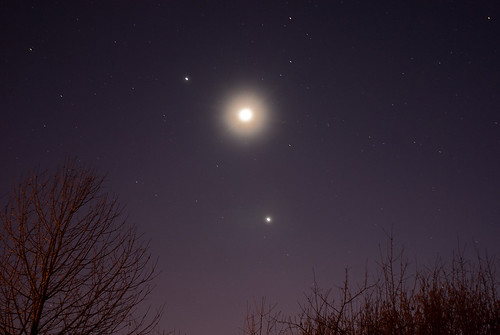
Moon photos by lamentables and jpstanley. Click on the photos or their names to see more of their amazing work. Thanks!

**** **** **** **** **** **** ****


** This winter was tough and I got messed up in my calendar. I wrote this thinking it was the Birth Moon but it was really the Death Moon. Since the post itself is more about the Moon of Long Nights, I just changed the tags and labels. For more on my thoughts about this, see this post. **


Full Death Moon 2008: Full Moon in Taurus

Full Death Moon 2009: Moving From the Season of the Dead

Full Death Moon 2010: Wear it As Long as Thou Canst

The Full Birth Moon post in 2010, The Dark of the Dark is also about a lunar eclipse.