Showing posts with label environment. Show all posts

Sunday, March 2, 2014

Evolution Sunday

New Seed Moon 

**** **** **** **** **** **** ****
 
I was asked to give the message at my Quaker church for Evolution Sunday 2014. This is usually celebrated the second weekend in February in honor of Charles Darwin's birthday but a rare Portland snowpocalypse postponed it until the first weekend in March. Here is what I wrote. What I said was slightly different, but for details and impressions from the gathered crowd you'll have to ask someone who was there. Enjoy!

**** **** **** **** **** **** ****
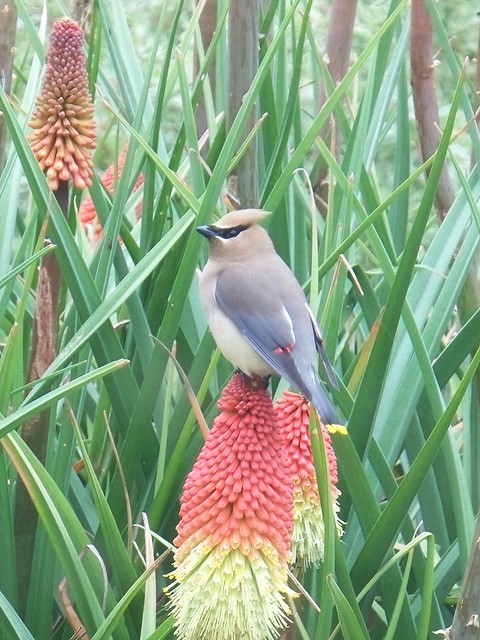
It is interesting to contemplate an entangled bank, clothed with many plants of many kinds, with birds singing on the bushes, with various insects flitting about, and with worms crawling through the damp earth, and to reflect that these elaborately constructed forms, so different from each other, and dependent on each other in so complex a manner, have all been produced by laws acting around us..... There is grandeur in this view of life, with its several powers, having been originally breathed into a few forms or into one; and that, whilst this planet has gone cycling on according to the fixed law of gravity, from so simple a beginning endless forms most beautiful and most wonderful have been, and are being, evolved.
Charles Darwin's The Origin of Species, Chapter 14, Concluding Remarks

Today is evolution Sunday, a day when we reaffirm that science and religion or spirituality are not enemies but both ways that we humans find meaning in a world that all too often seems meaningless. I have always been a nature girl. My mom took me and my friends out on nature hikes all around the San Franscisco bay area from the time I was very little and there was always a sense of awe and wonder in those natural places. From climbing on redwood logs as tall as a house to catching newts and bugs in creeks and playing in the ocean, I was always most happy outside. As a teenager I spent hours wandering by myself through the forested parks in this neighborhood and my sense of wonder grew as my awareness and understanding grew. My studies of natural history and science in high school and college led to some of my first explicitly spiritual experiences - laying on a log overwhelmed with awe at xylem and phloem one year, stunned at the intricacies of the body systems of the starlings flying above me another year, grinning with joy and awe at the migrating vultures overhead another year. I watched the moon and saw the face of god there. I climbed mountains and swam in rivers and studied the workings of the earth and her inhabitants and I was in awe.

Like so many students of science before me I found wonder and awe in the theories that scientists have used to explain and understand the world, too. Mathematicians and physicists often describe equations as beautiful and I don't quite get that, but I do see stunning beauty in Darwin's Theory of Evolution by Natural Selection. It is beautiful because it is simple, but out of that simplicity comes immense variation and flexibility. It is beautiful because it is based on observed evidence and it is beautiful because it allows me to make some sense out of an otherwise rather senseless world. 

The theory of evolution by natural selection says that over time populations of organisms change because some of the organisms have heritable traits allow them to survive more easily and thus have more offspring. A classic example of this is the story of the peppered moth, a standard sort of moth found in England. The typical variety seen before the Industrial revolution was a pretty white grey with some darker specks, allowing the moth to blend in perfectly with the white grey and speckled tree bark and lichen found in its forest home. As coal burning became more prevalent during the Industrial revolution the trees in England became stained with soot, making the pretty white grey with speckles colored moths easy targets for the birds who wanted to eat them. Luckily for the moth population, some small number of moths were born with darker wings and they blended in well with these new, darker trees. In recent decades, with stricter air quality standards and cleaner trees, the lighter speckly variety is again more common. Other classic examples of populations that change because some traits are more adaptive that we all know and love are things as mundane as dog breeds and as important as antibiotic resistant bacteria.

Evolution by Natural Selection is beautiful because it is simple, but out of that simplicity comes immense variation and flexibility. It shows a biological universe where just a few simple rules, carried out with novelty, creativity and fecundity, lead to stable ecosystems where every creature's needs are met. The rules of natural selection really basic: gather enough food and evade becoming food long enough to create the next generation. The ways creatures fulfill these rules are staggeringly varied and the results it allows for are mind boggling. Dandilions grow in any patch of soil and quickly flower, sending out millions of seeds on fluffy parachutes into the world in the hopes that just one or two will survive. Coast redwood trees, however, don't even begin to produce seeds until they are 10 or 15 years old and only about 15 percent of those seeds are viable. Cheetahs and antelope have honed each other into lean running machines though countless generations of "arms race" competition. Slightly less fast antelopes get eaten by slightly more fast cheetahs while slightly less fast cheetahs are outrun by the slightly more fast antelope. Each generation slightly faster than the last until we find in the plains of Africa today these amazing creatures. Sometimes the sheer number of types and individual living things overwhelms me. We get blase about it but our entire planet is covered in living things. Grass and weeds, ants and bugs, sea gulls and pigeons. There is so much variety of life. All I can do some days is gawk in awe.
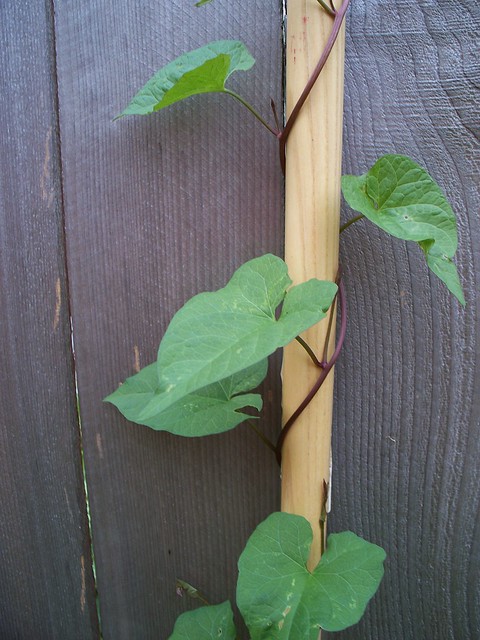


Evolution by Natural Selection is beautiful because it is based on observed evidence and it is beautiful because it allows me to make some sense out of an otherwise rather senseless world. Charles Darwin spent twenty years studying and compiling evidence for his theory and scientists have spent 150 years continuing that work. Darwin himself saw evidence for evolution by natural selection in the distribution of species such as his famous finches in the Galapagos islands, in fossils and in the comparative anatomy he studied for most of his adult life. The story told in every biology text book of the bones in the forelimb of mammals is classic for a reason - my human hand has the same bones as the flipper of a whale, the wing of a bat and the paw of a cat. Common descent with modification explains that fact in a simple, logical, sense making way. North American paleontologists have discovered a well preserved series of fossils showing the change over time of a little forest dwelling leaf eater with four toes into a large, grassland dwelling single hoofed and long necked horse many of love today. Not all lines show such well preserved evidence, but exciting discoveries in fossil whales and feathered dinosaurs support the theory with evidence. Darwin knew nothing about genetics but we know lots about the biochemical mechanisms of inheritance today, and all of it shows that vastly different kinds of living things are related to each other. People talk about "believing" in evolution but that seems to me completely besides the point. It's not a matter of faith to me, it is simply the best explanation for the evidence observed. Every new way we question nature with scientific methods we see patterns of common descent and patterns of change in populations over time due to environmental pressures. I have to believe that scientists know what they are talking about, but scientific thinking provides evidence for conclusions. The overwhelming variety of life on earth makes sense when we understand evolution. There is a pattern, there is order in this chaotic complexity. And that is beautiful.

The theory of evolution by natural selection is beautiful because it is simple, but out of that simplicity comes immense variation and flexibility. It is beautiful because it is based on observed evidence and it is beautiful because it allows me to make some sense out of an otherwise rather senseless world. I see in our Quaker community a similar, beautiful system of variety out of simplicity and order out of chaos with evidence to support it. 

Here at West Hills I see a system of just a few rules carried out with creativity and novelty that lead to a stable system with room for all who want to be here. We don't have a long list of rules rigidly enforced to keep the good from the bad, we let the equilibrium of the system that is in touch with it's source do that heavy lifting for us. Our rules really are few: the Inward Teacher is within every person, listening for that Still Small Voice together allows us better access than seeking alone, and we must love each other and God in the same way for they are the same thing. In this very room right now we have people who have widely varying beliefs about the figure of Jesus Christ, about the best ways to live a moral life and the best way to sing Happy Birthday. But all of us together make for a forest full of variety and adaptability. 

I also see at West Hills a system of practice based in the evidence of what actually works. George Fox, in his journal, told of his first opening to understanding that the spirit of god could speak directly to his condition. He finished his report with the words "and this I knew experimentally". He had tried listening to the priests and the preachers, he had examined the paths of soldier and tradesman and none gave him the peace and understanding he sought. But listening to his inward teacher, "who enlightens, and gives grace, and faith, and power" worked, he had evidence for a fruitful path. The earliest of Quaker advice and queries such as the Balby Letter of 1656 admonish Friends to gather regularly and "speak the word of the Lord at such meetings, that it be done in faithfulness, without adding or diminishing". They reminded each other to care for those in need in their community and "all be subject one to another, and be clothed with humility". These weren't rules just to be followed because those 17th century Friends liked rules, they were advice given based on what they had experienced to work. They saw in their meetings that Friends who spoke the words of the Lord clearly and faithfully contributed to the life of their meetings. They saw that taking care of each other, walking with humility and grace and being discrete in their confrontations of straying Friends made their lives together better and made it easier to hear those words of the Lord. Quaker practice is an evidence based practice. I don't need to take it on faith that it will work, I've seen it work for four years and three centuries of Friends before me have seen it work. And that is beautiful.

The theory of evolution by natural selection is beautiful because it is simple, but out of that simplicity comes immense variation and flexibility. It is beautiful because it is based on observed evidence and it is beautiful because it allows me to make some sense out of an otherwise rather senseless world. Quaker practice is beautiful because it is simple, but out of that simplicity comes the adaptability to accept all who want to come. It is beautiful because just as George Fox before us "knew it experimentally", we see the fruits of our work, we see evidence for our best practice. And that is pretty darn beautiful.


What do you see in the human life of the mind as beautiful? What is your experience with waking up to the beauty of the natural world?

Where in Quaker practice do you see flexibility and adaptability coming out of simple rules? How has Quaker practice taught you, experimentally, to hear the still small voice?

What signs of spring are showing you the beauty of life all around us? 

**** **** **** **** **** **** ****

New Seed Moon 2012: The Seed Moon

New Seed Moon 2011: Johnny Appleseed (one of my all time favorite posts!)

New Seed Moon 2010: To Everything there is a Season

New Seed Moon 2009: The Seed Moon Is New 

Also, check out my other posts labeled Quaker for more I've written addressed to and about my Quaker community.

Saturday, May 18, 2013

Hedonism and Big Juicy Good

New Journey Moon

**** **** **** **** **** **** ****
 
God
and I have become
like two giant fat people living
in a tiny
boat.
We
keep bumping into
each other
and laughing
-Hafiz

I joke that I gave up vegetarianism after college to become a hedonist. Little did I know how fruitful of a spiritual path hedonism could actually become. Over the last year or so I have allowed myself to indulge in all manner of earthly pleasures gastronomic, aesthetic, carnal and ecological. To my surprise and delight, I have found that these joys are not a diversion from spiritual pursuits but have been a yellow brick road leading directly to the Divine Wow.

Ascetic traditions ask followers to rise above the sea of emotion and physical sensation that are a leading cause of suffering. “Suffering rises from attachment to impermanent things,” the Buddha says. Monks and seekers from traditions Eastern and Western have been encouraged to abstain from certain foods, intoxicating beverages, the entanglements of romantic relationships and even the sensual pleasures of art and music for fear that they will dull or distract the soul from its journey towards God With a Capital G. In my experience, the unencumbered mind can soar to intellectual heights in this kind of pursuit. But there’s not much laughing there. Or ice cream. Or roasted duck, champagne cocktails and two hour make out sessions. And honestly, who wants to live in a world or go to a heaven without those thing? 

Indeed, those things have not stopped or distracted me from my connection with The Eternal Bliss. As my focus shifted a few chakras down over the last year the realizations are no less real or even less abundant, they are just of a different kind. Just the other night, while lounging contentedly, I said to the gentleman sharing my bed, “The Buddhists say Namaste – the divine in me greets the divine in you. Right now I wish there were a word for ‘the loving in me greets the lover in you.’” But there are no words for that kind of thing, just a squeeze, a kiss, a smile and knowing that this is All Good. My experience mirrors that of the Sufi understanding that all love, all pleasure, is a practice run for the love and pleasure we find with God. 

The renunciate’s ideal of detachment offers one path to the Kingdom of Heaven where we hurt no more. Radically deep connection is another way. In nature there is individual tragedy – the mouse must die for the owl to survive – but the web of connection keeps the mouse, the owl, the Fir tree, the fungus and everything else in Harmony. Rather than floating above the waves of emotions and physical sensation that are the root of hurt, this body and connection based search for That Which Is Wonder, invites me to dive into the ocean of life. There is pain and grief there; water up your nose and sand in your shorts. Feeling certainly causes a lot more tears than thinking, but that can’t get in the way of experiencing Big Juicy Good. “I don’t want to hurt you,” he said to me once. “Well, there’s heartbreak at the end of this no matter what,” I replied, “’tis the human condition. Let’s not be afraid of that, ok?” The only way to feel ocean currents on your skin, to feel your heart ready to burst at the beauty of an azalea bush the size of your bedroom, or to experience the pleasure of a salumi plate and a crisp pinot gris on a warm spring evening is to dive in rather than float above. At least get in the boat with us  :)

*** *** ***

Yes, it has been a long time since I've posted. My life has been very full of doing and not so full of writing. But I try. And so here is a piece I wrote recently that shares a little of what my life is like these days. Hope you enjoy it, but more than that, I hope you are enjoying your own journey.   

**** **** **** **** **** **** ****

New Journey Moon 2011: Perseus and the Journey Moon

New Journey Moon 2010: Journey Moon is New

New Journey Moon 2009: Journey Moon

Saturday, December 1, 2012

City and Sky Advent

This is a special note to let you know about my other writing project for the month of December. I am making an online Advent calendar of sorts and publishing a short piece every day this month. My regular readers here will probably not be too shocked at what they find - Pagan Quaker Hippy Scientist Nerdilicious goodness. I hope you will stop by and check it out!

http://cityandskyadvent.blogspot.com


Winter

Friday, November 30, 2012

Mushroom Season

Full Death Moon

**** **** **** **** **** **** ****

It is distinctly winter here in Portland. I spent these weeks around Thanksgiving dog sitting for a number of families and have been very busy getting a whole pack of dogs tired, work that means hiking in the woods and fields every day. The days have been cold and wet, but some more cold and more wet than others. Some even sunny lately. They say if you don't like the weather in Oregon just wait a few minutes. With about five weeks of rainy weather behind us, the ground is getting saturated and the trails are starting to get muddy - muddy trail season is a distinct time of year in my lived calendar. The days are short with the sun coming up just after 7 and it being quite dark by 5pm but my "work" has had me outside about as much as I want each day, a real luxury this time of year. 


Hoyt Arboretum Mushrooms
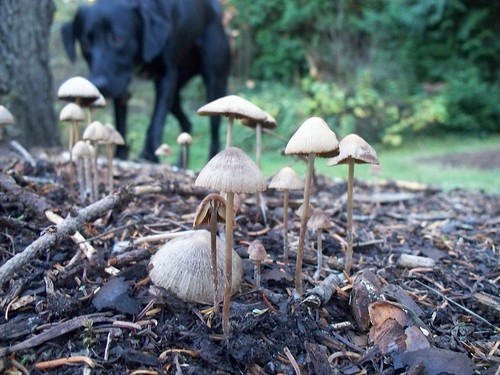
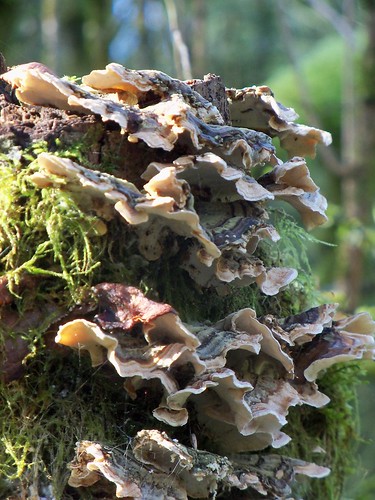
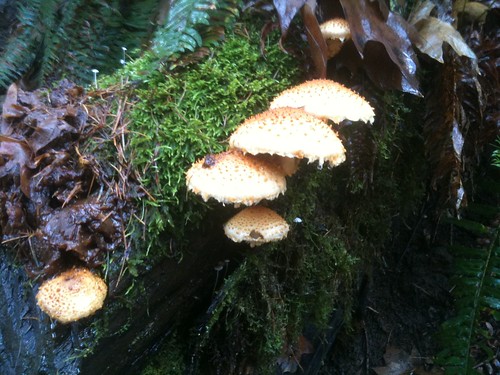
The cool and wet weather is bringing out a special kind of wildlife in the woods of Western Oregon - the mushroom. Every walk this last week has brought me strange and amazing visions of the fungal world. Tall and skinny mushrooms, fat little toadstools, shelf fungus firm, frilly, white and brown, entire logs covered in mushrooms and mushrooms shooting out of the leaf litter under the trees. Some logs have patches of fungus growing on them that seem to ooze a deep red liquid and others collect drops of water like a jeweled crown. The diversity of forms is really mind blowing even just in the small areas and single ecosystem I have been exploring.

What we call mushrooms are the fruiting bodies of fungus that live in soil, rotting wood or some other substrate. Fungus is one of the five major categories of life (the others being bacteria, protists, plants and animals) and despite their outward similarity with plants, they are actually more closely related to animals in many ways. Mushrooms, a specific kind of fungus, can be found in an astonishing array of habitats and are vitally important parts of their ecosystems. They are decomposers, breaking down plant and animal material to get at the nutrients inside and in the process release those nutrients back into the environment for other plants and animals to use. The mushrooms we see sprouting out of logs and forest duff are actually just a tiny part of a huge organism that impregnates the wood or soil. The mycelium, the internal filament like structure of the fungus, spreads out and eats away at the material the fungus is growing in and only creates the fruiting body for a couple days or a couple weeks at most. 
Shelf Fungus in Forest Park

Mushrooms fascinate me. They are mysterious and unlike other living creatures I know in really fundamental ways. Many of the websites I've checked out recently to learn about them use the word cryptic to discuss their life cycle and habits. They inhabit the deep part of the forest but create these amazing and beautiful bodies that push out into the light and they do that so quickly that the English language uses their name, mushroom, to describe something that multiplies almost too fast to be measured. They are an important part of cleaning up the detritus of a forest, making sure nutrients are recycled for reuse and many are eaten by other forest creatures. Some species are even eaten by humans while others are important medicines, some are so poisonous they kill almost instantly and some do other crazy things to our brain chemistry. They are deep, dark forest magic. Not like us at all, but vital members of their communities.

*** *** ***

Mushrooms Berkeley 


A classic recipe from the Vegetarian Epicure by Anna Thomas. Described as such "The mushrooms and peppers will be very dark and evil looking, but irresistible in flavor and aroma."


1 lb mushrooms, halved

1 medium bell peppers, cut in 1-inch squares
1 onion, peeled and chopped
1/2 c butter

Sauce

2 T Dijon mustard
2 T Worcestershire sauce
1/2 c brown sugar (or less)
3/4 c mellow red table wine
Fresh ground black pepper
Seasoned salt

Melt butter and saute onions till clear.

While sauteing make sauce. Mix together mustard, brown sugar, and Worcestershire sauce till perfectly smooth. Add the wine, season with lots of fresh ground pepper, seasoned salt to taste. Stir well

When onion is clear, add the mushrooms and peppers and saute. As the mushrooms begin to brown and reduce in size, add the sauce.

Now simmer at medium for about 45 minutes or till sauce is reduced and thickened. Serve over steak, polenta, pasta or as a vegetable side dish. 


*** *** ***
 

Mushrooms remind us of the hidden and dark parts of life. They grow in the dark, sometimes literally but always the figurative dark of wet forests and short days. The mycelium remind me that even when things look dead, like the spongy rotting logs that litter my beloved temperate rain forests, there is often much going on under the surface. The fruit will pop up only when it is ready and then it might just "mushroom" out, being so prolific we can't even believe that was just a pile of dry leaves three weeks ago. Mushrooms have completely unusual and fantastical shapes, colors, uses and jobs. They are, in short, simply unexpected and simply amazing. 
Forest Park Mushrooms

What unexpected and amazing things are popping up in your life right now? Are there mushrooms sprouting in your yard or some other neat natural growth in these dark days of winter? Do you have a favorite mushroom recipe or do you generally stay away from the fungus? Is this a time of hidden growth deep inside the rotting log of your life or are ideas or projects ready to mushroom out? Happy winter!

**** **** **** **** **** **** ****


Death Moon 2011:
The End of the Year, Favorites and Living in Relationship

Death Moon 2010:
Night and Day , Wear it As Long as Thou Canst, and Doggy Heaven (still makes me cry years later) 

Death Moon 2009: 
The Soldier and Death (one of my all time favorite posts!) and Moving From the Season of the Dead

Death Moon 2008: Full Moon in Taurus and Time is a Circle

Wednesday, October 10, 2012

Outdoor School Harvests

Full Harvest Moon

**** **** **** **** **** **** ****


I'm falling behind again in my posting but this time because I am busy and working hard, not because I am off gallivanting. As my summer job came to a close I was lamenting my lack of employment for the fall and a friend suggested I apply for outdoor school. "You'd love it, and they'd hire you in a minute," she said. I sighed and agreed. "You're right, you're right... I know you're right."

Smith Lake, my office
For those of you who did not grow up in northwestern Oregon, a little background. Outdoor School is a residential environmental education program that started by the school districts in the counties around Portland in the late 1960s. It has grown into a beloved tradition for 6th graders to go to camp with their science classes and generations of high schoolers have come to outdoor school as counselor-teachers. Even with the budget cuts in recent years, the Outdoor School programs in the Portland area have survived and continue to give teenagers these really important and empowering experiences.

I went to Outdoor School as a middle schooler and counted the days until I could go back as a counselor, which I did 6 times before I graduated from high school and another time the fall after I graduated. I joke that I went to college to become a camp counselor and got my dream job working for the Oregon Museum of Science and Industry's science camp and outdoor school. I worked at camp for a summer and a fall before I decided that I wanted a kitchen, a dog, and a home in town rather than camp life.

Sunset from Camp
Seven years later, after a circuitousness route of work and school, I'm back at outdoor school. It's all the magic I expected and more. Within two minutes of meeting my co-workers I knew we were going to hit it off great and have a really fun fall. The work these last two weeks has been physically exhausting, emotionally draining and absolutely mind blowingly awesomely fun. The high schoolers rise to our extraordinary high expectations and the sixth graders bring energy like you wouldn't believe to our camp community. We adults pull together to support each other while making each other laugh until we cry almost every day. I can not discount the awesomeness of spending all day every day in the woods by the ocean surrounded by squirrels, racoons, chickadees and gulls.

The Harvest Moon


A touch of cold in the Autumn night
It is the Harvest Moon! On gilded vanes
  And roofs of villages, on woodland crests
  And their aerial neighborhoods of nests
  Deserted, on the curtained window-panes
Of rooms where children sleep, on country lanes
  And harvest-fields, its mystic splendor rests!
  Gone are the birds that were our summer guests,
  With the last sheaves return the laboring wains!
All things are symbols: the external shows
  Of Nature have their image in the mind,
  As flowers and fruits and falling of the leaves;
The song-birds leave us at the summer's close,
  Only the empty nests are left behind,
  And pipings of the quail among the sheaves. 

Henry Wadsworth Longfellow 

Coastal Huckleberries, the best part of camp.
Coming back to Outdoor School reminds me of the harvests I have reaped from my own past experiences and the harvests I hope I am sowing now. I come back to camp because being a part of a community that really works feels so warm and loving. A good camp community is one where every person is working to make sure that every other person is succeeding and growing. Camp is a community pressure cooker, where we go from strangers to bosom buddies in the matter of a few days and where life long relationships begin. As a teenager, I met caring adults at camp who were able to identify strengths I didn't know I had and grow towards a wholeness I wasn't sure I could achieve. As I looked back over the evaluations my supervisors wrote and felt both intense gratitude and awe at how insightful they were. 

As I complete this week's round of counselor evals I hope that I can be even half as helpful to the teenagers I am working with as my staff supervisors were. I hope that these teen counselors can see a vision of themselves as confident leaders and knowledgeable teachers. I want everyone at camp, the staff, the counselors, the students, the kitchen staff and the teachers to see what a functional community looks like and maybe be able to take that experience into their futures. I want the students and counselors to have good emotional experiences in the woods and beach so they can begin to build a conservationist ethic. I hope that my actions here, and my part of this community, can do what Mother Teresa's words (which are posted in every bathroom at my camp) ask of us:

"Let no one ever come to you without leaving better and happier. Be the living expression of God's kindness: kindness in your face, kindness in your eyes, kindness in your smile."

My camp name and red vest of power
The full Harvest moon found me and my camp co-workers out on the beach for a bonfire. We played tackle catch with a glow in the dark ball, talked about the week and laughed a lot. The tide was exceptionally high (it was a spring tide) and we ended up having to move our active camp fire with our bare hands. The Harvest Moon asks us questions about the fruits of our labors in the physical, emotional and spiritual realms. Coming back to Outdoor School has left me thinking about my harvests this fall, and my hopes for future harvests. I really feel like I am working to make the world a better place when I work at camp. Even when we are at our silliest... or maybe mostly when we are at our silliest.

What are your harvests this autumn? What future harvests are you sowing for? Did you get to go to Outdoor School or other camps as a kid or young adult? How is autumn shaping up where you live?

**** **** **** **** **** **** ****

Harvest Moon 2011: C.S. Lewis on Praise and An Ill Harvest

Harvest Moon 2010: Harvest Moon 

Harvest Moon 2009: The Harvest Moon is New and The Moon When Squirrels Throw Acorns at You (Inexplicably, my most viewed post. Ir has been viewed over 500 times, more than two hundred times more than my second most viewed post. Curiouser and curiouser.)

Sunday, September 30, 2012

The Morning Swift Show

Autumn Equinox

**** **** **** **** **** **** ****


Some people think the most wonderful time of the year is Christmas but I know it is September. Gorgeous weather, cooler nights, the colors of autumn starting to show. I just love it.

The Morning Swift Show
I have a long standing tradition of waking up for the sunrise on the equinox and a separate tradition of viewing the Vaux's swifts at Chapman school in September but this year I finally combined them. For years, I've been wondering if the birds put on a show in the morning when they leave the roost so this year I combined my traditions and went to see the Morning Swift Show. September 20th was a windy morning and cool, but the sky was clear and it was evident that it was going to be a warm day. I arrived at the school about 10 minutes before the official sunrise time and there were three other intrepid souls waiting for the bird, a hipster couple wrapped in a mexican blanket and an older gentleman with a notebook and binoculars. Just after the published sunrise time the birds started to come out of the chimney, not in the swirling mass they go in with, but like a fountain dripping over the side. The birds would leap out and fall for a couple feet before flapping their wings and flying off into the new day. The Peregrine falcons, a regular visitor to the evening Swift Show, was there with a mate or a friend. Both were very successful in nabbing breakfast. As the sun rose above the clouds the rush of birds ended and I walked across the park to the dog park. Now I know what happens to the swifts in the morning, and it was fun to have the spectacle almost all to myself. 

Steiner identified the archetypical festival of this season as Michaelmas, the celebration of the God's warrior overcoming a dragon or serpent. It is the time when we face our own fears and earn a spark from Michael's iron sword to light our lanterns through the winter. But first, we get to bask in the glory that is autumn. My favorite time of year.

What did you do to celebrate the equinox? What dragons are you facing? When was the last time you got up for the sunrise? How is autumn progressing where you are? Happy equinox!

**** **** **** **** **** **** ****
Autumn Equinox 2011: Michaelmas Season and Michaelmas Photos

Autumn Equinox 2010: Here Be Dragons and A Dragon Tale for Michaelmas 
 
Autumn Equinox 2009: The Autumnal Equinox and The Earth is Breathing its Soul Back In


Thursday, December 29, 2011

Wolves at the Gate


New Birth Moon

**** **** **** **** **** **** ****

    “Lose the bobcat?” she asked him.
    “No, lost you. For a while.”
    “Not for long, I see.”
    He was wearing his hat again, with the brim pulled low. She found it harder to read his eyes. “You weren’t after that cat today,” he accused. “That trail’s a few days old.”
    “That’s right.”
    “I’d like to know what it is you’re tracking.”
    “You’re a man that can’t hold his horses, aren’t you?”
    He smiled. Tantalizing. “What’s your game, lady?”
    “Coyotes.”
    His eyes widened, only for a second and a half. She could swear his pupils dilated. She bit her lower lip, having meant to give away nothing. She’d forgotten how to talk with people, it seemed – how to sidestep a question and hide what was necessary.
    “And bobcats, and bear, and fox,” she piled on quickly, to bury the coyotes. “Everything that’s here. But especially the carnivores.”
    She shifted, waiting, feeling her toes inside her boots. Wasn’t he supposed to say something after she finished? When he didn’t, she suggested, “I guess you were looking for deer the other day?”
    He gave a small shrug. Deer season was many months over and gone. He wasn’t going to be trapped by a lady wildlife ranger with a badge. “Why the carnivores, especially?” he asked.
    “No reason.”
    “I see. You’re just partial. There’s birdwatchers, and butterfly collectors and there’s gals like you that like to watch meat eaters.”
    He might have known this one thing could draw her talk to the surface: an outsider’s condescension. “They’re the top of the food chain, that’s the reason,” she said coldly. “If they are good, then their prey is good, and its food is good. If not, then something’s missing from the chain.”
    “Oh yeah?”
By Jerolek
    “Yeah. Keeping tabs on the predators tells  you what you need to know about the herbivores, like deer, and the vegetation, the detritovores, the insect populations, small predators like shrews and voles. All of it.”
    He studied her with a confusion she recognized. She was well accustomed to watching Yankee brains grind their gears, attempting to reconcile a hillbilly accent with signs of a serious education. He asked finally “And what you need to know about the shrews and voles would be what, exactly?”
    “Voles matter more than you think. Beetles, worms. I guess to hunters these woods seem like a zoo, but who feeds the animals and cleans up the cage, do you think? Without worms and termites you’d be up to your hat brim in dead tree branches looking for a clear shot.”

 *** *** ***
The new moon this month is the new Birth Moon in Annette Hinshaw's calendar and the new Wolf Moon in Jessica Prentice's. It is the dark of winter, the testing place of the wisdom and support we gathered over the last summer both physically as well as emotionally and spiritually. Did the fields and herds provide enough food for us this year? Did we store enough food to last the winter? Do we have the friend and kin support to get us through the dark times?  

Humans are like other large animals top predators in that we require huge amounts of land to support our needs. Each one of us requires entire armies of farmers and ranchers, crop plants and livestock animals, food packagers, butchers and cooks to meet our food needs. Estimates of how much land a human needs to meet their food needs range from 1/5 of anacre to over 10 square miles, depending on the climate and intensity of agriculture, but no matter what, we are resource intensive creatures. In the last 50 years agriculture in the western world has changed drastically with the input of petroleum fuel and chemical fertilizers, reducing some of the human labor required to feed our growing population that now tops 7 billion souls. Unfortunately, this oil based food system is not sustainable in the long term. Unlike natural ecosystems, it both requires an in put that is not renewable and 
By Ricky NJ
it also produces waste that is not useable by the system. In fact, the waste and destruction caused by our modern agribusiness practices makes the entire ecosystem unhealthy for both humans and many other animal and plant species.

Wolves and other large carnivores were some of the first species to feel the effects of western civilization as we developed the technology to take the land we needed for our agriculture. Wolves were hunted virtually to extinction in Europe and North America as industrial agriculture grew and by the middle of the 20th century there were only remnant populations in the far reaches of their former range. The environmental movement of the last 40 years has changed the way both the public and the government views wolves, however, and in the 1990s there was a program to reintroduce wolves to the northern Rocky Mountain areas of Idaho and Wyoming. By 2004 the original couple dozen wolves relocated from Alberta,Canada to central Idaho had expanded to over 450 animals and some of those were making their way across the Snake River into Oregon. Nearly sixty years after the last wolf bounty was paid in Oregon, the fish and wildlife department confirmed two pups born to the small Imnaha pack, the first in the state. Six more pups were confirmed in the 2009 breeding season and there are two other packs now roam the wilderness of north eastern Oregon.

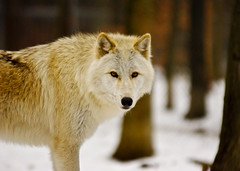
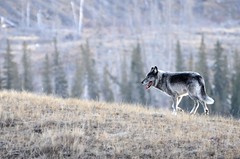
This autumn big news broke when a young wolf left his home pack and started heading west across Oregon. By December OR 7, as he is known, had traveled over 700 miles and set up camp in the heavily forested land between Medford, OR and Crater Lake. OR 7 is a bit of a celebrity these days and his journey, and the notoriety it is getting, is stirring up the rural/urban, rancher/conservationist divide over the reintroduction of wolves to Western States. Like Eddie Bondo, the Wyoming rancher and hunter in Barbara Kingsolver’s Prodigal Summer which I excerpted above, many people in rural Oregon view wolves as threats to their livelihood. The irony, of course, is that wolves returning to their mountains are in direct opposition to the real threat to their livlihoods.

By Fremlin
In Kingsolver’s beautiful novel, Eddie learns from the forest ranger Deanna about how important large carnivores are to the entire ecosystem they live in. Yes, large carnivores kill young and weak livestock, but another character in the novel notes that there are 10 other ways she might be responsible for the death of her animals. In fact, the land that supports a healthy population of carnivores can support a larger and healthier population of grazing animals. Even crop farmers benefit from the healthy ecosystems that support wolves, coyotes, bobcats and cougars. Those ecosystems provide clean water, balanced insect populations and habitat for pest rodents to live in so they are less likely to harass stored grains. Turns out, healthy ecosystems make for healthy farms, which in turn allow all people to live healthier lives.

I think one of the hardest things to wrap my city born brain around is just how detrimental our culture is to both wild things and to our own lifestyles. Our current practices of mining the earth’s resources are simply not sustainable – and I don’t mean that in the green washed way that Whole Foods or American Apparel mean it. I mean really, really for real, there is not going to be enough food, clean water, breatheable air or fertile soil to support the human population. We are filling our house with garbage and toxic waste, eating everything out of the fridge and refusing to see that things can’t go on like this.

The struggle for me, an environmentalist who cares about food issues and wildlife issues and really knows all about this stuff, is what to do on a daily basis. How do I make changes in my life that make it more sustainable, without abandoning civilization and living off dumpster diving and walking everywhere? I currently live a life that requires a car, and electricity and buying food at the grocery store. How do I take steps towards a life that this earth can actually support? Jessica Prentice quotes Martin Prechtel, the author of the book The Party’s Over, as he talks about the big, mechanized slug of a culture of progress. This “culture crushing mentality” has left behind a homogenized, lifeless civilization of freeways, big box stores and franchise restaurants. My sister went to India and her traveling partner insisted on eating McDonalds and KFC. It is mind boggling that you even can eat that food 
By Eoin C
so far away from the American heartland where it was invented! How do I fight this overwhelming slug without being a total outsider to my culture and community?

Prentice and Prechtel leave us with a simple, yet profoundly life shifting call to action; to recreate the interpersonal relationships found in our ancestral villages. Not to reject modern civilization (I do truly believe that appropriate technology will be profoundly useful in creating a sustainable culture) but building the human community within our civilization that makes life meaningful, valuable and worth honoring. In terms of food, this community is built through becoming a producer as well as a consumer, and trading with other individual producers. Buying eggs from a neighbor or local farmer, shopping for vegetables at the farmer’s market where you can shake the hand of the woman who grew your cauliflower, trading your dried oregano and wild harvested nettles for your neighbors apples or lettuce. These things allow us to see each other as valuable individuals, not just cogs in the wheel or obstacles on the way to our own fulfillment.

By Wiz411
We can create these webs of relationship in ways that don’t involve food, too. Taking the bus or walking allows us to really see our neighbors (and sometimes hear them, and smell them but that’s how we know they are real people). My group of friends is great at having the kinds of parties that allow us to build relationships, like Christmas lights viewing or cheese and wine parties or trips to the pumpkin patch. My church, like so many other places of worship, is another bastion of community relationships. When I was having such a dark time this last fall I realized that the culture of my church community involved explicitly being open with our needs and equally explicit with our ability to help each other both through encouragement and physical or material assistance. I learned that I had to be equally explicit with my non-church friends and once I did my needs were met quickly and lovingly.

The wolf is at the gate, this time of year. The days are dark and we are lonely, both in our daily lives and in our cultural life. Wolves show us how interconnected we all are and how important strengthening and honoring those connections really is. How connected do you feel these days, to your friends and family, your community and your larger ecosystem home? How do these connections nourish you, ground you or leave you feeling confined? Who do you like to buy your food from or share your food with? Do you have any wolf, coyote or other large predator sighting stories to share?  

**** **** **** **** **** **** ****

** This winter was tough and I got messed up in my calendar. I wrote this thinking it was the Milk Moon but it was really the Birth Moon. Since the post itself is more about the Wolf Moon, I just changed the tags and labels. For more on my thoughts about this, see this post. **

New Birth Moon 2008: Waiting

New Birth Moon 2009: Advent, Awaiting the Birth

New Birth Moon 2010: Winter is Dark, Yet Each Tiny Spark


My full Milk Moon post in January of 2010 is also about the Wolf Moon, and retells the wonderful story of St. Francis and the wolf of Gubbio.

Friday, September 2, 2011

The Book of Nature

New Nesting Moon
**** **** **** **** **** **** ****


When I was 21 I began observing the moon. I was well versed in the natural history and geology of my environment, but was woefully ignorant of how the sun and the moon cycles worked. Maybe I was inspired by the months on end of clear skies in Southern Oregon or maybe it was my continuing interest in nature based spirituality. Maybe it was God tapping me on the shoulder and pointing her finger at something I should check out. Whatever it was, I faithfully watched the moon for cycle after cycle that year.

What I found amazed me. I was enthralled by the shapes the moon takes, the patterns on its surface and the relationship between the moon and the sun. I watched the moon wax and wane, and also found myself watching the seasons wax and wane. I saw the sunset move up and down the crest of the hills and the angle of light rise and fall with the seasons. I felt how the earth seems to wake up, be full, release its energy and then hibernate as the seasons wax and wane like the moon herself. I kept watching, kept observing month after month, year after year. The rhythms of day, month, season and year started to feel natural and deep, like my own heart beat and breathing.

I have felt God's presence in nature for much longer than I have ever felt it anywhere else. I knew the liturgy of growing plants long before I knew any church liturgy and heard God's voice in song birds and streams long before I heard it in a meeting for worship. Today, my primary language for accessing God is still the language of the living earth and especially of the natural rhythms of the sun and the moon. I see all life moving in these cycles, from the compact and huddled seed in winter, to the shooting growth of spring, the fullness and flowering of summer into the dissipating, conserving, slowing comfort of autumn. Gardens, creative projects, human lives and even civilizations move in these cycles. Breathing into these cycles, living fully in them and allowing them to unfold seems to me to be the best, highest and closest to God way to live my life.

Our culture seems to be an always on, always up, always growing kind of culture. But do you remember what cells that don't stop growing are called? Cancer. Plants that don't stop growing, like kudzu or English Ivy, are choking weeds. Sun that doesn't stop shining creates deserts like the lifeless land of the planet Venus. I feel deep in my bones that cycles of growth and constriction allow a chance for starting over, for assessing the last period of growth and for resting. I know God is in all parts of this cycle. I feel her in the pruning and contracting of autumn just as much as in the growth and light of spring. God is even in the hibernation and death of winter. God, my mother, knows and loves me through all parts of the cycle. God, my father, uses the cycle to encourage me to grow and challenge myself. The book of nature and the book of time are, to me, the fullest and most beautiful books God has written to help me navigate my life. And all I have to do is watch.

*** *** ***

This post was inspired by both my Quaker Meeting's literary journal query for the Autumn and a Rob Breszny horoscope from a couple weeks ago. The query is "How have you experienced god's presence in nature?" (which I chuckled at a bit - I've been writing about that twice a month for three years and still haven't exhausted all I could write about) and the horoscope is below:

Storyteller Clarissa Pinkola Estes loves life's natural rhythms just as they are. She says we can avoid a lot of suffering if we understand how those rhythms work. "The cycles are birth, light, and energy, and then depletion, decline, and death," she told Radiance magazine. In other words, everything thrives and fades, thrives and fades. After each phase of dissipation, new vitality incubates and blooms again. According to my analysis of the astrological omens, Virgo, you are currently going through a period of dwindling and dismantling. The light is dimmer than usual, and the juice is sparser. But already, in the secret depths, a new dispensation is stirring.

**** **** **** **** **** **** ****

New Nesting Moon 2009: Breathe a Sigh of Relief

New Nesting Moon 2010: Ramadan


My Summer Solstince/Pagan Value's Blogging Month post from this summer is on a similar theme of cycles in nature: Circles, Cycles and Pulses: Pagan Values Blogging Month

Saturday, June 18, 2011

June is Pagan Values Blogging Month

The Full Journey Moon

Full Journey Moon 2009: A Journey for the Journey Moon

Journey Moon 2010: The Journey Moon

**** **** **** **** **** **** ****

"We must not be afraid to discuss the values and virtues and ethics we have discovered in our contemporary Pagan faiths. There are enough books on rituals and spells and prayers to last us a few generations… lets start writing works on confronting poverty and hunger from Pagan perspectives. Let us set aside the fear of prejudice, and the once glamorous but now tattered and worn mantle of the outsider and the rebel, and take pride in ourselves and our faiths, in our works and lives and worship and in our Pagan communities and our larger communities." - Pax, author of Crysalis

June 2011 is the 3rd Annual Pagan Values Blogging Month, a great project that aims to get pagans of all stripes to be both thoughtful and vocal about the things they care most about. Some bloggers have chosen to confront broad topics of historical pagan values, or the values and ethics of movements, traditions or denominations within contemporary paganism. From both a practical and ethical standpoint, I can not begin to discuss such broad and impersonal topics but can only speak as to my own beliefs and values. I am a pagan, but I am also a Quaker and Quakers put great emphasis on speaking only as far as your leading takes you; to not go beyond the measure of light that we have been given. I can only speak about my own values and beliefs, but I hope to be able to discuss how my background in both pagan and Quaker thought and worship have informed my values.

June 2011: What do I value?

My personal value s are inspired and informed by my dual identity as both pagan and Quaker. I see the core of my values as a two sided coin with relationships on one side and self actualization on the other. The interaction of these two forces creates a motion that we physical beings live within, a motion and a force that does the work of building, rebuilding and healing our world.

As a pagan I see the root of my spirituality as a deep connection between myself and a mother goddess spirit, who in turn has a deep connection with every other person, animal, plant, and non living thing on the planet. The Mother loves me like her special child, but she loves you, that guy over there, this tree, my dog, the soil, thunderclouds, bushtits, spiny lobsters and wildfires just as much. I am bound fast to all the myriad things in that strong and vast web of loving connection. It is easy to forget our connection to the goddess and the rest of creation, but by constantly seeking knowledge, experience and wisdom we can become better citizens of this interconnected web.

Quakers see a similar web of connection through what they call the Light of Christ present in each person. By recognizing that God works through all people, all people must be listened to, cared for and treated as an agent of the divine. Coming out of that realization Quakers see personal authenticity and individual seeking as important components of a spiritually rich life. We can not listen to the voice of god if we are busy with unimportant things and practicing the fine art of discernment is highly valued in Quaker communities.

When I first started meditating on the question of what do I value the very first thing that came to mind was education. I spend vast amounts of time in my own personal life learning things so I can be a smarter, wiser and better person. I read voraciously, practice skills of observation and discernment, enjoy sharing what I know with others. I created a vision statement for myself last fall and used the phrase “I am an ambassador of the universal divine on a journey to explore life on earth and share what I discover.” It is my job to constantly work to get better, smarter, bigger, happier, and wiser. Quakers and other Christians call this becoming more Christlike. Some pagans call this becoming a priestess. Psychologists call it getting closer to self actualization and Havi might call it destuckification or biggification and Rob might call it cultivating pronoia. Whatever we call it, it is of the utmost importance to me.

In fact, I am prone to thinking it is more important than it is. I tend to value intelligence over genuineness, cleverness over bigheartedness and worldliness over simple faith. All virtues can become vices if taken to an extreme and I am grateful that I have been presented with a number of lessons to remind me that humility is a worthy virtue as well.

Many of those lessons come through experiences with community. Quakers believe that a true leading from god will be verified by the discernment of the community. My pagan theology says that nothing is truly virtuous unless it benefits the community, and nothing can be evil if it has benefit to some member of the community. Ed Espe Brown, the author of the Tassajara Bread Book and an early spiritual mentor of mine, wrote once that living in community is like living in a rock tumbler. He feels his time at Tassajara Zen Community was a time when he was rubbed against other people and his sharp edges were worn away into smoothness. I’ve met people who don’t have strong communities and I think of them as like the 40 foot long gypsum crystals in the Naica mine in Mexico. They are beautiful and perfect in their own way, but fragile, sharp and brittle. Tumbled rocks, rocks that have rubbed against other rocks in the community of a stream or a rock tumbler, are just as beautiful but with a sense that they have been tested and hold up against the forces of life. A community of seekers, acting authentically and with caring, can be that testing ground and polisher for a person. 

Relationships and biggification. Self actualization and community. The inward focus and the outward push. Like yin and yang or male and female, the pull between these seemingly opposing forces creates motion that propels us forward. In the end, I believe we will be judged by our actions but the impulse behind our actions is vitally important. All of the other things I value like safe and clean food, protection of the natural environment, equal rights for all people, the reduction of pollution and waste, the increase of beauty and truth are rooted in this interplay between an inward seeking and an outward connection. We must actively care for our communities, both human and non-human, and we must base that care in the interplay of inward and outward, benevolent altruism and informed self interest. What is good for the web is good for me, and what is good for me is good for the web. 

Right now our web is sick and hurting. There are bright spots of self actualization, healing and beauty but there are more places of bleakness, brokenness and despair. I believe that we are here, in the physical, mental and spiritual form we are in because God needs this form to do some specific work. There are things that can only be done with our human bodies, human minds and human hearts and we must find out what those things are and do them. The dual impulses of becoming more authentically ourselves and becoming more authentically in community is the way forward to find that work and successfully do it.