Showing posts with label death moon. Show all posts

Friday, November 30, 2012

Mushroom Season

Full Death Moon

**** **** **** **** **** **** ****

It is distinctly winter here in Portland. I spent these weeks around Thanksgiving dog sitting for a number of families and have been very busy getting a whole pack of dogs tired, work that means hiking in the woods and fields every day. The days have been cold and wet, but some more cold and more wet than others. Some even sunny lately. They say if you don't like the weather in Oregon just wait a few minutes. With about five weeks of rainy weather behind us, the ground is getting saturated and the trails are starting to get muddy - muddy trail season is a distinct time of year in my lived calendar. The days are short with the sun coming up just after 7 and it being quite dark by 5pm but my "work" has had me outside about as much as I want each day, a real luxury this time of year. 


Hoyt Arboretum Mushrooms
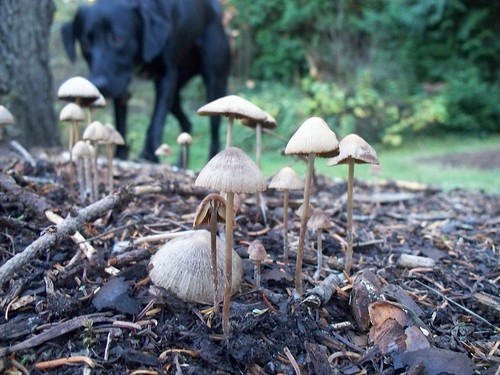
The cool and wet weather is bringing out a special kind of wildlife in the woods of Western Oregon - the mushroom. Every walk this last week has brought me strange and amazing visions of the fungal world. Tall and skinny mushrooms, fat little toadstools, shelf fungus firm, frilly, white and brown, entire logs covered in mushrooms and mushrooms shooting out of the leaf litter under the trees. Some logs have patches of fungus growing on them that seem to ooze a deep red liquid and others collect drops of water like a jeweled crown. The diversity of forms is really mind blowing even just in the small areas and single ecosystem I have been exploring.

What we call mushrooms are the fruiting bodies of fungus that live in soil, rotting wood or some other substrate. Fungus is one of the five major categories of life (the others being bacteria, protists, plants and animals) and despite their outward similarity with plants, they are actually more closely related to animals in many ways. Mushrooms, a specific kind of fungus, can be found in an astonishing array of habitats and are vitally important parts of their ecosystems. They are decomposers, breaking down plant and animal material to get at the nutrients inside and in the process release those nutrients back into the environment for other plants and animals to use. The mushrooms we see sprouting out of logs and forest duff are actually just a tiny part of a huge organism that impregnates the wood or soil. The mycelium, the internal filament like structure of the fungus, spreads out and eats away at the material the fungus is growing in and only creates the fruiting body for a couple days or a couple weeks at most. 
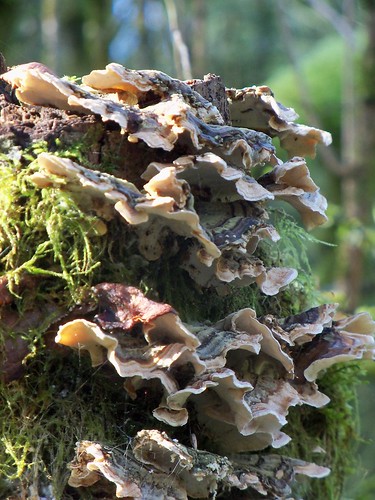
Shelf Fungus in Forest Park

Mushrooms fascinate me. They are mysterious and unlike other living creatures I know in really fundamental ways. Many of the websites I've checked out recently to learn about them use the word cryptic to discuss their life cycle and habits. They inhabit the deep part of the forest but create these amazing and beautiful bodies that push out into the light and they do that so quickly that the English language uses their name, mushroom, to describe something that multiplies almost too fast to be measured. They are an important part of cleaning up the detritus of a forest, making sure nutrients are recycled for reuse and many are eaten by other forest creatures. Some species are even eaten by humans while others are important medicines, some are so poisonous they kill almost instantly and some do other crazy things to our brain chemistry. They are deep, dark forest magic. Not like us at all, but vital members of their communities.

*** *** ***

Mushrooms Berkeley 


A classic recipe from the Vegetarian Epicure by Anna Thomas. Described as such "The mushrooms and peppers will be very dark and evil looking, but irresistible in flavor and aroma."


1 lb mushrooms, halved

1 medium bell peppers, cut in 1-inch squares
1 onion, peeled and chopped
1/2 c butter

Sauce

2 T Dijon mustard
2 T Worcestershire sauce
1/2 c brown sugar (or less)
3/4 c mellow red table wine
Fresh ground black pepper
Seasoned salt

Melt butter and saute onions till clear.

While sauteing make sauce. Mix together mustard, brown sugar, and Worcestershire sauce till perfectly smooth. Add the wine, season with lots of fresh ground pepper, seasoned salt to taste. Stir well

When onion is clear, add the mushrooms and peppers and saute. As the mushrooms begin to brown and reduce in size, add the sauce.

Now simmer at medium for about 45 minutes or till sauce is reduced and thickened. Serve over steak, polenta, pasta or as a vegetable side dish. 


*** *** ***
 

Mushrooms remind us of the hidden and dark parts of life. They grow in the dark, sometimes literally but always the figurative dark of wet forests and short days. The mycelium remind me that even when things look dead, like the spongy rotting logs that litter my beloved temperate rain forests, there is often much going on under the surface. The fruit will pop up only when it is ready and then it might just "mushroom" out, being so prolific we can't even believe that was just a pile of dry leaves three weeks ago. Mushrooms have completely unusual and fantastical shapes, colors, uses and jobs. They are, in short, simply unexpected and simply amazing. 
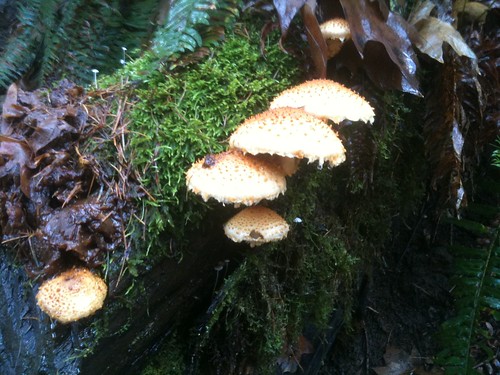
Forest Park Mushrooms

What unexpected and amazing things are popping up in your life right now? Are there mushrooms sprouting in your yard or some other neat natural growth in these dark days of winter? Do you have a favorite mushroom recipe or do you generally stay away from the fungus? Is this a time of hidden growth deep inside the rotting log of your life or are ideas or projects ready to mushroom out? Happy winter!

**** **** **** **** **** **** ****


Death Moon 2011:
The End of the Year, Favorites and Living in Relationship

Death Moon 2010:
Night and Day , Wear it As Long as Thou Canst, and Doggy Heaven (still makes me cry years later) 

Death Moon 2009: 
The Soldier and Death (one of my all time favorite posts!) and Moving From the Season of the Dead

Death Moon 2008: Full Moon in Taurus and Time is a Circle

Saturday, December 10, 2011

Living in Relationship

Full Death Moon

**** **** **** **** **** **** ****

During one of the last really difficult times in my life I found myself on a bus in Providence, Rhode Island right around this time of year, in fact. It was a terrible, dumb night and I looked out the window to see a sign on top of a cab that read, "Sometimes you're the pigeon, and sometimes you're the statue." It felt apt then, and it still feels pretty apt.

Life is hard and sometimes we make it harder than it needs to be. Once again, I feel like I am being shown and asked to work through the same situation over and over again in various aspects of my life because it is just that important right now. The situation this time is all about relationships. How do we live in relationship with other? How do we form and nurture relationships when we come from very different kinds of lives? How do we nurture relationships as our lives change? How do we address issues we have with other people's actions and values within the context of relationships?

This is the darkest time of the year when days are short and cold. The Earth has breathed her soul back in, bringing back the experiences gained from a summer of living out in the cosmos to be worked into wisdom in this dark time. This inward motion pulls the creatures that live on her surface into various kinds of rest, repose and reflection. Some creatures are sleepy and dormant, others have actually died, living on only in their seeds or eggs that will burst forth in life as spring warms them. Humans, too, feel this pull to be indoors, introspective, dreamy or reflective. In some cultures winter is the time for story telling, retelling and recreating the narrative of the culture's beginnings and values each winter. In the Christian calendar this is the season of Advent, of waiting and preparing for the birth of the savior at the darkest dark point of the year. In my eclectic pagan theology, it is the time when we are also waiting, working on the wisdom we gathered during the last year's cycle and waiting for the new birth of the year at solstice.

As we consciously and unconsciously work through all the things we experienced over the last season of growth and harvest we discern patterns and come to conclusions about how our life is and how we want our life to be. The really tricky part comes when we have to make decisions about how to act on any of these conclusions.

At West Hills Friends the first light of advent was called the light of the prophets. Prophets are in direct relationship with god and speak up to their community about what they know. Their speaking up often puts them at odds with the people around them and can even sever relationships with people they used to be in strong relationship with. When Abram got word from Yaweh that he was to leave his home in Ur and travel to another land, it meant leaving behind everything and everyone he had known from childhood. John the Baptist was beheaded for his prophesying and Joseph Smith was run out of town (er, three of them), tarred and feathered and finally murdered for his prophetic visions. Being true to what you see, what you know and what you believe requires great courage and faith; courage to act despite the uncertainty and faith that you deserve to be heard, no matter the outcome.

The second light of advent this year at West Hills Friends was dedicated to the Angel Gabriel and those who receive his word with wonder. Our pastor told the story of Zachariah who, when told that his wife would become pregnant in her old age, asked how that would be and was promptly struck dumb. Many people consider this a punishment on Zachariah for questioning the Angel, but our pastor pointed out that Mary asked the same question and was not silenced. Zachariah's silence, our pastor argued, was a gift. He didn't have to explain himself, he didn't have to expound on his experience and he didn't have to defend his actions, belief or wonder. I see parallels between Zachariah's silence in the face of mystery with the silence of plants, the correspondence for the second week of advent in the Waldorf tradition. Plants and trees stand tall in the face of all the glory and mystery that is life on this planet.

Sometimes, as we wrestle with how to be in an authentic relationship with other people that is true to our own needs and beliefs, but also loves and honors the other person's innate humanity, we wrestle with these polar positions of speaking and being silent. How do we speak our truth with courage? When do we stay silent in the face of wonder that is god incarnate in another person's life? When do we speak up to protect our own integrity and how do we stay silent when we don't understand what is going on?

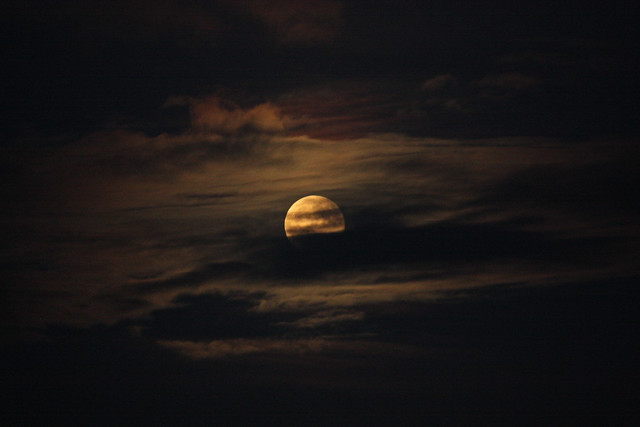
This month's full moon, the full moon in both the Death Moon and the Moon of Long Nights, is asking us all these questions and more. The full moon was fully eclipsed over much of the world on the night of December 10 and it feels like that eclipse brings even more questions and mysteries. As we spend these last two weeks sinking further into the darkness before the solstice, we might find ourselves wrestling with these questions. How do we live in relationship with other people? No one knows how to do it, but we all have to do it.

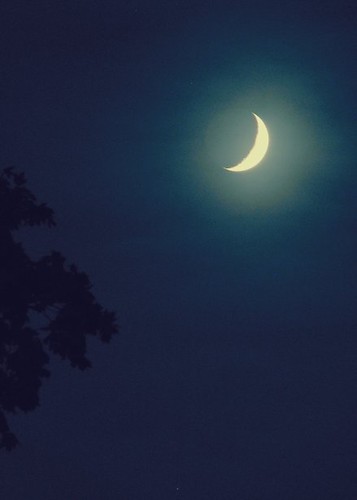
Moon photos by lamentables and jpstanley. Click on the photos or their names to see more of their amazing work. Thanks!

**** **** **** **** **** **** ****


** This winter was tough and I got messed up in my calendar. I wrote this thinking it was the Birth Moon but it was really the Death Moon. Since the post itself is more about the Moon of Long Nights, I just changed the tags and labels. For more on my thoughts about this, see this post. **


Full Death Moon 2008: Full Moon in Taurus

Full Death Moon 2009: Moving From the Season of the Dead

Full Death Moon 2010: Wear it As Long as Thou Canst

The Full Birth Moon post in 2010, The Dark of the Dark is also about a lunar eclipse.

Saturday, December 3, 2011

Favorites

Birth Moon

**** **** **** **** **** **** ****

I've always had favorite landmarks and trees and animals and views on my drives. I always note them and greet them when I drive past. I mark the changing seasons based on how they change and enjoy coming back and seeing them when my path takes me back that way after an absence. There is a potted tree on a balcony near the Marquam Bridge that I watched change with the seasons for three years. I still wave to the sign for Hugo, OR that was a landmark on my drive up from college in Ashland.


On my long drive to The Quiet Little Mountain Town I have a few... the field with the cows up near Colton, the guard llama in the field with the reservoir near Molalla and this tree. It is a huge, stately oak tree on the corner of Hwy 99E and Hwy 211 on the outskirts of Woodburn. It is so huge that it must have been there long before the Little Ceasar's pizza it now stands in the parking lot of, or the Arco and Safeway across the busy intersection. It must have stood there when this was a sleepy corner in the middle of berry, lettuce or alfalfa fields. It might even have been there when this was still a soggy oak meadow frequented by mule deer, coyotes and Kalapuya people.

But now it is a friend of mine. A big, stately tree, silhouetted against the winter sky marking my abrut turn from south to east or west to north, heralding the beginning of the scenic, post-sunrise portion of my drive of the dark, straight shot to home. Thank you, tree. Thank you for surviving. Thank you for sporting those dashing yellow leaves and now the splendid black branches against the grey sky. Thank you for surviving, and still being here to show me the way. I hope you are here for another century or more, doing your tree thing.

**** **** **** **** **** **** ****
** This winter was tough and I got messed up in my calendar. The moon that this post was written about -the Birth Moon - and the moon that it actually was according to Annette Hinshaw's calendar - the Death Moon - are not the same. For more on my thoughts about this, see this post. **

This is an extra, bonus post for the Birth Moon this year. There will be a full, solid, Full Birth Moon post next week sometime. Check out my other posts labeled Birth Moon.

Tuesday, November 29, 2011

The New Birth Moon

New Birth Moon

**** **** **** **** **** **** ****


Lest that last post leave you worried that I am drowning in depressing and darkness....

The veil has lifted. The Birth Moon is risen!


I can't tell what made the change. I finished a big writing portion of my student last week and am actually teaching now. Maybe I finally was able to hang onto the positive attitude breakthrough I've been bobbing in and out of for a few weeks. Maybe it was God showing me, through a question asked at Meeting last weekend of what would heaven look like, that really cemented the change of heart. My response was that heaven looks just like this life, only I get the unshakable, undeniable knowledge that everything that happens is part of the Divine System and really will make everyone stronger, smarter, wiser and happier. It felt like as soon as I wrote those words down the scales fell from my eyes and I really did see heaven here and now.

Yes, I'm still tired. Yes, there is tons of work and stress. But I do really, honestly feel... really know in my heart... that it is all just the work that has been set up, uniquely and purposefully, for me.

Have you ever felt this realization? How have you worked through hard periods in your life? What sooths you in times of stress the way the sight of the new crescent moon soothed me this week?

**** **** **** **** **** **** ****


** This winter was tough and I got messed up in my calendar. The moon that this post was written about -the Birth Moon - and the moon that it actually was according to Annette Hinshaw's calendar - the Death Moon - are not the same. For more on my thoughts about this, see this post. ** 

New Birth Moon 2008: Waiting

New Birth Moon 2009: Advent, Awaiting the Birth

New Birth Moon 2010: Winter is Dark, Yet Each Tiny Spark

New Birth Moon 2011: It's Hard

I also talked about Very Hard Things in the post Very Bad Things and Our Lady of Sorrows.

Saturday, November 26, 2011

It's Hard

New Birth Moon

**** **** **** **** **** **** ****


I'm student teaching right now and it is possibly the hardest thing I've ever done.

What's so hard is the commute. A solid hour each way with the sun rising halfway through the morning drive and setting halfway through the evening drive - if I leave right on time, which I rarely do. It's a long, stressful drive and it leaves me exhausted every day.

What's so hard is how tired I am. To get there before class starts means waking up at 5am. I rarely make it back home before 7pm and then it's essentially make-dinner-pack-lunch-pass-out time.

What's so hard is how lonely I am. I don't see my friends, or really have much contact with them. My days are filled with strangers and people I'm not terribly fond of. And those long, long drives.

What's so hard is how stressed out I am. I have so much schoolwork, both for the student teaching itself and for my other classes. I'm behind in everything, and this knot in my stomach hasn't really left in a couple weeks.

It's all hard, and sometimes I drown in the hardness. Sometimes I can't see out of my own Debbie-Downer attitude about being tired and lonely and stressed out. Sometimes I cry. OK, more than sometimes.

The new moon we are celebrating this weekend is the Birth Moon in Annette Hinshaw's calendar and the Moon of Long Nights in the calendar Jessica Prentice lays out. The Moon of Long Nights is the month of the Winter Solstice, the month of darkness.

In her book, Full Moon Feast, Jessica Prentice discusses a number of authors and researchers who have looked at how the human body responds to light and darkness, disease and health, known and unknown. She says something I've stated before on this blog - that our culture is a culture of light and growth and bigger, better, onward and upward but our physiology needs rest periods. Too often we deny the darkness and fallow periods in life to the detriment of our psychological, spiritual and physical health.

What is interesting to me is not so much the darkness of winter, but other kinds of darkness. I have spent a number of years allowing myself to sink into that rhythm of the seasons and have come to quite enjoy the rest that comes with the long nights and wet days of winter. What I am experiencing right now, though, is a different kind of darkness, a dark time of a trial or that dark night of the soul some people experience when they feel so far away from god. It's just so hard.

Some days, I drown in the darkness. I am lonely and sad and tired and freaked out. I am being pushed and stretched and molded and it hurts. I think about staying in bed or of driving to Texas instead of to my Quiet Little Mountain Town. Some days I am sure my friends don't care about me and I'll never be able to do what is asked of me and it will all end in disaster. It is dark, and hard.

Other days, or other hours, I can bob up out of the darkness and feel the pull of the Birth Moon even in the midst of the darkness. The Birth Moon is the time when new light and new hope is born, even in the middle of the hard. I can see clearly, my head is on straight and I know this is all for the good. The hard is the call, it is the point of it all. If I didn't do anything hard I'd never get any better and this particular hard only lasts a couple more weeks. I am actually coping well and learning so much. And the sunrises, and the beautiful mountain valleys, and the leaves and the kids are all amazing.

On these days I feel so clearly and strongly my pronoic foundational beliefs. The Universe really IS a conspiracy to make me smarter, wiser, happier and better. The difficult is doing the exact same thing as the delightful; making my life more fully useful to god's purposes. I am being tested and trained in the crucible, but it is all for the best. Hard is the calling, hard is the name of the game. But it's still really, really hard.

My family's Thanksgiving tradition is to go around the table during dinner and say what we are thankful for. This week I had four different Thanksgiving dinners with four different "families" and four different delicious spreads of food. And at each dinner I said what I was thankful for; I am thankful for my friends and family who do love me, even if my monsters sometimes try to convince me otherwise. I am thankful that no matter how poor or disadvantaged I may feel, I can still buy gas, socks and chocolate ice cream. I am thankful for the hard. It really is working to liberate me from suffering, shower me with blessings and make me smarter, stronger and happier.


*** *** ***

For the wide sky and the blessed sun,
For the salt sea and the running water,
For the everlasting hills
And the never-resting winds,
For trees and the common grass underfoot.
We thank you for our senses
By which we hear the songs of birds,
And see the splendor of the summer fields,
And taste of the autumn fruits,
And rejoice in the feel of the snow,
And smell the breath of the spring.
Grant us a heart wide open to all this beauty;
And save our souls from being so blind
That we pass unseeing
When even the common thornbush
Is aflame with your glory,
O God our creator,
Who lives and reigns for ever and ever.

A Thanksgiving prayer by Walter Rauschenbush.

**** **** **** **** **** **** ****

** This winter was tough and I got messed up in my calendar. The moon that this post was written about -the Birth Moon - and the moon that it actually was according to Annette Hinshaw's calendar - the Death Moon - are not the same. For more on my thoughts about this, see this post. ** 


New Birth Moon 2008: Waiting

New Birth Moon 2009: Advent, Awaiting the Birth

New Birth Moon 2010: Winter is Dark, Yet Each Tiny Spark


I also talked about Very Hard Things in the post Very Bad Things and Our Lady of Sorrows.

Sunday, November 20, 2011

The End of the Year

New Death Moon

**** **** **** **** **** **** ****


I just started my student teaching this week, or my "pre service teaching" as my University likes to call it (student teaching sounds too wimpy, they argue), and have been placed at a very small school in a rural community about an hour from my house. The early morning wake up is hellish, and the predawn drive a bit harrowing, but the school is very good and my cooperating teachers are going to work out really well. The real upside, besides finally getting into a classroom and beginning to actually teach, is my afternoon drives back through the farming country of the Willamette Valley. This is the land people crossed the mountains and deserts to get to, and still are, in fact (the town of Woodburn, about 40 minutes south of Portland, is the largest community in Oregon with over 50% of the population claiming Hispanic heritage). It is a beautiful country full of farms, fields and forests.

As I have been driving back and forth this week I have been noticing just how "done" the agricultural year is in the Willamette Valley. At the hop farms north of Woodburn the vines are all down and the tall support structures empty for the winter. There are many small farm stands along the way with signs up that say "Closed for the Winter", their vegetable patches empty and muddy. Alfalfa fields are mown and the rows of berry bushes are turning crimson and gold in the chilly nights. Higher up, closer to my school, most of the fields are either Christmas tree farms or horse, sheep or cattle pastures which are changing their character for the winter, too. The tall weeds are blackening and the grass is low and wet, just hanging on until spring. Horses have blankets on to ward off the chill and the sheep are woolly with their thick winter coats. One field of sheep has a guard llama in it and it took me two days to figure out exactly what that giant, woolly beast was. Everything is done growing and either dying back or just settling in for the winter. The people who work the land are settled in, too, or have moved on to other places where harvests are still happening. The land is just holding it's breath until the storms of winter come and, later, the renewal of spring.

It's the end of the cycle here at The Wheel and the Disk, too. This post marks the beginning of my fourth year of blogging. Again, this year, I posted for the new and full moon of every single month of the year plus at least one post for each eight solar holidays. In fact, I posted quite a few more posts than that, including two posts that were published in my Quaker Meeting's journal (here, and here) and two posts for Pagan Values Blogging Month (here, and here). Again, I celebrated Ramadan by finding meaningful information about Muslims, Islam and Ramadan and sharing it with my Facebook friends and then with you here at The Wheel and the Disk. My writings this year did an excellent job of highlighting the eclectic mix of inspiration I gather my own thinking from, including Quakers (and here, too), Catholics (and here, too), Buddhist stories, Greek mythology, Waldorf thought and practice and more modern stories, to name just a few. Some of my favorite posts from this year are the stories I wrote about Johnny Appleseed and Krishna and the Gopis. Neither of these stories are truly original - the plot and characters are as old as old can be - but I took them into my own self and brought them back out as original retellings.

This next year will be hard for me. One week into student teaching and I am already exhausted and overwhelmed. I wonder how this blog will fare when my time is so much more dedicated to teaching. I hope to keep writing both for myself and for you. I have seen my own thinking about the topics I explore deepen and broaden over the course of these three years and I want to keep exploring as long as I can. Next year, I would love to incorporate thoughts from another excellent book I have that is organized around the lunar months, Jessica Prentice's Full Moon Feast. She talks about seasonal food, community and connection through the lens of the seasonal round of moons. I think bringing this focus to my thinking, practicing and writing would be a wonderful challenge to align my life with my ideals about safe, sustainable and healthful food. I will take the year of blogging one step at a time, but promise to post something for each full and new moon, even if it is just a note or a photo.

As the land readies itself for the deep of winter, so do we. It is time to light our lanterns off the spark Michael took off the dying sun just those few weeks ago. It is time to bundle up, cuddle up and turn inward. Our season in the sun, expanded out towards the cosmos, has brought us a treasure trove of knowledge, now is the time to spend time working that into wisdom, as the gnomes work the sun's sparkling light into crystals during the winter.

How are you noticing the end of the year? What did you do in the last 12 months that you are most proud of, or from the last cycle you completed whether it took shorter or longer than 12 months? What wisdom did you bring back from your journeying and how are you lighting your lantern for the winter ahead? How has this blog touched you and your thinking? What would you like to see me think about, change or add next year? What was your favorite post from this last year?

**** **** **** **** **** **** ****


** This winter was tough and I got messed up in my calendar. This post was written at the right time for the right moon, but there are other posts dated the same time about a differen moon. What tha? Where was I?? For more on my thoughts about this, see this post. **
New Death Moon 2008: Time is a Circle

New Death Moon 2009: The Soldier and Death (another one of my all time favorite posts. I absolutely love this story, and am quite fond of my own retelling of it :)

New Death Moon 2010: Night and Day

I reviewed my first year of blogging at The Full Sorting Moon and my second year a Year Two Complete!

Friday, November 19, 2010

Wear it As Long as Thou Canst

Full Death Moon

Full Death Moon 2008: Full Moon in Taurus

Full Death Moon 2009: Moving from the Season of the Dead

**** **** **** **** **** **** ****

Winter is here:

A large pale moon above a frosty field in the morning sun.

Big wet snowflakes drifting through the light of a street lamp.

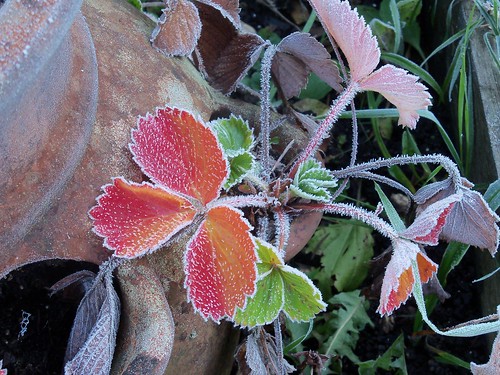
The complex, geometric beauty of frost edged leaves in my garden.

The thud of frozen leaves hitting the shed roof as they fall off the fig tree.

The shock of cold when you open the door, the ache in your feet by the end of Meeting.

Seriously, winter is HERE.

Usually, in Portland Oregon winter is more about dark and wet than it is about actual cold. Sure, what cold we have is that bone chilling damp cold, but the thermometer rarely shows truly frigid temperatures. This week, though, we are experiencing a rare arctic blast with hard frost and ice, a little snow and a high of only 30 degrees. Winter is not joking around.

Winter is a time when we become very aware of our needs. We are in extra need of warmth, shelter, food, light and friendship. Resources run thin and the elements take their extra toll. As we become aware of our own needs we are often nudged to be aware of the needs of others. The plight of needy people in our own communities seem to loom large over us as well during this time of the year. My morning commute often takes me past people begging for money on street corners and I sometimes drive past the crowd of men and women outside Portland Rescue Mission on my way home from work. When I say my evening prayers, or give thanks to god for the warm and dry places in my life I am often reminded of these people who lack what I am so grateful to have.

These unmet needs of others can feel so overwhelming if we let them. This last weekend the pastor at my Quaker meeting gave a typically irreverent and witty message, this time about our responsibilities to our community. He used the terms diffused responsibility and shared responsibility to illustrate the difference between those burdens we all pick up together and those we leave to others to pick up. He said most of us are like zebras who flee when the lion comes out of the tall grass hoping it will be someone else's responsibility to become dinner.

We Quakers, though, like many other people who feel the presence of god in their lives, try to listen to what responsibilities god is calling us to address. There is a famous Quaker story about the time William Penn asked George Fox for his advice about something that was bothering him. George Fox founded the Quaker movement after receiving his vision on Pendle Hill and forming his convictions regarding the light of god in all people. William Penn was a young aristocrat who had converted to Fox's upstart religion and was concerned about his sword. All noble men wore swords in those days but Quakers were pacifists and believed in not carrying weapons so as not to provoke violence. Penn asked Fox what to do about his sword, most likely hoping for some rule or guide to follow. Fox did not provide him such an easy answer and instead said "I advise thee to wear it as long as thou canst."

Living in the wider world of ours with all of its issues and problems also requires us to choose to take responsibility or choose to leave responsibility for someone else to deal with. Like Penn we are allowed to wear the sword of our own lives and our own needs, leaving responsibilities to the poor and needy for others for as long as we can. Eventually, though, we need to set down our sword, pick up those burdens we are able to, and do what we are can with them.

  • My Meeting held a food drive during the months of October and November and we raised over 2000 pounds of food for Neighborhood House, a non-profit community group in our neighborhood. As part of our community celebration during that time members of our congregation created a labyrinth out of boxes and cans of food.
  • I also recently joined an organization called the Harry Potter Alliance, a group using imagery and language from the books by J.K. Rowling, plus a healthy dose of competition, to organize people to fight real world problems. The current campaign is a petition to get Time Warner to use all fair trade chocolate in their Harry Potter merchandising. They call it the Starvation Wages Horcrux and hope to raise awareness of fair trade issues in chocolate production and get a large corporation to make the responsible choice with its products (p.s. Click on that link, sign the petition and Hufflepuff as your house. We have a chance to win the house cup!).
  • This week my sister felt compelled recently to solicit donations from our friends for New Avenues for Youth, a homeless youth shelter in Portland. They are asking for donations of warm clothing to help kids who are living on the street stay warm and safe this winter. We have two giant garbage bags full of sweaters, socks and tshirts to be dropped off.

None of these actions alone are going to solve the problems world hunger, economic justice or crushing poverty by themselves. They might, however, make life a little better for one person somewhere in the world. We can't take on all the world's problems alone but we can, however, cultivate our habits of gratitude and giving, fill our hearts with stories of people who have given more than seems reasonable to others, and encourage others to give what they are called to give. Together, perhaps, we can change the world for the better.

What responsibilities have you been feeling called to shoulder as winter closes in? How do you connect with god as she is found in other people? What organizations do you support as they work to help poor, sick or oppressed people? How is winter showing itself in your neighborhood?

Tuesday, November 9, 2010

Night and Day

New Death Moon

New Death Moon 2008: Time as a Circle

New Death Moon 2009: The Soldier and Death

**** **** **** **** **** **** ****

Night and Day, a Parable from Nature

In old times, long long ago, when Night and Day were young and foolish, and had not discovered how necessary they were to each other's happiness and well-being, they chased each other round the world in a state of angry disdain. Old northern tales say that they each rode across the sky in a chariot pulled by a beautiful horse, Night’s with a frosty mane, while that of Day had a shiny one. Moreover, foam fell from Frosty-mane's bit as he went along, which dropped on the earth as dew, and Shiny-mane's mane was so radiant that it scattered light through the air at every step. 

And thus they drove on, bringing darkness and light over the earth in turn—each pursuing and pursued; each thinking that he alone was doing good, and that therefore the other, so totally unlike himself in all respects, must be doing harm, and ought to be got rid of altogether if possible. Of the two, one grumbled and the other scolded the more, and it is easy to guess which did which.

Night was gloomy by nature, especially when clouds hid the moon and stars. She was really broken-hearted at the exhaustion produced all over the world by the labours and pleasures which were carried on under the light of day. She would receive the earth back as if it was a sick child and she a nurse, who had a right to be angry with what had been done to it.

Day, on the contrary, was amazingly cheerful, particularly when the sun shone and never troubled his head about what was to happen when his fun was over. On the contrary, he thought his fun ought to last for ever because it was pleasant and was quite vexed when it was put to a stop.

"Cruel Night," he exclaimed, "what a life you lead me! What trouble I have to take to keep your mischief in check. Look at the mists and shadows I must drive on one side before I can make the world bright with my beautiful light! And no sooner have I done so than I feel your cold breath trying to come up to me behind! But you shall never overtake me if I can help it!."

"I doing mischief which you have to keep in check!" groaned Night, quite confused by the accusation. "I, whose whole time is spent in trying to repair the mischief other people do: your mischief, in fact, you wasteful consumer of life and power! Every twelve hours I get back from you a half worn-out world, and this I am expected to restore and make as good as new again, but how is it possible? Some wear and tear I can renew and refresh, but some, alas! I cannot; and thus creeps in destruction and death."

"Hear her," cried Day, in contempt, "taunting me with the damage I do, and the death and destruction I cause! I the life-giver, at whose touch the whole world awakes which else might lie asleep for ever. She, the grim likeness of the death she talks about, and bringing death's twin sister in her bosom."

"You are Day the destroyer. I Night, the restorer," persisted Night, evading the argument.

"I am Day the life-giver, you Night the desolator," replied Day, bitterly.

"I am Night the restorer, you Day the destroyer," repeated Night.

"You are to me what death is to life," shouted Day.

"Then death is a restorer as I am," exclaimed Night.

And so they went on, like all other ignorant and obstinate arguers; each full of his own one idea, and taking no heed of what the other might say. How could the truth be got at by such means? Of course it could not so they persisted in their rudeness. And there were certain seasons particularly when they became more impertinent to each other than ever.

For instance, whenever it was summer, Day's horse, Shiny-mane, got so strong and frisky that Night had much ado to keep her place at all, so closely was she pressed in the chase. Indeed, sometimes there was so little of her to be seen that people might have doubted whether she had passed by at all, had it not been for the dew Frosty-mane scattered, and which those saw who got up early enough in the morning.

Oh, the boasting of Day at these times! And really he believed what he said. He really thought it would be the greatest possible blessing if he were to go on for ever, and there were to be no Night. Perhaps he had the excuse of having heard a whisper of some old tradition to that effect: but the principal cause of the mistake was, that he thought too much about himself, and too little about his neighbour.

Soon, though, she had her revenge; for when it was summer on one side the globe it was winter on the other; and then it was her turn to boast, as it was in winter that Frosty-mane came out in all his glory. During that season Night kept up a sort of murmuring triumph, "Good, good, very good: this is something like rest at last; now worn-out Nature is recruiting herself to some purpose. Now weary muscles may gather strength instead of giving it out. Now all the secret forces of Nature are at work, and exhaustion is being repaired on every side. Now trees and plants may keep their gases for themselves, and waste and consumption cease, for the wear and tear of life have stopped. Ah, if it could but cease for ever! Then the world would be renewed, indeed, and giant races of man and beast and plant arise!"

And so things went on till a check came, and it came in a very odd way. It is not always very easy to tell the exact causes of change even in one's own mind, much less in other people's, so I do not pretend to trace the whole process out in this case.

But Night and Day did grow wiser as time went on, for there is no squabbling or boasting going on between them now. One may conclude that after the first flush of feeling cooled down, they were better able to look round them and judge dispassionately of each other. And, lo and behold! they discovered at last that there were two portions of the globe, the poles, where each had their own way for six whole months at a time, and that yet the brilliant consequences which they had insisted would occur never took place.

On the contrary, those were the dreariest and most desolate portions of the whole globe,—barren wastes of ice and rock, where both animal and vegetable life were at the lowest possible ebb. In vain did Shiny-mane drive round and round that frozen horizon with a light that was never interrupted: where was the promised Paradise which was to follow?—the foliage, the flowers, the fruits, the precious crops which should have adorned this unchecked reign of Day, where were they? Day, the life-giver, looked down upon a kingdom without life!

And it was the same with Night, when her turn came round. In vain did Frosty-mane distil his dews. They were useful—at least Night thought so—everywhere else; but here, what did they avail? Here was the unbroken rest which was to recruit and refresh all Nature: now her secret powers might work as they pleased: but where were the giant races of man and beast and plant that were to arise in consequence? Night, the restorer, ruled, but over a kingdom where there was nothing to restore!

They had made a terrible mistake, that was clear; and if they did not at first see that there must be other and more important powers at work, besides theirs, or the good old earth would not be what it is in most places, they must be excused. People cannot grow quite wise all at once, and they had made a very good beginning by learning to distrust themselves; that being always the first step towards doing justice to a neighbour.

"I called you Day the destroyer, bright and beautiful friend," murmured Night, in her softest tones; "you who bring light over my shadows, and make my good deeds known to all men. Day, the life-giver, forgive me, and return at the seasons appointed. Touch the earth with your glory from time to time, lest all things perish from its face, and it and I are forgotten together."

"But I mistook your friendly shadow for that of death," answered Day, with his sweetest smile, though tears trembled in his eyes as he thought of the injustice, causing the brightest of rainbows to span the landscape below: "and that was a thousand times worse! You, in whose silence and rest the very fountains of life are renewed. Ah, while earth remains what it is, an everlasting day—a day without night—would be destruction! Dear friend, forgive me, and ever and ever return."

"There is nothing to forgive," whispered Night, as she came round once more. "And death also may restore as I do," added she tenderly; for the harvest moon was shining upon long fields of golden corn, some waving still, some gathered into sheaves; and she felt particularly hopeful about everything.

"Anyhow we are friends—loving, helpful friends," sang Day.

"Friends—comforting and abiding friends," echoed Night, in return, as the weary world sank on her bosom; eyes closing, limbs relaxing, and flowers folding, as if the angel of rest had come down from heaven.

And friends they were and remain, though long ages have passed away since the time the old northern tales tell of; and though now the wise men will not allow that Night and Day drive round the world in cars with horses to them. Perhaps it is really true that the earth is a dark ball, hanging in the openness of space moving slowly round the shining sun, but spinning like a top all the time itself, so that first one side and then the other faces the brightness. But no matter which way the changes come. Night and Day are the work of the Lord; and, like all the other "works of the Lord" have a voice, and say many things worth listening to, especially now that they are no longer young and foolish. Listen only, and you will hear. And which speaks you can surely guess, for they praise each other now and not themselves. One sings—

"Dear Night, whom once I dreaded as the dark end of life and enjoyment. Dear Night, whom now I know as the forerunner of life renewed. Welcome, blessed restorer; take our worn-out child to your bosom. All her day-labourers grow weary, for a portion of life goes from them, in the toil of limb and of muscle. Restore what thou canst and mayst, let the rest remain in hope; for the mercy thou bringest now, foreshadows a greater in store. Oh, type of the mighty change which must one day pass upon all; of the deep mysterious rest in which all things shall be renewed; of the needful, hopeful death which quickens unto life! Dear Night, my sister and friend, the twilight shades approach, and I see in thankful peace your darker shadows beyond."

And the other answers in turn.

"Dark and secret my mission; men call me Night the gloomy; but I hold in my bosom the germs of a glory full of hope; hiddenly working within, till thou, the life-giver, returnest, to break through the mists and shadows, and touch my nurslings with light. So, at the first creation, at the touch of the first young dawn, lo! gleams of life universal were lit all over the world, and Nature, amazed, awoke in songs of thanksgiving and joy.”

**** **** **** **** **** **** ****

I love this story. I love the imagry, I love the language and I love the moral. Night and Day, like ourselves so often, think that if everything were one way, our way, life would be perfect. That isn't so, and The Goddess knows it. In her infinite wisdom she has made Day AND Night, Winter AND Spring. In what ways do you question the wisdom of the divine, or of nature, or of the universe? Have you ever had a nasty reminder that Her wisdom is more wise than yours? Or have you ever had a pleasant reminder? What are you doing to prepare for the "deep mysterious rest in which all things shall be renewed; of the needful, hopeful death which quickens unto life!" that Winter brings just as Night does?

The story Night and Day is written by Mrs. Alfred Gatty and is found in her book, Parables from Nature, which can be read at Gateway to the Classics. I have edited the story for length and in doing so slightly changed it in a way Mrs. Gatty may or may not approve of. Please do read the original here.

The photo of Mt. Hood and the moon is by the amazingly talented photographer Lucas Mandar. Check out his photos on Flickr here. Thanks!

Sunday, October 31, 2010

Doggy Heaven

The lights were off except the gently glowing moon shaped night light. She had told him a bedtime story, they had said their evening prayers and they had sung their usual goodnight songs. Just as the night’s silence settled over the room he fidgeted under the covers and said, in a small, sad little boy voice, “Mama, I miss Lucky.”

“I miss Lucky, too, baby. I’m very sad that she is gone.”

“Mama, where did Lucky go?”

“I wonder. Where do you think Lucky is now?”

“I think Lucky is in doggy heaven,” he said with the finality only a five year old can have.

“Mmm, yes. I bet you are right.” Silence settled over the room again. They could hear dry leaves blowing along the sidewalk and an owl hooted from the trees behind the house. A dog barked somewhere off in the distance.

“Mama, what do doggies do in doggy heaven?”

“I wonder. What do you think Lucky is doing?”

“I think she’s chasing squirrels. That was always her favorite thing to do.”

“Yes it was,” she said with a smile. “Do you remember that time Lucky pulled the leash right out of your hand? We had such a hard time getting her to come back.”

“Yeah! She ran and ran chasing every squirrel in the park. And remember when we took her to the river and she found the dead fish and rolled in it. She was so stinky and you didn’t want to let her in the car.”

They laughed and she replied, “Yeah, I do remember that. I bet there are lots of dead things to roll in in doggy heaven. What else do you think dogs get to do in doggy heaven?”

“Eat popcorn. And potato chips.”

“Oh yeah! An all you can eat popcorn and potato chip bar! And tuna, too, right?”

“Yeah! And there is a big field full of old bones to dig up and bury!”

“And she will never never have to play with dogs that scare scare her, or hear fireworks or get in Daddy’s truck. Lucky Lucky.”

He laid quietly for a little bit, but not sleeping yet. They could hear cars driving by outside and rain starting to fall on the pavement.

“Mama, what if I forget Lucky?”

“You won’t forget Lucky. Every year we have a special festival to remember the people and animals we loved who have died, remember? You know how next week is Halloween, right? Then the day after Halloween we have our Day of the Dead dinner.”

“Yeah. We decorated the nature table with pictures last year, and lit a candle at dinner.”

“That’s right. Last year we had pictures of Great Grandpa from World War II and of Grandma’s Grandparents on their farm, and my favorite piece of crochet from my Great Grandma. Remember how we also had a picture of my childhood dog? We can put a picture of Lucky on our nature table this year and tell stories about her during dinner. She is one of our Beloved Dead now, too.”

“Can we put some dog food in her bowl, like we make a plate from dinner for our Beloved Dead?”

“Haha, yes. We’ll have to keep the cat out of it, but we can do that.”

“Mama,” he asked again, after a moment of quiet, “who will take care of Lucky when she is in doggy heaven? Who will scoop out her dog food since I’m not there? And who will open the door for her or wipe her paws off?”

“Oh, don’t worry about that, baby. The Goddess will take care of Lucky while she is in doggy heaven.”

“She will?”

“Yes, every day they will go for long walks and Lucky will get to do all her favorite things. Every night The Goddess will make sure Lucky is tucked into a warm, soft dog bed. And every morning Lucky will wake up younger than she was the day before. Soon, Lucky will be a little Lucky puppy again.”

“We didn’t know Lucky when she was a puppy.”

"No, we didn't. But The Goddess did, and she will take care of Lucky when she grows young into a puppy again. And then, before not too long, Lucky will be so young she’ll be ready to be born again.”

“Will she come back to live with us, Mama?”

“No, baby, she won’t. She might be born another dog who gets to love another family. Or she might be born a person who gets to love another dog. Or she might get born something else. I don’t really know, only The Goddess knows that.”

“I think she’ll be born another dog and she’ll have another little boy, like me. Only this time the little boy will have her since she is a puppy and she’ll never have to go to the humane society.”

“I bet you are right.”

There was silence again in the room. She listened to him breathing, knowing he wasn’t asleep yet. She kissed his forehead and smelled his little boy smell.

“Mama, I miss Lucky.”

“I know. I miss Lucky, too.”


Drawing by Zlaika. Check out more on her Flickr stream.

Wednesday, December 2, 2009

Moving From the Season of the Dead

Today marks the full moon of the Death Moon, but it is also the middle of the first week of Advent, the season of preparing for Christmas. I have been feeling this tension of energies this week and have been reveling in it.

The Death Moon is the first moon of the year and as such it is the time of cycle change. It is a time to work on handling transitions and changes in our lives. It is a time to meditate on the fact that stagnation is crippling and stifling, only through change do we stay dynamic and alive. We have just celebrated Halloween and the lives and ghosts of our Beloved Dead are still forefront in our minds. It is the time of bare, skeleton trees, giant moons on frosty nights and dry leaves scraping and scuttling along the pavement. It's a time of stillness before the wheel starts creaking into motion again.
photo by mikeropology

I am decorating and advent creche again this year but with a little change from last year. It is traditional for Waldorf schools and families to decorate their nature tables and light their advent wreaths in a very specific order. The first week of advent is dedicated to the realm of the earth, stones, crystals and bones. The second week is dedicated to the realm of plants, the third to the realm of animals and finally the fourth week is dedicated to the realm of human beings. The nature table or creche is decorated with figures that represent these realms and verses are read at the lighting of the candles on the advent wreath that speak to these realms. I find it a very powerful visual representation of the movement, as Ann Druitt's book All Year Round says, out of "a season of remembrance for the dead, into a time of preparation for that which is to be born.”

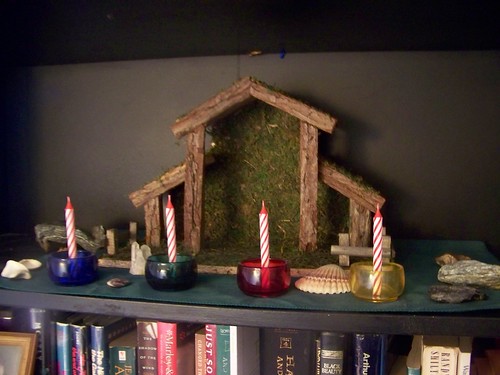
This year I was out of town celebrating Thanksgiving with my friends and came home on Sunday, full of love and gratitutde, to decorate my creche. I cleared my altar of the Halloween decorations (photos of my grandfather, deceased friend and childhood dog, figures of owls, salmon, ammonites, a sage smudge, candles, etc.) and set it up with my creche background. I set up four tall candles and added a number of shells, stones and crystals to the table. Every night this week when I come home I see that stark, bare creche. It is clearly waiting, just like we are waiting, for the rebirth of the light in just a few short weeks.


The first light of Advent is the light of stone–.
Stones that live in crystals, seashells, and bones.
The second light of Advent is the light of plants–
Plants that reach up to the sun and in the breezes dance.
The third light of Advent is the light of beasts–
All await the birth, from the greatest and in least.
The fourth light of Advent is the light of humankind–
The light of hope that we may learn to love and understand.
-attributed to Rudolph Steiner

Are you feeling the energies of the Death Moon or the Advent season this week? Or are you feeling both? How are you marking the turning from the season of the dead into the season of that which will be born? Do you celebrate Advent? Have you had to turn on the heater yet? :)

Tuesday, November 24, 2009

The Soldier and Death

As I said in my post, I am going to try to incorporate more stories and poems into my blog posts as a way to illustrate, rather than simply tell about, the turning of the wheel of the year. Some posts will include short stories or poems and some explination while others, like this one, will simply be a story.

This story is an old Russian tale I first heard through the Jim Henson's The Storyteller series. It caught my imagination and when I found a written version of the story I knew I would have to retell it as my Death Moon story. Here is my version, with links to the Jim Henson and Arthur Ransome versions at the bottom.

*** *** *** ***

The Soldier and Death

Once upon a time there was a soldier who had served his King well for 25 years and was finally free to go home. He gathered his cloak and his sword, kissed his companions good bye, and took three dry biscuits before setting off into the early winter morning.

He whistled an ancient tune as he traveled the high road past snowy fields and under grey skies. He walked and he whistled until he met a beggar along the road. The old man was dressed in patched and ragged clothes and begged for alms. The soldier had no money to his name but gave the old man one of his three dry biscuits.

“God keep you and Goddess bless” said the beggar.

“Goddess bless you as well, old man” said the soldier and he set off.

He whistled his ancient tune as he traveled the high road through wooded hills and marshy lands. He walked and he whistled until he met another beggar along the road. The old man was dressed in clothes even more patched and ragged than the first and was also begging for alms. The soldier had no money to give but handed the old man the second of his three dry biscuits.

“God keep you and Goddess bless” said the beggar.

“Goddess bless you as well, old man” said the soldier and he set off.

He whistled his ancient tune as he traveled the high road past fields of wooly sheep and shaggy cows. He walked and he whistled until he met a third beggar along the road. This old man was dressed in even more patched and ragged clothes than the other two. He looked so thin and weak he could hardly stand as he begged for alms. The soldier thought of his one remaining dry biscuit but decided that he was close to home and the old man needed it more than he did. He handed the beggar his third dry biscuit.

“God keep you and Goddess bless” said the beggar.

“Goddess bless you as well, old man” said the soldier.

“Is there anything you would like as thanks for your kindness?” the beggar asked.

“There is nothing you can give me beyond your blessings, friend” replied the soldier.

“Looks can be deceiving, young man. What would you like?”

The soldier thought back fondly on evenings spent with his companions wagering all they could think to wager playing cards. He asked the old man if he had any such thing as a pack of cards about him. The old man reached under his patched and ragged cloak and pulled out a small but beautiful deck and something else the soldier could not at first identify.
“Take these as thanks, and you will never lose no matter who you play against. And take this sack as well. If you come across any beast of fowl and want to have it just tell it to get into the sack and it will. Then you can do with it what you wish.”

“Thank you kindly and Goddess bless” said the soldier one more time before he set off again, whistling his ancient tune traveling down the high road.

After a night and a day of traveling the soldier found himself on the shore of a small glittering lake. He stopped to rest his feet and quench his thirst. As he lay back among the grass he noticed three wild geese paddling across the lake. “If only I could catch them,” he thought, “then I would not be hungry as I am now.” And then he remembered the sack the old man had given him. He stood up, held the sack open and cried “Hey, you, geese! See my sack? Get into it!”

The geese rushed quickly towards the sack and clambered over themselves to get into it. When all three were in the sack the soldier tied the top with two double knots, put the sack on his shoulder and set off again. His tune was a bit less lively due to the effort of carrying the three geese, but he traveled still along the high road past stacks of hay and fields of stubble.

Before night fall he found himself on the main street of a small but lovely town. He found a well kept inn and asked for the landlord.

“Sir,” said the soldier, “In my sack are three fat geese. I would like one roasted for my dinner. I’ll trade the other for a bottle of your finest wine and you can keep the third for your troubles.”

“Oh, aye,” cried the landlord and rushed off with the sack into the kitchens.

“Don’t forget to bring back the sack,” the soldier called after him.

In no time at all the soldier was tucking in to a wonderful dinner of goose roast in honey and cloves and washing it down with a bottle of fine red wine. He spent his evening dancing and laughing with other guests at the inn and finally laid his weary body down in a soft, warm bed upstairs.

In the morning the soldier woke up and looked out the window of the inn. On the hill above the town stood a beautiful palace all made of rose red stone with red tile roofs, a tower, walled gardens and beautifully carved wooden door posts and window frames. The odd thing was, that none of the windows had glass in them, and the gardens were clearly overgrown, and some of the roof tiles were broken or missing.

When the soldier went down for breakfast he asked the landlord about the palace.

“Oh, aye, that palace belongs to the Duke who rules these lands.” said the landlord. “It’s been empty these three years, though, because evil spirits have taken up living there. They say they are angry that the Duke didn’t pay proper respects to the stones and trees that made his palace. Every night the spirits come in and make such devilish noise, stomping and singing, hooting, hollering and playing cards. There’s no living there for decent folks.”

“Can no one clear them out?” asked the soldier.

“Easier said than done.” replied the landlord. “Brave men go in live and well in the evening and in the morning the Duke’s servants have to sweep the floors to pick up all the pieces of their bones.”

“I’ve served my King well for 25 years. Fire won’t burn a soldier and water won’t drown him. A single night in that palace won’t be the end of me.” And with that the soldier asked the landlord to point him in the direction of the Duke’s new home, wishes the landlord well and set off to talk to the Duke.

“Your majesty,” said the soldier after giving the Duke a proper bow and salute, “will you give me leave to spend one night in your empty palace?”

“No man has survived a night in that palace since the evil spirits have taken up residence. I hate to see the end of such a fine man as yourself,” replied the Duke.

“I’ve served my King well for 25 years. Fire won’t burn a soldier and water won’t drown him. A single night in that palace won’t be the end of me,” Said the soldier.

“Well, if that be so then God keep you and Goddess bless,” the Duke said, “Spend the night there if you’ve set your heart on it.”

The soldier entered the palace, whistling his ancient tune, cards in his pocket, sack on his back. He whistled and sang his way through all the empty rooms admiring the beautiful rose colored stone and admiring the carved wooden beams. He lit a small fire in large room, and sat down at the table to wait for the spirits, shuffling his cards and whistling his tune the whole night through.

At 12 o’clock sharp he heard such a noise as the soldier had never heard. Yelling and screaming, dancing and singing, drums and fiddles, hooting, hollering, stomping and yowling. The room filled with the devilish little spirits, with long fingers and toes on the ends of their long arms and legs, wispy white hair floating above their pale faces and sneering mouths filled with sharp pointed teeth.

“You, soldier,” one cried, “What are you doing here? There’s no living here for decent folks”

“What a nice tune he has” another cried. “And lovely cards” yet another cried. “And such a decent soul” a third remarked.

“Deal out the cards, we’ll take them all from you, and then we will tear you to pieces and eat you up!” the first screamed again.

The soldier laughed. “Be sure you know who is eating who. What do you have to wager against my tune, my cards and my soul.”

“We have 40 barrels of gold, we do” cried one of the spirits.

“Bring them here and let’s play a game” said the soldier.

No sooner than he had said it had forty of the spirits dragged forty barrels of gold into the room. The soldier shuffled his cards and dealt them out to the spirits pushing and shoving for room on the benches around the table. They played a game and the soldier won. They played again, and the soldier won again. A third game they played and a third time the soldier won.

So it went on all night with the spirits using all their cunning to cheat and lie but the soldier winning game after game. The gold moved from one end of the room to the other until the whole 40 barrels were stacked up behind the soldier’s chair. When the spirits realized they had no more money to lose they cried out with such a clamor. They yelled and they howled, they screamed and they screeched.

“Tear him to pieces! Eat him up” they cried.

“Be sure you know who is eating who,” said the soldier as he pulled out his sack. “Do you know what this is?”

“A sack.” One of the spirits replied.

“If it is a sack, then get in it!” called the soldier. With a rushing and a whistling all the spirits flew into the sack, clambering over each other to get into it. When they were all in the soldier tied up the sack with two double knots and threw the sack on the ground. He kicked it and tossed it around, punching it and beating it until the spirits cried out for mercy.

“Do you promise to leave this palace and never come back?” asked the soldier.

“Yes, yes, we promise!” cried the spirits.

And with that the soldier untied the sack and let the spirits fly out. And fly out they did! They tripped over each other to get away from that soldier and his sack. The soldier, however, caught the last spirit as it left the sack and held it by the leg. The spirit hung, gibbering and flailing, trying to get away. The soldier grabbed the spirit’s hat and said
“Spirit, promise me to be my faithful servant.” There was nothing to be done other than agree so the spirit agreed and agreed so the soldier would let him go.

“I will keep your hat and when I call for you, you must come to me.” Said the soldier and then let the spirit go.

The last spirit hopped off screaming, following the others over fields and woods, hills and pastures, across the Great River to the Isle of the Dead. They called all the other spirits and spooks, fairies and furies, banshees and angels, dryads, nymphs and gnomes, crying and aching in all their bones, and told them about the soldier and his sack. They set sentinels all around the Isle of the Dead, and warned the ferryman who ran the ferry across the Great River, and ordered them to watch well, and whatever they did, not on any account to let in the soldier with the sack.

In the morning the Duke and his servants came to the palace and instead of finding the soldier ripped to pieces found him whistling his ancient tune in front of a small fire in the large room. Behind him was the forty barrels of gold and at his side his sack. The soldier told the Duke all that had happened and how he had won the gold from the spirits and chased them away so no spirits would dare set foot within a hundred miles of the palace.

“If that be so,” said the Duke, “then we shall move into this palace at once and you shall live here with me as a brother.” And so they did. They moved in all of their tables and beds, servants and cooks and even the Duke’s wife and children. Soon after that the soldier himself took a wife and they all lived happily in the beautiful palace above the small town.

One year after the soldier married his wife gave birth to a beautiful son. The soldier loved his son more than anything and told him stories of his own valor and made up stories about when the boy grows up and becomes a general himself. The son grew into a fine young boy, happy and strong. One day, when the boy was three years old, he fell ill with a terrible fever. The soldier and his wife prayed and tended him, they called in doctors and wise women, they fed him teas and gave him baths and special ointments were put on his chest and forehead. Despite all of this the boy got sicker and sicker. The Duke was about to call for a priest to care for the dying boy when the soldier remembered the deal he made with the spirit all those years before.

He grabbed up the spirit’s hat and cried out, “Where the devil has my devilish spirit gone to?” With a small whoosh the spirit appeared in the room of the sick boy.

“How may I help you, great Sir” asked the spirit, his eyes full of fear.

“My son is very sick. Do you or any of the other spirits of the Isle of the Dead know how to cure him?” asked the soldier.

The spirit, with his with long fingers and toes on the ends of his long arms and legs, wispy white hair floating above his pale face and fearful eyes above a mouth filled with sharp pointed teeth, looked around as if unsure whether to reveal his secret but in his great fear decided to tell what he knew. He pulled a small glass goblet with strange etchings all over it out of his pocket and held it in his long fingers. He filled it with cold water from the basin next to the bed and held it upon the boy’s forehead.

“What do you see in the water, great Sir” asked the spirit.

The soldier looked through the glass into the goblet and saw a shrunken woman dressed all in black, her face shifting from young to old, beautiful to ugly, dark to fair and back again more quickly than his eyes could make out. “I see Death” he whispered, “standing at the foot of my son’s bed.”

“All is well, great Sir” said the spirit, “If you see Death at the foot of a sick person’s bed then with a sprinkle of water from the goblet they are fit and fine. If Death is at the head of a sick person’s bed, however, all is up with them and Death will have her due.”

The spirit sprinkled a little water from the goblet onto the boy and he was instantly laughing and crawling towards his mother, as if he had never been sick a day in his life.

“Give me that goblet and I will give you back your hat. We will call it quits and our deal be done,” said the soldier to the spirit. The spirit looked greatly relieved, handed over the goblet, grabbed his hat from the soldier’s hands and whooshed off, as quick as he could, away from the soldier and his sack.

Starting that very day the soldier set up as a wise man, traveling from sick bed to sick bed. He would fill the goblet with water and hold it up to the sick person’s forehead. If Death stood at their feet he would sprinkle the water and up they got. If Death stood at their head he would say “All is up with you, Death will have her due”, and the person died as sure as spring would come again. It was a hard time for the doctors and wise women, but a great time for the soldier.

One day the soldier’s great friend the Duke fell ill. The soldier quickly came to his bedside, filled the goblet and held it up to his head. To his great fear and horror he saw the shrunken woman all dressed in black, her face shifting from young to old, beautiful to ugly, dark to fair and back again more quickly than his eyes could make out standing at the head of the Duke’s bed.

“Quickly, man, what do you see?” asked the Duke. “I am feeling weaker with every breath.”

The soldier made a choice and chose to sprinkle the Duke with the water from the goblet. The Duke rose, fit and fine, but the soldier immediately fell ill himself. Death would have her due. The soldier lay on the bed, feverish and ill, getting weaker with every breath. He held the glass up to his own forehead, looked Death in the face and pulled his sack out from under his cloak.

“Do you know what this is?” he asked her.

“A sack.” she replied, her eyes growing wide with fear.

“If it is a sack, then get in it!” he cried with the last of his strength. And with a rushing and a whistling Death flew into the soldier’s sack. He jumped up, fit and fine, tied the sack in two double knots.

“I’ve caught Death in my sack! I’ve caught Death in my sack!” he cried. And with that, he took the sack, slung over his shoulder and headed off to the deep forest, far away from the small town with the beautiful palace. He traveled into the very center of the forest and climbed he tallest tree in the darkest heart of the forest. He climbed the tree with his sack on his back and tied the sack with Death in it onto the highest branch of the highest oak tree in the darkest heart of the forest. And then he went home.

With Death tied in a sack no one could die. There were births every day, and plenty of them, but no deaths. Wars would be fought and people would get sick, but there would be no deaths. The soldier looked out over his small village below his beautiful palace and was very pleased with himself.

This went on for a number of years, happy years in which the soldier’s son grew into a fine young lad. The soldier and the Duke remained friends and grew even more wealthy with the prosperity of their land. One day the soldier went for a walk through the town and saw an ancient old crone sitting on a doorstep. She was so old and tiny she looked like she could hardly keep herself upright and tottered in the face of every breeze that blew down the street.

“Grandmother,” said the soldier gently, “is there anything I can do to help?”

“You,” cried the old woman full of anger “you soldier with your sack have done nothing but harm to me. Years ago I was ready to die in my bed surrounded by my family. I was ready to find a peaceful place across the Great River and grow young again, ready to meet the Goddess in the place she made ready for me on the Isle of the Dead. But then you caught Death in your sack. I’ve now spent years in this broken body wishing for nothing but Death’s release. There is only one thing you can do to help me.”

And with that the soldier set off straight for the deep forest, far away from the small town with the beautiful palace He traveled into the very center of the forest and climbed he tallest tree in the darkest heart of the forest. He untied the sack and carried it back to his palace, ready to meet Death and go with her when he opened the sack. But when he opened the sack Death flew out, as quick as she could away to the Isle of the Dead, terrified of the soldier and he sack.

The soldier cried out for her to return, to take him as was her due, but she would not return.

“If Death won’t take me then I’ll have to go myself.” he said to himself and he immediately set out. He marched over fields and marched through woods. He marched over hills and he marched through pastures. He marched and he marched until finally he came to the ferry across the Great River to the Isle of the Dead.

“Hulloo there!” he called out to the ferryman. “I’ve come to take the ferry to the Isle of the Dead.”

“And who are you?” asked the ferryman, “and why didn’t Death bring you here?”

“I am the soldier who caught Death in his sack. She wouldn’t bring me here so I brought myself.” Replied the soldier.

The ferryman left the soldier and went across to the Isle of Death to see what should be done about the soldier. When he returned he told the soldier that they would not let him into the Isle of the Dead and he should return to his small town with his beautiful palace.

“But I have done a terrible thing. I owe Death her due and deserve to die!” cried the soldier.

“There is no place for you here,” replied the ferryman.

Just then, Death, a shrunken woman dressed all in black, her face shifting from young to old, beautiful to ugly, dark to fair and back again more quickly than his eyes could make out, arrived on the shore near the soldier. With her was the ancient old crone from the streets of the soldier’s town.

“Death! Tell the ferryman to take me to the Isle of the Dead!” cried the soldier, but Death shrieked in fear of the sack, turned away and disappeared as quickly as she could.

The ferryman reached for the ancient old crone’s hand to gently help her into his ferry but the soldier begged her to stop.

“Grandmother, please help me. I let Death out of the sack and allowed you to come here, to the Isle of the Dead where you will grow young again. Do me this favor and take my sack. When you reach the other shore call me into it so I can meet the Goddess and beg her forgiveness. Do this for me as I have done well by you.”

The ancient crone took the sack and stepped into the ferry. But when she stepped on the shores of the Isle of Death she began to forget all that had happened to her on Earth, starting with her meeting the soldier on the shore. She dropped the sack somewhere on the Isle and there it most likely lies to this day.

The soldier waited on the shore of the Great River to be called into the sack, but he was never called. He waited and waited and eventually he turned and walked slowly back to Earth. For all I know, he wanders the Earth still.

*** *** ***

If you liked this story please check out my source material. Both of these versions are delightful and rich in language and images.

Google Books page for Arthur Ransome's The Soldier and Death

Jim Henson's The Storyteller episode, The Soldier and Death
A Veoh.com video of the entire episode (also avaliable on Netflix as of October 2009)
Someone's personal page with a full transcript of the episode.
The Muppet Wiki page with information about production and the cast.