Showing posts with label story. Show all posts

Saturday, May 3, 2014

Differences and Oneness

 May Day

**** **** **** **** **** **** ****

When God created everything, God said, "it is good." And God put God's own image in the creatures that walk on the earth. In the midst of the create there was a wonderful garden. It was God's garden. Everything was there, but everything was so close it was all together. God was with the rocks and plants and animals, and they were with God and each other.
All the people were also together in one person who was called "Everyone", or in their language, "Adam." Eve was there, too. She was always there, for she came from Adam. She and Adam were a kind of AdamEve.

In the middle of the garden grew two trees. God told AdamEve that they should not eat the fruit from those trees. One tree was about difference and one tree was about forever. If you ate the fruit of the tree of difference, you would know about differences, and if you ate from the forever tree, you would live forever.

Now the serpent was more clever than any other creature that the Lord God made. And he suggested that AdamEve taste the fruit from the tree of differences. And they did. AdamEve ate from the tree of differences and things fell apart for them. They became Adam and Eve. The difference between them and God also came apart. And the difference between good and evil did, too. 

God called for them and they hid, but God found them. They did not know how to be with God anymore, because of all the difference. There were: good and evil, close and far, high and low, God and people, Adam and Eve... and many more. 

The differences also did something wonderful. Now Adam and Eve could take things apart and put them back together again. They could be creators, almost like God. The couldn't make something out of nothing, but they could make something out of differences.

After the differences, Adam and Eve could not go back to when everything was all together in the Garden. They could only go forward and they did. God sent Adam and Eve out of the Garden. An agel and a sword was put at the edge of the Garden so they could not go back, but only go forward. God went with them on their journey to help them be the best creators they could be, and to be with God in a new way, and to stay one with God.


*** *** *** 

This is the story of Genesis 2 as told in the Godly Play curriculum. My Quaker church uses this story based Sunday school curriculum because we know that sharing stories and talking about stories together is the best way to talk about god. The Godly Play stories are always followed by a set of wondering questions where those who heard the story can think together, out loud and silently, about what is important and meaningful in the story. Word fail us when we try to talk about god, but the pictures and metaphors in stories help us express what we know and what we are learning.

When our amazingly gifted story teller gave us this story at West Hills Friends last weekend, most of us brought with us baggage about this story. In the Bible as it is usually interpreted, this story is a story of bad news - deceit, falling from grace, being cast out of the garden, the pain of childbirth, original sin. In Christian theology Genesis 2 is usually seen as a set up for the redeeming nature of Christ's birth and an explanation for why life is so hard. It doesn't feel very redeeming. But interpreting the story just a little differently, as this version does, opens the story up in previously unthinkable ways. Like a flower in May, the story unfolds, revealing layer after layer of meaning to each visitor. 

This week, the layer I am seeing most clearly is the story of differences. They ate from the tree of differences and things fell apart. That line resonates with me right now. When things are different, when you are separated, when you see the differences between this and that, thou and I, now and then, things feel like they are falling apart. But the story has redemption! Out of the differences Adam and Eve learn to take things apart and put them back together, to create something out of the differences. 

As I sat in church, literally on the edge of my seat, and heard those words "create something out of differences" my very first thought was about literally making babies. We just wrapped up a unit on heredity in my 7th grade class and we talked a fair amount about how organisms that use sexual reproduction need one of each sex and the resulting offspring are similar but different from their parents in vital ways. Organisms that use asexual reproduction create offspring that are identical to their parents with genetic variation happening in different, possibly slower and less responsive ways. Without that core difference of biological sex, humans can not create the new thing that is babies. AdamEve were together and they were together with God, but they could not create new humans in that state. 

I also thought a lot about what state of mind AdamEve might have had in the garden, before the differences. There is a spectacular TED talk by brain researcher Jill Bolte Taylor recounting her experience of having a massive stroke. She says that when her left hemisphere, the side of our brain responsible for linear thought, categorizing, autobiographical memories and language (ya know, differences), went offline she was left in a state of timeless connection with the universe, of joy and love and energy. I wonder if this is what life was like in the garden for AdamEve. As Jill Bolte Taylor says, "in this moment we are perfect, we are whole, and we are beautiful." 

But being a whole, perfect and connected piece of the Universal Flow does not allow us to be creative. We just are. When she realized she was having a stroke and needed help, Jill Bolte Taylor could not effectively dial a phone or communicate her need. She was too busy feeling vast and limitless. Babies, in their sense of moment to moment pleasure, pain and wonder do not have the capacity to build or create. It is only when we step into the discreteness of ourselves, when we see the differences between Thou and I, between male and female, light and dark, good and evil, that we can make anything new in the world. 

My pagan theology holds at its center the sacredness of the ebb and flow of the differences in life. Lightness flows and ebbs into darkness, winter into summer, growth into decay and as these differences dance around each other life is created and sustained. In my creation story in the beginning there was One, one Goddess. She could do nothing but Be Goddess until she woke up and realized she was lonely. She, like AdamEve, tasted the fruit of difference, found her world lacking and went about the work of creating what she needed to be connected and happy.

Our job as humans is to dance the ebb and flow of differences. To know that sometimes we must feel differences, painful and separating as they may be, in order to know how to proceed in our creation of a better life. I continue to struggle with anxiety and dark emotions this spring as I work through realizations about my separateness and singularity in the world. The angel and the sword were placed at the entrance to the garden and we can not really go back, only forward. But the path forward also has room for us to dance back into that expansive, connected place of oneness with God and with each other. My walks in the woods this spring have left me more than one mouth agape at the sheer fecundity and beauty of nature. Flowers and leaves, flowing water and animals and compost. And I am a part of it! It is there in that place of connectedness that we can reclaim a memory of Eden and know what we are trying to create out of the differences. 

What differences are you dancing with this May Day?

What stories do you know or can think of that might explain how AdamEve lived in the garden?

What are you working on creating out of differences right now?

**** **** **** **** **** **** ****

May Day 2012: The Dauntless Youth of the Year


May Day 2010: Glory Days

May Day 2009:  May Day

Sunday, February 3, 2013

Brigit

February First

**** **** **** **** **** **** ****
February First has come and gone. I didn't make Red Soup. I didn't go for a walk around the neighborhood. Things are busy and complicated again this spring. But good. Really good.

I offer you a repost of my most favorite story on this blog. The story of Lovely Luz and Sweet Brigit. I originally wrote this in February of 2010 and I still love it. I hope you do too.

*** *** ***
Once upon a time there was a little girl named Luz who lived with her sickly mother in a small cabin near the woods. Her mother had been weak for a long time and Luz had to take care of herself and her mother. Luz cleaned the houses of other families in their village, collected firewood and tended a small flock of chickens and two pretty nanny goats in the yard behind the cabin, so there was always something to put on the table but never much extra.

In the autumn, as the leaves were falling and the days were getting shorter, Luz’s mother helped her light a candle in a little glass lantern. Her mother was able to come to the door and watch Luz as she paraded around the yard singing songs to the nanny goats and chickens. “Remember,” her mother said “as the light of the sun fades in the autumn, we can keep the light in our lantern through the winter.”


Photo by calynde
Winter was always hard for Luz and her mother. The days were cold and snowy but Luz needed to go out most days to collect more firewood. The nanny goats stopped giving milk and eventually even the chickens stopped laying eggs, but the cold left Luz and her mother hungry for those nourishing foods. There was one wonderful thing that happened in the winter, though. Every evening, after the wood had been stacked by the fireplace and the chickens had been shut in their coops, the goats had been given fresh hay and the dinner dishes washed and put away, Luz’s mother would tell her stories about the beautiful Goddess Brigit. Brigit was always good to the poor and people who were like her always had good things happen to them.

One day just before Christmas, Luz was out along the edge of the forest by her cabin collecting firewood. She had a good armload and was about to turn back seeing as it was getting dark when she saw a man huddled around a tiny campfire. Despite the cold air he was dressed in rags, working hard to warm his fingers which were turning blue. Luz remembered the story her mother told the night before where Brigit gave away a precious silver necklace to a poor woman in need. Brigit’s sisters were angry, but the next day they found a sliver necklace to replace the one given away. Well, Luz thought, whether she found another pile of wood or not, this man needs my firewood, as well as the hardboiled egg and small wedge of cheese my mother sent with me, more than I do.

“Here you go, sir.” Said Luz, setting her gifts down near him. “I don’t have much, but you need it more.”

“Thank you, child.” He said. “I am almost home, and your gifts and kindness will warm me until I get there. Bless you, child, bless you.”

Luz hurried home, for it was getting dark, but just as she reached the path back to her own cabin she came across a large pile of dry, good firewood. She picked it up and hurried home.

“Oh mama!” she cried. “I left the wood I had gathered with a poor man near the forest, but look! There’s a pile of dry, good firewood here!”

“What a lovely girl you are, Luz.” Her mother said. “Just like Brigit you give more than what you can spare. But look, Brigit left this wood for you as a gift. Those who keep the sun’s light strong and care for others are always taken care of.”

A few weeks later a neighbor had taken Luz’s mother on a visit to a friend’s house in the village and Luz was home alone, tending the chickens and nanny goats. Luz went out and collected the last few eggs the chickens would lay that winter and went inside to make a small lunch for herself. Just then an old woman walked up the path by their house and asked if Luz had any bread to spare. The woman looked like she needed more than just a slice of bread to get her home and Luz remembered the story of the old woman who gave Brigit shelter one cold night. The woman tore down a piece of her house and killed her only calf to feed and warm Brigit, but in the morning her cow had another calf and her house was whole and warm. Well, thought, Luz, I don’t have to tear down our cabin to give this woman a warm lunch so she invited her in.

Luz prepared the last of the eggs with the last of the goat milk and a few slices of bread to make a warm meal for the woman, and let her sit by the warm fire for as long as she needed.

“Thank you, child.” she said. “I am on my way to visit my daughter, and your gifts and kindness will warm me until I get there. Bless you, child, bless you.”

When Luz’s mother came home Luz rushed to find the last food in the cupboard to make her dinner, but instead of a crust of bread she found a full egg basket and two whole wheels of cheese.

“Oh mama!” she cried. “I fed a poor woman the last of our eggs this afternoon, but look! There’s a dozen eggs here!”

“What a lovely girl you are, Luz.” Her mother said. “Just like Brigit you give more than what you can spare. But look, Brigit left those eggs for you as a gift. Those who keep the sun’s light strong and care for others are always taken care of.”

Late in the winter, after Christmas but while the days are still dark and cold Luz’s mother, who had always been weak, got terribly sick. Luz was so worried, especially when her mother couldn’t even get out of bed. She kept her mother warm and the fire strong, and prayed to Brigit for help.
After three nights of this, when it felt like winter will never end and her mother would never be well, Luz fell asleep by the fire. She dreamed she heard an old woman walking by the window of their little cabin chanting.

Moving rightways with the sun
My blessings weave and bend
Weave and bend

All winter you did keep the light
Spring blessing soon will rise
Soon will rise

Luz rose from her seat by the fire and wrapped her shawl around her shoulders. She grabbed her Martinmas lantern and headed out to follow the sound. Ahead of her she saw a woman dressed all in black, with hair white as the snow and a face dark like old wood walking slowly through the woods. Luz followed her quietly, sure the old woman must know she’s there, but the old woman never turned around or stopped chanting. She just kept walking into the woods. Luz followed the woman further into the woods than she had ever been before but she wasn’t afraid, the old woman seemed to have a light and warmth that made Luz feel safe.

Moving rightways with the sun
My blessings weave and bend
Weave and bend

All winter you did keep the light
Spring blessing soon will rise
Soon will rise

Eventually, as the sky started to lighten in the east, the old woman, with Luz following behind, came to a clearing with an old stone well in it. The old woman stood by the well and finally spoke, “Come closer child. Do you know who I am?” Luz shook her head, too afraid to say what she knew must be true.

“I know I don’t look like the beautiful woman in the stories your mother tells you, but I am her, I am Brigit. This night is my night, this morning my dawn. You carry with you the light you have nurtured all winter with good deeds and warm stories. Because you have done so well at caring for that light through the long dark winter you may have a wish. What do you wish for, child?”

“I wish for my Mother to be well again.. and.. and for this winter to be over! I am so sick of it being cold all the time.”

Brigit laughed, “Granted one wish and you ask for two. No matter, it can be arranged.”

Just then, the first morning bird sang out, and the first ray of dawn’s light broke over the horizon. The old crone Brigit pulled the bucket out of the well, dipped her hands into the cold, clear water, and splashed her face. Her robes instantly turned to red, and her hair to a speckled grey and black, and her face to that of a matronly woman of middle age. In just another moment, the disk of the sun broke above the horizon, spilling full sunlight into the clearing with the well. The mother Brigit dipped her hands into the bucket again, and once more splashed a handful of water onto her face. In the blink of an eye her robes turned to pure white, her hair to a deep auburn red and her face fair as that of a young maiden.

“Come, bring your lamp here,” said the maiden Brigit and Luz did as she was asked. Brigit took the lantern from her hands and blew the candle out, but the light didn’t go away. It seemed to Luz that the light from the candle, instead of being kept inside the small lantern, spread throughout the whole forest. The morning dew sparkled on swelling buds and the sun seemed even brighter than it had been the day before. The snow was still deep and the air cold, but Luz could tell spring would be on its way soon.

The maiden Brigit pulled a small tin cup out of her cloak and filled it with water from the well. “Take this to your Mother and have her drink it. She will be well soon, and spring is on its way. Keep my memory alive, Luz, tell stories about my good deeds and live them out in your own life. Blessed be.”
Luz took the cup and her lantern and hurried home, as quickly as she could, but careful to not spill a drop of the precious water Brigit pulled from the sacred well.

“Oh mama!” she cried, when she got home. “I met sweet Brigit at the well and she gave me this magic water to make you well! Oh, mama! You will be well again!”

“What a lovely girl you are, Luz.” Her mother said. “Brigit found you who are so like herself and has blessed us all. Those who keep the sun’s light strong and care for others are always taken care of.”

**** **** **** **** **** **** **** 

February First 2009: February the First

February First 2010: Lovely Luz and Sweet Bridgit
This happens to be my all time favorite post from all two plus years of blogging. Please go check it out. 

Feburary First 2011: Brigid - The Goddess of Poetry

February First 2012: Brigid's Red Soup and Magic

Tuesday, December 25, 2012

Solstice Celebration

Winter Solstice

**** **** **** **** **** **** ****
One year, the wind blew down the mountain fiercer than it ever had before. The wind screamed so loud sometimes that Lucia could not hear her mother humming as she rocked the baby by the fire. Frost covered the nail heads in the walls, and the wind that sneaked in through the cracks tossed the last of the flour in the barrel around, so that it seemed to snow inside the house as well as out.

One day, the sun did not rise over the mountaintop. And the next day and the next and the next, not a glimmer of sun shown, no matter how long Lucia watched for sunrise. Dark roosted on the land.

"Where has the light gone?" Lucia asked.

"I don't know," her mother replied. "Even the oldest tales never told of this darkness." She wrapped Lucia in her arms. "We will be each others' sun until the real sun returns," she said.

Today is Winter Solstice, the day with the shortest sunlight hours here in the Northern Hemisphere. It is the height of winter, the darkest time of the dark season. Starting tomorrow, the sun will stay in the sky just a little longer. And that is more than enough reason to celebrate.


I spent the day at the Nature Park doing a day off camp with elementary school aged kids. We spent the morning reading the wonderful story Lucia and the Light by Phyllis Root, which I have exerpted here, hiking in the woods and seeing what was growing and what was not out there. We found some awesome newts and an amazing fungus forest, with six or seven varieties growing out of a single pile of logs. Of course, we sent arms full of leaves and twigs over the railing of the bridge and down the swollen Beaverton Creek, an all time favorite activity for kids of every age. 

In the afternoon we made lanterns to celebrate the returning of the sun. We talked about the science of the solstice and how the days will begin to get stronger with each passing day and then provided them with colored tissue paper and plastic lantern forms. As the dusk came on we lit them with electric tea lights and paraded around the office building, welcoming back the sun. Later, ask evening came on for real, the kids asked if we could turn off the lights in the room and they proceeded to leap over their lit lanterns. Screams of laughter greeted the gathering darkness.


Sunlight followed Lucia through the front door and poured across the floor, warm and sweet as honey. A fire blazed and the hearth and the baby cooed and clapped to see Lucia.

"I thought I had lost you," her mother cried, sweeping Lucia into a hug."and then the sun came up, and I knew you would come home. My brave child!"

Lucia's mother held her close. "My sunshine," she whispered. "Light of my heart."

How do you celebrate the darkest day of the year? How did you welcome the dark, or greet the growing light? When was the last time you heard children howling and screaming with laughter? Happy Solstice!

**** **** **** **** **** **** **** 
Winter Solstice 2008: Good Morning Sun! and also Solstice Creche

Winter Solstice 2009: Christmas and Advent, Awaiting the Birth

Winter Solstice 2011: Advent and The Long Nights of Winter and It's Christmas

Winter Solstice 2012: City and Sky Advent

Thursday, August 30, 2012

The Grasshopper and the Ants

New Nesting Moon

**** **** **** **** **** **** ****
 
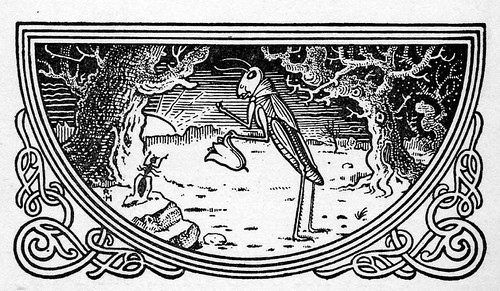
IN a field one summer’s day a Grasshopper was hopping about, chirping and singing to its heart’s content. An Ant passed by, bearing along with great toil an ear of corn he was taking to the nest.

“Why not come and chat with me,” said the Grasshopper, “instead of toiling and moiling in that way?”

“I am helping to lay up food for the winter,” said the Ant, “and recommend you to do the same.”

“Why bother about winter?” said the Grasshopper; “we have got plenty of food at present.” But the Ant went on its way and continued its toil. When the winter came the Grasshopper had no food, and found itself dying of hunger, while it saw the ants distributing every day corn and grain from the stores they had collected in the summer.

*** *** *** 

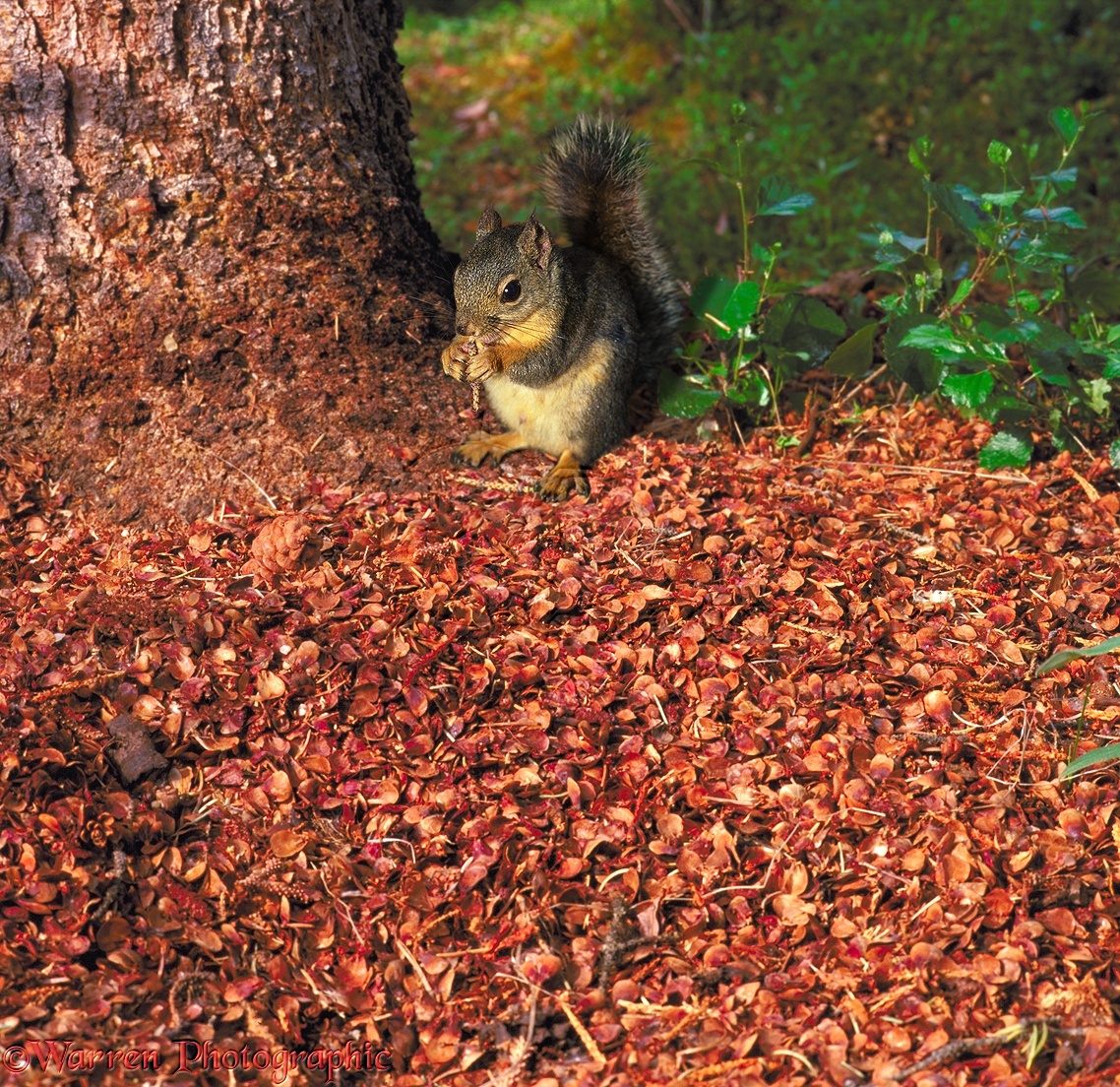
Douglas Squirrel by Powerkey
Can you feel it? The change is in the air. The light is a bit thinner, a bit more golden and the sun is lower in the sky, shining right in my eyes for more of the afternoon. There are more leaves on the trails I walk every day. Mostly Indian plum and Big Leaf Maple, the early changers, but more leaves on the street trees are turning red and gold. Every stump and log in the park I work in is covered with the ripped apart Douglas fir cones left behind by the Chickaree squirrels. The coastal forest we hiked in today is chalk full of ripe red huckleberries and salal and a few acorns can be found on the ground in other forests. Mornings are cooler, despite warm afternoons, but the real signs of autumn include the winter flock of bushtits and the first wooly bear caterpillar sighting. 

With the first signs of autumn come the first inklings that my season of frolicking and play might need to come to an end. My summer job ends in a very short number of weeks and I have nothing lined up for the fall. As I analyze my complete and utter lack of taking responsibility for my career path since graduation, I am coming up against some big fears I will need to work on this dark season. It isn't the introspective season yet, but I see it coming.

via Dierken
In another version of the classic Aesop's fable, the grasshopper "perishing with famine, passed by and earnestly begged for a little food." When they learn that he did not store treasure in the summer, they deride him by saying "If you were foolish enough to sing all the summer, you must dance supperless to bed in the winter." I hope that the winter, and the ants I may run into, will be a bit more forgiving of my summer of singing than the ants in this tale. But I guess we'll have to burn that bridge when we get to it.

Have you been an ant or a grasshopper this summer? What signs of autumn are you seeing around you? What work do you see in front of you for the winter? What is your favorite part of summer that you will miss most?


**** **** **** **** **** **** ****

New Nesting Moon 2011: Golden Autumn and The Book of Nature

New Nesting Moon 2010: Ramadan 

New Nesting Moon 2009:  Breathe a Sigh of Relief  

Sunday, July 15, 2012

Nothing But Good Can Come of This

Mothers Moon

**** **** **** **** **** **** ****
The Story of the Lost Son
Then he said, "There was once a man who had two sons. The younger said to his father, 'Father, I want right now what's coming to me.'
"So the father divided the property between them. It wasn't long before the younger son packed his bags and left for a distant country. There, undisciplined and dissipated, he wasted everything he had. After he had gone through all his money, there was a bad famine all through that country and he began to hurt. He signed on with a citizen there who assigned him to his fields to slop the pigs. He was so hungry he would have eaten the corncobs in the pig slop, but no one would give him any.

"That brought him to his senses. He said, 'All those farmhands working for my father sit down to three meals a day, and here I am starving to death. I'm going back to my father. I'll say to him, Father, I've sinned against God, I've sinned before you; I don't deserve to be called your son. Take me on as a hired hand.' He got right up and went home to his father.

"When he was still a long way off, his father saw him. His heart pounding, he ran out, embraced him, and kissed him. The son started his speech: 'Father, I've sinned against God, I've sinned before you; I don't deserve to be called your son ever again.'

 "But the father wasn't listening. He was calling to the servants, 'Quick. Bring a clean set of clothes and dress him. Put the family ring on his finger and sandals on his feet. Then get a grain-fed heifer and roast it. We're going to feast! We're going to have a wonderful time! My son is here—given up for dead and now alive! Given up for lost and now found!' And they began to have a wonderful time.

 "All this time his older son was out in the field. When the day's work was done he came in. As he approached the house, he heard the music and dancing. Calling over one of the houseboys, he asked what was going on. He told him, 'Your brother came home. Your father has ordered a feast—barbecued beef!—because he has him home safe and sound.'

 "The older brother stalked off in an angry sulk and refused to join in. His father came out and tried to talk to him, but he wouldn't listen. The son said, 'Look how many years I've stayed here serving you, never giving you one moment of grief, but have you ever thrown a party for me and my friends? Then this son of yours who has thrown away your money on whores shows up and you go all out with a feast!'

"His father said, 'Son, you don't understand. You're with me all the time, and everything that is mine is yours—but this is a wonderful time, and we had to celebrate. This brother of yours was dead, and he's alive! He was lost, and he's found!'"

Luke 15:11-32 from The Message Bible

*** *** ***

 I've never been terribly fond of this story. I never understood why the brother who stayed wasn't celebrated while the brother who left got a party. It seemed so unfair. The light of the Mothers Moon this summer
 has allowed me to see the story, the Father's actions, in a different way. In the way of motherlove.

The Mothers Moon reminds us that we are all worthy of love not based on what we do or believe or say, but based simply on the fact that we exist. We are the Mother's beloved child and she will love us no matter what we do or don't do. The Father in the parable of the Prodigal Son loves the boy who left and came back just as much as he loves the son who stayed. Both are beloved sons, both are deserving of barbecues and dancing. Neither deserve punishment or chastisement.

I think in the past I have always identified with the son who stayed. Of course I was the child who who played by the rules, didn't strike off on my own, didn't do dumb or silly things. Worked hard, played it safe. No one would ever have to throw a party for me when I returned, because I would never leave. This spring, however, I have done some "leaving". I like to think that I have been splashing around in the shallows of hedonism for a couple months. I have felt far from some aspects of my spirituality, 
especially my contemplative practices,  but I have never felt far from the spirit of god. I have felt a bit like the kids I took to the beach last week; they ran and screamed and poked dead things and climbed on things while I watched from the sidelines. They might have gotten hurt, but that is part of growing up. I might have gotten hurt or distracted as I splashed around in all this emotional and physical muck, but the Goddess is near by to comfort me when I scrape my knee or bang my head.  She loves me no matter what I do, or don't do.

The epiphany that came right around the full moon of the Mother's Moon rang so true with pronoic motherlove energy: Nothing but good can come of this. She loves me no matter how prodigal I am. 

**** **** **** **** **** **** ****

Mother's Moon 2011: Freedom, July and Krishna and the Gopis


Mother's Moon 2009: Gifts from the Mother

Wednesday, January 18, 2012

Playing Games

Birth Moon

**** **** **** **** **** **** ****

The low winter sun streams through the Douglas fir and cedar branches along the Wildwood Trail. The trail winds along a contour line out in the deep wooded heart of the park and I am alone. Well, almost alone. Around a bend in the trail my comes my dog, running full out, her ears flapping and mud flying out behind her. She skids to a halt in front of me, her doggy face practically grinning as she hops up to touch my hand with her nose, spins and darts off up the trail. I can’t help but laugh.


Tumalo
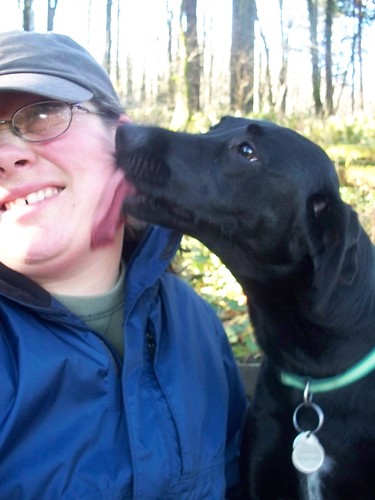
I laugh out loud, my voice muffled by the ferns and fir tree foliage all around me. I laugh at her silly antics and goofy ways. She’s not a clown of a dog, but her little hop, flapping ears and flying leaps make me crow with laughter. I giggle uncontrollably at her yipping and yowling in her sleep. Is she dreaming about giant squirrels or flying tennis balls? Goddess only knows what goes on in the mind of a dog.

My laugh softens into a chuckle and a grin as I catch sight of a flock of chickadees tumbling their way through a stand of cedar and hemlock trees. The sheer joy she gets out of living her dog life makes me laugh, too. She is never self-conscious about her pleasure at a smelly fence post, at a sunny spot in the lawn or a good chase. She is never anything but herself, without reservation or apology. The chickadees come closer, chipping and chirping at each other, completely oblivious of my presence. They, too, are fully present in their lives, not worrying or pretending. They simply are. One flits from one branch to another, doing a somersault over the new perch, hangs upside down and digs in the needles for bugs. I can’t help but grin.

Me ant Tummy
I heard an interview with Brother Guy Consolmagno, a Jesuit priest and astronomer, recently in which he tells a story about his mother. When he was about 9 years old she played cards with him one rainy Saturday afternoon. They played for hours and she let him win more often than not. Of course, she could have beat him every hand but that wasn’t the point. Playing the game was a way for her to say she loved him and Brother Guy sees exploring God’s created universe as a similar game. He is an astronomer and a mathematician so super novas and equations explaining planetary orbits are the game God plays with him to show his love.

I am a naturalist and a dog person so God plays a slightly different game with me. She shows me how to stop worrying and just be through a muddy Labrador. She shows me how she cares for every being through a flock of chickadees. She shows me that she will light my way with a big bright moon rising over the mountain as I drive home. She shows me that she loves me by making me laugh. 


**** **** **** **** **** **** ****

I wrote this for my Quaker Meeting's journal, Minding the Light. The querie this season was "When has god made you laugh?" I think this story about my dog, about chickadees and about the games God plays with us fits well with the theme of the Birth Moon. This is a time when the light of the Sun Son is new and feeble, but growing stronger each day. The Goddess watches over that growing light, protecting it, loving it, giving it what it needs to become the Light of The World as the summer waxes. I think she is doing that for all of us, giving us exactly what we need exactly when we need it... be that a muddy dog, a giant full moon or another dark, rainy night. 

You can read past issues of Minding the Light online here. My previous posts written for the journal can be seen by checking out all the posts tagged Minding the Light.


Tuesday, January 3, 2012

The Columber

Full Birth Moon

**** **** **** **** **** **** ****
 
The Colomber
Dino Buzzati, translated by Lawrence Venuti

     When Stefano Roi was twelve years old, he asked his father, a sea captain and the owner of a fine sailing ship, to take him on board as his birthday gift. 
     “When I grow up,” the boy said, “I want to go to sea with you. And I shall command ships even more beautiful and bigger than yours.”
     “God bless you, my son,” the father answered. And since his vessel had to leave that very day, he took the boy with him.
     It was a splendid sunny day, and the sea was calm. Stefano, who had never been on a ship, happily wandered around on deck, admiring the complicated maneuvers of the sails. He asked the sailors about this and that, and they gladly explained everything to him. 
    When the boy had gone astern, he stopped, his curiosity aroused, to observe something that intermittently rose to the surface at a distance of two to three hundred meters, in line with the ship’s wake.
     Although the ship was indeed moving fast, carried by a great quarter wind, that thing always maintained the same distance. And though the boy did not make out what it was, there was some indefinable air about it, which attracted him intensely.
     No longer seeing Stefano on deck, the father came down from the bridge, after having shouted his name in vain, and went to look for him.
     “Stefano, what are you doing there, standing so still?” the captain asked his son, finally perceiving him on the stern as he stared at the waves.
     “Papa, come here and see.”
     The father came, and he too looked in the direction indicated by the boy, but he could not see anything.
     “There’s a dark thing that rises in the wake every so often,” Stefano said, “and it follows behind us.”
     “Despite my forty years,” said the father, “I believe I still have good eyesight. But I see absolutely nothing.”
     And the boy insisted, the father went to get a telescope, and he scrutinized the surface of the sea, in line with the wake. Stefano saw him turn pale.
     “What is it? Why do you make that face?”
     “Oh, I wish I had never listened to you,” the captain exclaimed. “Now I’m worried about
you. What you see rising from the water and following us is not some object. That is a colomber. It’s the fish that sailors fear above all others, in every sea in the world. It is a
tremendous mysterious shark, more clever than man. For reasons that perhaps no one will ever know, it chooses its victim, and when it has chosen, it pursues him for years and years, for his entire life, until it has succeeded in devouring him. And the strange this is this: No one can see the colomber except the victim himself and his blood relations.”
     “It’s not a story?”
     “No. I have never seen it. But from descriptions I have heard many times, I immediately
recognized it. That bison like muzzle, that mouth continually opening an closing, those terrible teeth. Stefano, there’s no doubt, the colomber has ominously chosen you, and as long as you go to sea, it will give you no peace. Listen to me: We are going back to land now, immediately; you will go ashore and never leave it again, not for any reason whatsoever. You must promise me you won’t. Seafaring is not for you, my son. You must resign yourself. After all, you will be able to make your fortune on land too.”
     Having said this, he immediate reversed his course, reentered the port, and on the pretext of a sudden illness, he put his son ashore. Then he left again without him.
     Deeply troubled, the boy remained on the shore until the last tip of the masts sank behind the horizon. Beyond the pier that bounded the port, the seas was completely deserted. But looking carefully, Stefano could perceive a small black point which intermittently surfaced on the water: it was “his” colomber, slowly moving back and forth, obstinately waiting for him.

     From then on, with every expedient the boy was dissuaded from his desire to go to sea. His father sent him to study at an inland city, hundreds of kilometers away. And for some time, distracted by his new surroundings, Stefano no longer thought about the sea monster. Still, he returned home for summer vacations, and the first thing he did, as soon as he had some free time, was hurry to the end of the pier for a kind of verification, although he fundamentally considered it unnecessary. After so many years, even supposing that all the stories his father told him were true, the colomber had certainly given up its siege.
     But Stefano stood there, astonished, his heart pounding. At a distance of two to three hundred meters from the pier, in the open sea, the sinister fish was moving back and forth, slowly, raising its muzzle from the water every now and then and turning toward land, as it anxiously watched for whether Stefano was coming at last.
     So the idea of that hostile creature waiting for him day and night became a secret obsession for Stefano. And even in the distant city it cropped up to wake him with worry in the middle of the night. He was safe, of course; hundreds of kilometers separated him from the colomber. And yet he knew that beyond the mountains, beyond the forests and the plains, the shark was waiting for him. He might have moved even to the most remote continent, and still the would have appeared in the mirror of the nearest sea, with the inexorable obstinacy of a fatal instrument.
     Stefano, who was a serious and eager boy, profitably continued his studies, and as soon as he was a man, he found a dignified and well-paying position at a store in the inland city. Meanwhile, his father died through illness, his magnificent ship was sold by his widow, and his son found himself the heir to a modest fortune. Work, friends, diversions, first love affairs- Stefano’s life was not well under way, but the thought of the colomber nonetheless tormented him like a mirage that was fatal and fascinating at the same time; and as the days passed, rather than disappear, it seemed to become more insistent.
     
     Great are the satisfactions of an industrious, well-to-do, and quiet life, but greater still is the attraction of the abyss. Stefano was hardly twenty-two years old when, having said goodbye to his inland friends and resigned from his job, he returned to his native city and told his mother of his firm intention to follow his father’s trade. The woman, to whom Stefano had never mentioned the mysterious shark, joyfully welcomed his decision. To have her son abandon the sea for the city had always seemed to her, in her heart, a betrayal of the family’s tradition.
     Stefano began to sail, giving proof of his sea-worthiness, his resistance to fatigue, and his
intrepid spirit. He sailed and sailed, and in the wake of his ship, day and night, in good weather and in storms, the colomber trudged along. He knew that this was his curse and his penalty, and precisely for this reason, perhaps, he did not find the strength to sever himself from it. And no one on board, except him, perceived the monster.
     “Don’t you see anything over there?” he asked his companions from time to time, pointing at the wake.
     “No, we don’t see anything at all. Why?”
     “I don’t know. It seemed to me…”
     “You didn’t see a colomber, by any chance, did you?” the sailors asked, laughing and
touching wood.
     “Why are you laughing? Why are you touching wood?”
     “Because the colomber is an animal that spares no one. And if it has begun to follow this
ship, it means that one of us is doomed.”
     But Stefano did not slacken. The uninterrupted threat that followed on his heels seemed in fact to strengthen his will, his passion for the sea, his courage in times of strife and danger.
When he felt that he was master of his trade, he used his modest patrimony to acquire a small steam freighter with a partner; then he became the sole proprietor of it, and thanks to a series of successful shipments, he could subsequently buy a true merchantman, setting out with always more-ambitious aims. But the successes, and the millions, were unable to remove that continual torment from his soul; nor did he ever try, on the other hand, to sell the ship and retire to undertake different enterprises on land.
     To sail and sail was his only thought. Just as soon as he set foot on land in some port after a long journey, the impatience to depart again immediately pricked him. He knew that outside the colomber was waiting for him and that the colomber was synonymous with ruin. With nothingness. An indomitable impulse dragged him without rest, from one ocean to another. 

     Until one day, Stefano suddenly realized that he had grown old, very old; and no one around him could explain why, rich as he was, he did not finally leave the cursed life of the sea. He was old, and bitterly unhappy, because his entire existence had been spent in that mad flight across the seas, to escape his enemy. But the temptation of the abyss had always been greater for him than the joys of a prosperous and quiet life.
     One evening, while his magnificent ship was anchored offshore at the port where he was born, he felt close to death. He then called his second officer, in whom he had great trust, and ordered him not to oppose what he was about to do. The other man promised, on his honor.
     Having gotten this assurance, Stefano revealed to the second officer the story of the colomber that had continued to pursue him uselessly for nearly fifty years. The officer listened to him, frightened.
     “It has escorted me from one end of the world to the other,” Stefano said, “with a faithfulness that not even the noblest friend could have shown. Now I am about to die. The colomber too will be terribly old and weary by now. I cannot betray it.”
     Having said this, he took his leave of the crew, ordered a small boat to be lowered into the sea, and boarded it, after he made them give him a harpoon.
     “Now I am going to meet it,” he announced. “It isn’t right to disappoint it. But I shall
struggle, with all my might.”

     With a few weary strokes of the oars, he drew away from the side of the ship. Officers and
sailors saw him disappear down below, on the placid sea, shrouded in the nocturnal shadows. In the sky was a crescent moon.
     He did not have to work very hard. Suddenly the colomber’s horrible snout emerged at the side of the boat.
     “Here I am with you, finally,” Stefano said. “Now it’s just the two of us.” And gathering his
remaining strength, he raised the harpoon to strike.
     “Uh,” the colomber groaned, imploringly, “what a long journey it’s taken to find you. I too
am wasted with fatigue. How much you made me swim. And you kept on fleeing. You never
understood at all.”
     “What?” asked Stefano, with the point of his harpoon over the colomber’s heart.
     “I have not pursued you around the world to devour you, as you thought. I was charged by the King of the Sea only to deliver this to you.”
     And the shark stuck out its tongue, offering the old captain a small phosphorescent
sphere. Stefano picked it up and examined it. It was a pearl of unusual size. And he recognized it as the famous Perla del Mare, which brought luck, power, love, and peace of mind to whoever possessed it. But now it was too late.
     “Alas!” said the captain, shaking his head sadly. “How wrong it all is. I managed to
condemn myself, and I have ruined your life.”
     “Goodbye, poor man,” answered the colomber. And it sank into the black waters forever.
 
     Two month later, pushed by an undertow, a small boat came alongside an abrupt reef. It was sighted by several fisherman, who drew near, curious. In the boat, still seated, was a sunbleached skeleton: between the little bones of its fingers it grasped a small round stone.
     The colomber is a huge fish, frightening to behold and extremely rare. Depending on the sea and the people who live by its shores, the fish is also called the kolombrey, kahloubrha, kalonga, kalu-balu, chalunggra. Naturalists strangely ignore it. Some even maintain that is does not exist.

*** *** ***

I first read this story in the journal Parabola: Myth and the Quest for Meaning. I found their May 1983 edition in a library and the story sang when  I read it. I found it a number of places online (like here, here and here). The images are Gustav Dore prints done in 1876 to illustrate Coleridge's epic The Rime of the Ancient Mariner. I found them at this site, where you can purchase them, if you are into that sort of thing. I clearly don't own any of these pieces of art, and am clearly not making any money off reposting them here.

I will post more about my thoughts on this story soon. I promise. 

**** **** **** **** **** **** ****
** This winter was tough and I got messed up in my calendar. I wrote this thinking it was the Milk Moon but it was really the Birth Moon. Since the post itself is more about the the new year of 2012, I just changed the tags and labels. For more on my thoughts about this, see this post. **
Full Birth Moon 2008: Outer Darkness and Inner Hope

Full Birth Moon 2009: New Year! and A Story for the Birth Moon (these posts are dated 2010, but are for the year that took place mostly in 2009)


 Full Birth Moon 2010: The Dark of the Dark.

Thursday, December 29, 2011

Wolves at the Gate


New Birth Moon

**** **** **** **** **** **** ****

    “Lose the bobcat?” she asked him.
    “No, lost you. For a while.”
    “Not for long, I see.”
    He was wearing his hat again, with the brim pulled low. She found it harder to read his eyes. “You weren’t after that cat today,” he accused. “That trail’s a few days old.”
    “That’s right.”
    “I’d like to know what it is you’re tracking.”
    “You’re a man that can’t hold his horses, aren’t you?”
    He smiled. Tantalizing. “What’s your game, lady?”
    “Coyotes.”
    His eyes widened, only for a second and a half. She could swear his pupils dilated. She bit her lower lip, having meant to give away nothing. She’d forgotten how to talk with people, it seemed – how to sidestep a question and hide what was necessary.
    “And bobcats, and bear, and fox,” she piled on quickly, to bury the coyotes. “Everything that’s here. But especially the carnivores.”
    She shifted, waiting, feeling her toes inside her boots. Wasn’t he supposed to say something after she finished? When he didn’t, she suggested, “I guess you were looking for deer the other day?”
    He gave a small shrug. Deer season was many months over and gone. He wasn’t going to be trapped by a lady wildlife ranger with a badge. “Why the carnivores, especially?” he asked.
    “No reason.”
    “I see. You’re just partial. There’s birdwatchers, and butterfly collectors and there’s gals like you that like to watch meat eaters.”
    He might have known this one thing could draw her talk to the surface: an outsider’s condescension. “They’re the top of the food chain, that’s the reason,” she said coldly. “If they are good, then their prey is good, and its food is good. If not, then something’s missing from the chain.”
    “Oh yeah?”
By Jerolek
    “Yeah. Keeping tabs on the predators tells  you what you need to know about the herbivores, like deer, and the vegetation, the detritovores, the insect populations, small predators like shrews and voles. All of it.”
    He studied her with a confusion she recognized. She was well accustomed to watching Yankee brains grind their gears, attempting to reconcile a hillbilly accent with signs of a serious education. He asked finally “And what you need to know about the shrews and voles would be what, exactly?”
    “Voles matter more than you think. Beetles, worms. I guess to hunters these woods seem like a zoo, but who feeds the animals and cleans up the cage, do you think? Without worms and termites you’d be up to your hat brim in dead tree branches looking for a clear shot.”

 *** *** ***
The new moon this month is the new Birth Moon in Annette Hinshaw's calendar and the new Wolf Moon in Jessica Prentice's. It is the dark of winter, the testing place of the wisdom and support we gathered over the last summer both physically as well as emotionally and spiritually. Did the fields and herds provide enough food for us this year? Did we store enough food to last the winter? Do we have the friend and kin support to get us through the dark times?  

Humans are like other large animals top predators in that we require huge amounts of land to support our needs. Each one of us requires entire armies of farmers and ranchers, crop plants and livestock animals, food packagers, butchers and cooks to meet our food needs. Estimates of how much land a human needs to meet their food needs range from 1/5 of anacre to over 10 square miles, depending on the climate and intensity of agriculture, but no matter what, we are resource intensive creatures. In the last 50 years agriculture in the western world has changed drastically with the input of petroleum fuel and chemical fertilizers, reducing some of the human labor required to feed our growing population that now tops 7 billion souls. Unfortunately, this oil based food system is not sustainable in the long term. Unlike natural ecosystems, it both requires an in put that is not renewable and 
By Ricky NJ
it also produces waste that is not useable by the system. In fact, the waste and destruction caused by our modern agribusiness practices makes the entire ecosystem unhealthy for both humans and many other animal and plant species.

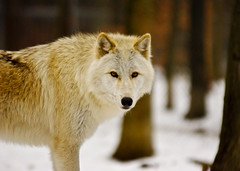
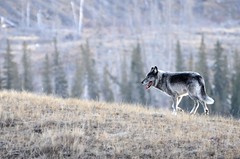
Wolves and other large carnivores were some of the first species to feel the effects of western civilization as we developed the technology to take the land we needed for our agriculture. Wolves were hunted virtually to extinction in Europe and North America as industrial agriculture grew and by the middle of the 20th century there were only remnant populations in the far reaches of their former range. The environmental movement of the last 40 years has changed the way both the public and the government views wolves, however, and in the 1990s there was a program to reintroduce wolves to the northern Rocky Mountain areas of Idaho and Wyoming. By 2004 the original couple dozen wolves relocated from Alberta,Canada to central Idaho had expanded to over 450 animals and some of those were making their way across the Snake River into Oregon. Nearly sixty years after the last wolf bounty was paid in Oregon, the fish and wildlife department confirmed two pups born to the small Imnaha pack, the first in the state. Six more pups were confirmed in the 2009 breeding season and there are two other packs now roam the wilderness of north eastern Oregon.

This autumn big news broke when a young wolf left his home pack and started heading west across Oregon. By December OR 7, as he is known, had traveled over 700 miles and set up camp in the heavily forested land between Medford, OR and Crater Lake. OR 7 is a bit of a celebrity these days and his journey, and the notoriety it is getting, is stirring up the rural/urban, rancher/conservationist divide over the reintroduction of wolves to Western States. Like Eddie Bondo, the Wyoming rancher and hunter in Barbara Kingsolver’s Prodigal Summer which I excerpted above, many people in rural Oregon view wolves as threats to their livelihood. The irony, of course, is that wolves returning to their mountains are in direct opposition to the real threat to their livlihoods.

By Fremlin
In Kingsolver’s beautiful novel, Eddie learns from the forest ranger Deanna about how important large carnivores are to the entire ecosystem they live in. Yes, large carnivores kill young and weak livestock, but another character in the novel notes that there are 10 other ways she might be responsible for the death of her animals. In fact, the land that supports a healthy population of carnivores can support a larger and healthier population of grazing animals. Even crop farmers benefit from the healthy ecosystems that support wolves, coyotes, bobcats and cougars. Those ecosystems provide clean water, balanced insect populations and habitat for pest rodents to live in so they are less likely to harass stored grains. Turns out, healthy ecosystems make for healthy farms, which in turn allow all people to live healthier lives.

I think one of the hardest things to wrap my city born brain around is just how detrimental our culture is to both wild things and to our own lifestyles. Our current practices of mining the earth’s resources are simply not sustainable – and I don’t mean that in the green washed way that Whole Foods or American Apparel mean it. I mean really, really for real, there is not going to be enough food, clean water, breatheable air or fertile soil to support the human population. We are filling our house with garbage and toxic waste, eating everything out of the fridge and refusing to see that things can’t go on like this.

The struggle for me, an environmentalist who cares about food issues and wildlife issues and really knows all about this stuff, is what to do on a daily basis. How do I make changes in my life that make it more sustainable, without abandoning civilization and living off dumpster diving and walking everywhere? I currently live a life that requires a car, and electricity and buying food at the grocery store. How do I take steps towards a life that this earth can actually support? Jessica Prentice quotes Martin Prechtel, the author of the book The Party’s Over, as he talks about the big, mechanized slug of a culture of progress. This “culture crushing mentality” has left behind a homogenized, lifeless civilization of freeways, big box stores and franchise restaurants. My sister went to India and her traveling partner insisted on eating McDonalds and KFC. It is mind boggling that you even can eat that food 
By Eoin C
so far away from the American heartland where it was invented! How do I fight this overwhelming slug without being a total outsider to my culture and community?

Prentice and Prechtel leave us with a simple, yet profoundly life shifting call to action; to recreate the interpersonal relationships found in our ancestral villages. Not to reject modern civilization (I do truly believe that appropriate technology will be profoundly useful in creating a sustainable culture) but building the human community within our civilization that makes life meaningful, valuable and worth honoring. In terms of food, this community is built through becoming a producer as well as a consumer, and trading with other individual producers. Buying eggs from a neighbor or local farmer, shopping for vegetables at the farmer’s market where you can shake the hand of the woman who grew your cauliflower, trading your dried oregano and wild harvested nettles for your neighbors apples or lettuce. These things allow us to see each other as valuable individuals, not just cogs in the wheel or obstacles on the way to our own fulfillment.

By Wiz411
We can create these webs of relationship in ways that don’t involve food, too. Taking the bus or walking allows us to really see our neighbors (and sometimes hear them, and smell them but that’s how we know they are real people). My group of friends is great at having the kinds of parties that allow us to build relationships, like Christmas lights viewing or cheese and wine parties or trips to the pumpkin patch. My church, like so many other places of worship, is another bastion of community relationships. When I was having such a dark time this last fall I realized that the culture of my church community involved explicitly being open with our needs and equally explicit with our ability to help each other both through encouragement and physical or material assistance. I learned that I had to be equally explicit with my non-church friends and once I did my needs were met quickly and lovingly.

The wolf is at the gate, this time of year. The days are dark and we are lonely, both in our daily lives and in our cultural life. Wolves show us how interconnected we all are and how important strengthening and honoring those connections really is. How connected do you feel these days, to your friends and family, your community and your larger ecosystem home? How do these connections nourish you, ground you or leave you feeling confined? Who do you like to buy your food from or share your food with? Do you have any wolf, coyote or other large predator sighting stories to share?  

**** **** **** **** **** **** ****

** This winter was tough and I got messed up in my calendar. I wrote this thinking it was the Milk Moon but it was really the Birth Moon. Since the post itself is more about the Wolf Moon, I just changed the tags and labels. For more on my thoughts about this, see this post. **

New Birth Moon 2008: Waiting

New Birth Moon 2009: Advent, Awaiting the Birth

New Birth Moon 2010: Winter is Dark, Yet Each Tiny Spark


My full Milk Moon post in January of 2010 is also about the Wolf Moon, and retells the wonderful story of St. Francis and the wolf of Gubbio.