Showing posts with label garden. Show all posts

Sunday, November 13, 2011

Snow Moon: Connecting with Our Food

Full Sorting Moon

**** **** **** **** **** **** ****


The moon a month before the winter solstice in Jessica Prentice's book, Full Moon Feast, is called the Snow Moon. In a pre modern society, this is the time of the year when the larders are full and people are beginning to live off their stored food rather than fresh food. It is fascinating for us, modern people with modern conveniences, to ponder life without refrigeration or electric freezers. What exactly does it take to make sure your household has enough food stored in a way that it will keep until fresh food becomes available again? And what does it mean to us and our connection with our food, with our food producers and with our larger community of spiritual beings that we don't have to think about where our food comes from?

Like most Americans, I get most of my food from grocery stores. On any day of the year I can easily get to a store and bring home almost any kind of fruit or vegetable, hygienic foods preserved in cans, bottles or frozen and even any number of prepared foods for a rather reasonable price. It is a rare week when I have to think about what I am going to eat further in advance than a couple of hours or maybe a day or two. Jessica Prentice points out that Americans tend to act like big babies when it comes to their food. We expect it to be available to us at any time with very little thought or effort on our own part. She notes that we are aghast when people claim they don't know how to drive but hardly bat an eye when people say they don't know how to cook.

Our ancestors, and many people all over the world, put infinitely more care into their food than we generally need to. Many people need to spend hours of the day for months of their year to collect, prepare and preserve enough food to meet their needs. These people are intimately in touch with their food from the exact part of the garden or field that it came from or which individual animal provided the food, through to what it looks and feels like in the kitchen through how it acts when it is prepared and preserved. They have an deep, visceral connection with their food.

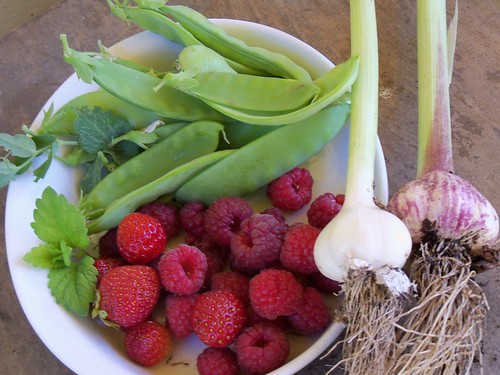
Over the past few years I have been making small, spiraling movements towards this kind of connection with my food. I grow a garden each year and revel in my own small harvests of snow peas, snap beans, cherry tomatoes and radishes. My garlic crop is my pride and joy and I relish the yearly rhythm of planting it right around Halloween, watching it come up in the February, monitoring it through the spring and deciding exactly when, in late June or early July, to dig up the whole patch. Then there is the process of tying the bunches to dry and checking on them every few days until they are ready to be trimmed, brushed of dirt and sorted into seed garlic and eating garlic. Luckily, garlic is good to eat at every stage from sprout to cured, so there is no wasted garlic out of my garden.
I also have taught myself to make a number of foods that are traditional ways to preserve foods for the winter. I recently made a big batch of yogurt and have made sour cream and kefir, another fermented dairy product, in the past. I occasionally make sourdough breads and really enjoy making fermented vegetable pickles. Sauerkraut, kimchi and other fermented vegetables are, as Jessica Prentice points out, excellent ways to ensure a supply of enzyme and vitamin rich vegetables through a long, dark, cold winter. The fermenting actually increases some vitamin levels and also provides lactic acid, a digestive aid that no doubt helped our ancestors deal with an otherwise plain and coarse winter diet of dried or salted meat, beans and grains. Even today this tradition continues to serve fermented vegetables with heavy foods like sauerkraut with sausages and cornichons with pate. In Korea, kim chi could provide up to half the food intake for a family during the winter and is especially full of healthful food compounds thanks to the garlic, onions, ginger and chilies that usually spice the potent cabbage dish.

This autumn I finally gave in to the giant "sauerkraut cabbages" for sale at my favorite pumpkin patch farm. For less than 4 dollars I was able to take home 18 pounds of cabbage to turn into as much lacto fermented goodies as I could fit in my fridge. I used some of it to make a giant batch of coleslaw and another goodly pile of it became a braised cabbage dish but the rest became three kinds of sauerkraut, a fusion kim chi and three jars of cortido. My fermented cortido is based on the Latin American cabbage salad with pineapple, onion, garlic, chiles and oregano spicing the cabbage. It took me over a week to process the entire head of cabbage but now I have enough kraut to last at least through the winter.

*** *** ***

2011 Fusion Kim Chi

Check out my other blog for some more detailed instructions for making fermented vegetables like sauerkraut, pickled vegetables or kim chi.

Shred a pile of green cabbage and put it in a large mixing bowl. Fill it up about half way.

When you get sick of shredding cabbage, wash out a couple jars with lids, maybe two quart jars, or four pint jars, or whatever old spaghetti sauce jars you have. Slice 2 carrots into thin coins, planks or match sticks and toss them in with the cabbage.

Slice half an onion into longitudinal planks and toss that in two. Add in two handfuls of pineapple chunks, if you happen to have some sitting around like I did. You could add firm apples, pears or jicama instead, or leave that out all together.

Sprinkle about a tablespoon of salt over the cabbage and toss it. Peel a big ole knob of ginger and about 10 cloves of garlic. Chop them all up together into a fine mince, or slice them into planks. Toss that in with the vegetables. Doesn't it smell delicious?

Add a big shake of ground red chiles. (I usually use New Mexico chiles because I like the warmth and flavor but this time I used Aleppo pepper, a middle eastern variety. You can buy ground pepper for kim chi at an asian store, but every brand I've found has added MSG or other flavorings.) Add a little pepper flakes if you want more heat, or even some cayenne or fresh peppers if you like your kim chi fiery.

Look at it now. It should be glistening and moist, and bright red. Mix it up -
with your hands, of course.

Taste a piece of cabbage and add some more salt if you need to. When it is good and salty, good and red, good and tasty start packing it into jars. Press the vegetables down until the brine comes up over top of the veggies. Pack the jars full but not over the threads of the jar. Close them up,
let them ferment and then move to the fridge. Enjoy with macaroni and cheese, rice or anything else you serve at your winter table.

*** *** ***

Our spiritual connection with food is a huge topic that I intend to explore more fully this year but even this vast topic starts with the daily actions of eating and preparing food. We are adult beings who are able to take responsibility for feeding ourselves and do not need to abdicate that to restaurants or food manufacturers. Taking back our connection to our food starts with making dinner, with an pot of herbs on the windowsill, with an experiment in making jam or pickles or yogurt. I certainly don't claim any special knowledge on what is the most healthful or most ecologically sound diet, I just know it is important to care about what goes into our mouths. That food becomes us, it is our vital, physical, chemical, energetic link with the rest of creation. That shouldn't come out of a box.

What foods or dishes are you most connected with? Have you ever done any food preserving or growing food in a garden? Does what food you serve change as the seasons change or do you continue to take full advantage of our modern food distribution system (or both, like in my house)? What food means winter to you?

**** **** **** **** **** **** ****

Full Sorting Moon 2009: Full Sorting Moon


Full Sorting Moon 2010: The Rains Have Come


A number of posts from my first year of blogging here contain recipes. At the Harvest Moon 2010 I shared a recipe for another of my favorite preserves, plum ketchup.

Monday, April 4, 2011

Re-creating during the Courting Moon

New Courting Moon

I've actually never posted for the New Courting Moon before, but here is my one lonely post about the Courting Moon:

Courting Moon 2009: Courting Moon - I took a break!

**** **** **** **** **** **** ****

This month's new moon is the Courting Moon, an intercalary moon that is added every few years to keep the solar festivals in their proper lunar month. One of the beautiful parts of Annette Hinshaw's calendar is that both the moon cycle and the solar festival cycle tell the story of the God, the Goddess and their Creation and that both cycles stay in sync. In a purely solar calendar like the Islamic calendar, festivals move around the year because the 29.5 day lunar cycle doesn't fit perfectly into the 365.25 day solar cycle. Every calendar that needs to keep it's solar cycle aligned with it's lunar cycle, like the Jewish calendar, has to add an intercalary month or period. I wrote more about this phenomenon two years ago during the last Courting Moon.
Like the last Courting Moon two years ago, I am feeling the energies of this moon as a question about how we re-create our lives through recreation. Keith Collins at The Inner Coach calls recreation the "third way" between work and rest and is a way to creatively work out how to live the life your soul asks you to live. I find this to be a huge task to pick up, especially in a month like this all full of sunshine and sleet, flowers and mud.

The Flower Fed Buffaloes by Vachel Lindsay

The flower-fed buffaloes of the spring
In the days of long ago,
Ranged where the locomotives sing
And the prarie flowers lie low:
The tossing, blooming, perfumed grass
Is swept away by wheat,
Wheels and wheels and wheels spin by
In the spring that still is sweet.
But the flower-fed buffaloes of the spring
Left us long ago,
They gore no more, they bellow no more:--
With the Blackfeet lying low,
With the Pawnee lying low.

April is National Poetry Month and I have been using my Facebook page as a "ministry" outlet again by posting lots of poetry. I have been having a great time reading many different kinds of poems ranging from classic children's poems to very modern poems about the Japanese earthquake and tsunami. In his article Recreation and Re-Creation, Keith Heidorn laments the fact that arts, music and even sports and science are being relegated to the halls of academia or other haunts of the highly skilled. "How many of us still sing outside the safety of the shower or the car in rush-hour traffic?... And poetry, according to Adrienne Rich, is being 'hoarded inside the schools, inside the universities' because the priesthood believes that the average citizen can't understand poetry and thus, it should be left to the experts." He goes on to insist that art is an act of re-creation, of giving physical substance to our innermost feelings. We should not give that away or let others take it from us. Posting poetry to Facebook almost feels like a renegade act, but one that is deeply fulfilling.

The Rainy Day by Henry Wadsworth Longfellow

The day is cold, and dark, and dreary
It rains, and the wind is never weary;
The vine still clings to the mouldering wall,
But at every gust the dead leaves fall,
And the day is dark and dreary.

My life is cold, and dark, and dreary;
It rains, and the wind is never weary;
My thoughts still cling to the mouldering Past,
But the hopes of youth fall thick in the blast,
And the days are dark and dreary.

Be still, sad heart! and cease repining;
Behind the clouds is the sun still shining;
Thy fate is the common fate of all,
Into each life some rain must fall,
Some days must be dark and dreary.

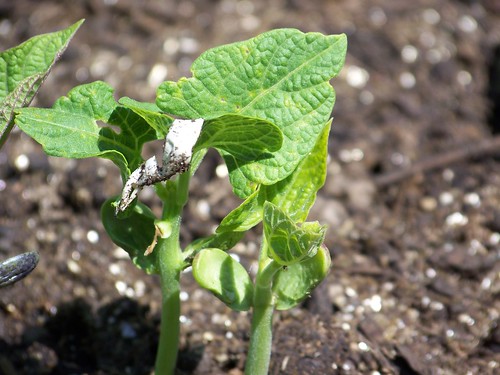
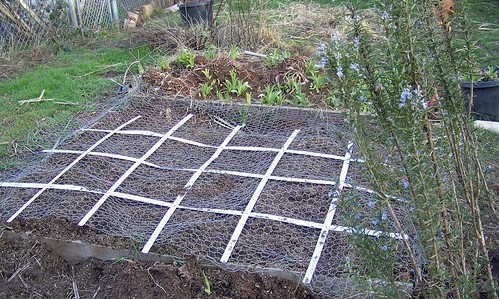
In addition to poetry, my other re-creational outlet this month has been working in my garden. This year I am back to just one garden but expanded it to three beds. I planted quite a few hardy greens last summer and autumn and was pleasantly surprised by how many survived and even thrived with minimal protection over the winter. I've spent a number of pleasant hours in my garden in the past few weeks pulling weeds, planting starts and seeds, massaging compost into the soil and just generally puttering about. I love watching everything poke its head up out of the soil, old friends like the persistent and perennial lemon balm and new plants that might be flowers or they might be weeds. Or they might be both. I've discovered some runaway garlic and raspberries from my neighbors yard and am excited to see if the gangley grape plant bears fruit for us this year. I get so much spiritual nourishment from my garden and playing around in it really is one of the great joys of spring.

Daffadowndilly by A.A. Milne

She wore her yellow sun-bonnet,
She wore her greenest gown;
She turned to the south wind
And curtsied up and down.
She turned to the sunlight
And shook her yellow head,
And whispered to her neighbour:
"Winter is dead."

How are you re-creating your self through
recreation this spring? Are you planting a garden? Reading poetry? Enjoying a sport or an art or time spent with dear loved ones? What are you reading that is re-creating? What are you writing? What life is your soul asking you to create through your recreation? What's your favorite poem? How are the flowers coming along wherever you are this spring?

Friday, March 25, 2011

Spring Equinox

Spring Equinox

Spring Equinox 2009: Spring Equinox
As I said two years ago, if you can't explain solstices and equinoxes to a nine year old, do some reading until you can. Check out this video.

Spring Equinox 2010: Giving Thanks at the Equinox

My post Easter from April 2010 is also about a holiday associated with the Spring Equinox.

**** **** **** **** **** **** ****


Spring is here! Spring is here!

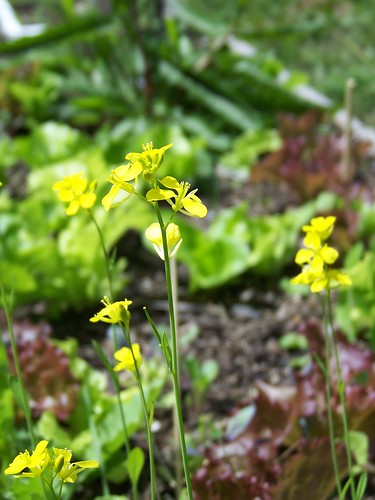
One of my biggest pet peeves is this ridiculous idea that a season begins at the equinox or solstice that bears its name. I much prefer to think of the equinoxes and solstices as the height of the seasons, not the beginnings. Spring is the season of new growth and it begins well before the days and nights reach equilibrium. To me, the beginning of spring is in early February, halfway between the winter solstice and spring equinox but it always seems like I'm the only one who is celebrating so early. Last weekend I was in my garden, turning up soil and planting lettuce seeds when I had the realization that spring is no longer a secret I whisper to myself. At the equinox spring is a triumph to be shouted out loud.

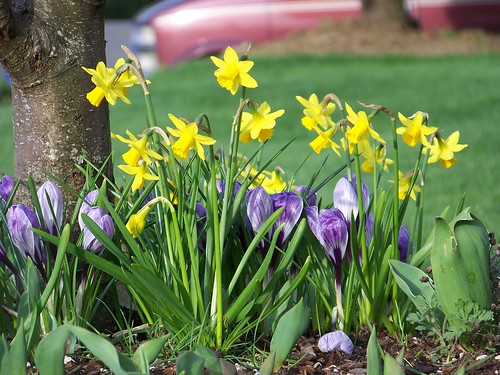
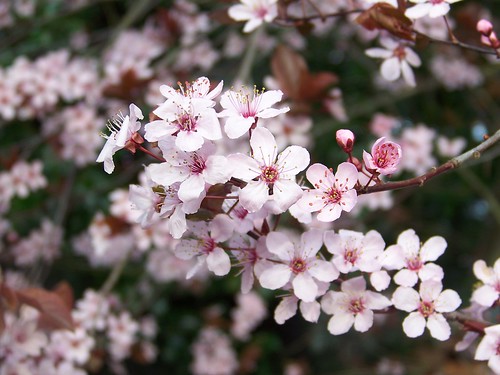
Luckily, I'm not the only one doing the shouting, now - the Earth is doing plenty shouting herself. The lilac trees and currant bushes are budding, the daffodils are out and so are the cherry blossoms. Nettles are up, ducks are pairing up and the slugs and snakes are back on the edges of the trails I walk each week. Even the rain is shouting that it's spring; gentle, sweet and almost warm. I even saw a turkey vulture the other day! A friend of mine recently commented that the peepers and pounders are back - peepers being tree frogs and pounders being the flickers who hammer against whatever sounds good. Both making all the noise they can to get the ladies lookin' their way.

Like equinoxes past, I was up for the sunrise on Monday morning. The sunrise was typically gray, but also typically noisy with birdsong. I love this time of year when the birds are twitterpated and making all the noise they can. I love the light evenings and the warmer afternoons. I love the smell of cherry and apple blossoms, of wet earth and sunshine on green grass.

What's spring shouting where you are? I know I have followers all over the continent and readers from even further afield. Leave a comment and let me know what spring looks like where you are. What's blooming? What's singing? What are you noticing? Happy equinox, and happy spring!

Monday, June 14, 2010

You Are The Mother's Beloved Child

The other night my cousin was in town and wanted to see the sunset from Council Crest, the higest point in Portland. The weather has been unseasonably wet lately so I wasn't optimistic about our chances for a nice sunset but the cloud cover broke just enough for us to see something besides rain. To the east was a solid wall of dark, red-purple rainclouds, like a curtain dropped between town and the mountains. To the west were fluffy blue clouds rimmed with gold and pink. Above those spectacular clouds was a new crescent moon. I don't think my cousin was as excited to see the moon as I was, but after close to 6 weeks of rain I have hardly seen the moon at all. Hello, New Moon! I'm glad you are back!

The new moon this month is the Mother's Moon which brings unconditional motherlove to all the myriad things. The Mother's Moon celebrates the energy of a love that is given simply because you exist. You are The Mother's beloved child; of course she loves you.

My cousin and I spent some really good quality time talking about our lives and our families during his visit this week. It was interesting to hear his thoughts about his father and stepmother and how little connection he feels with them. He says that even though his mother died when he was very young and his father and stepmother married before he started elementary school he has never called her "mom", only her given name. I contrasted this with my own family and am grateful for what I find. My parents did not have the ability to provide the material comforts my uncle was able to give his family, and from the outside we may look like a less loving family (my dad always half-jokes; "We stayed together for the kids, the screaming and yelling was good for them.") but I know my parents adore(d) me. I know my parents sacrificed their own wealth, their own dreams and even their own friends and relationships to provide my sister and I with everything they could. I have never for a moment, not even in the heat of our adolescent battles, doubted that my mother loves me more than anything in the world. And I am so, so grateful for that.

One of the easiest ways for me to conceptualize god is as an all loving Mother. I have always preferred a feminine pronoun for the divine, love the images of female goddesses of the world and find great strength in knowing that god adores and delights in me as a mother adores and delights in her children. At this time last year I wrote about a couple of my early influences in seeing god in this way and those influences are still strong in my relationship with the divine. The image of God as a mother big enough to hold and rock me, who showers me with gifts and loves me no matter what is comforting. I usually start my prayers with the address "Sweet Mother" in place of the more common "Our Father". I recognize that this isn't the only way to address god, or even always the best way, but it is what feels best to me, most of the time. It feels comfortable and safe. Motherly.


Motherlove, however, is not always comfortable. The Mother loves all her creatures equally and without regard to their merit. This means She loves murders and addicts (see this description of Gabor Mate's In The Realm of Hungry Ghosts: Close Encounters with Additions). She loves unscrupulous politicians and selfish executives. She also loves man-eating tigers, rip tides, blizzards and tornadoes. After the earthquake in Chile this last winter a friend of mine made a quip on Facebook about "Mother Earth just wants to get us off her back." I offered the idea that the earthquake didn't have anything to do with us. The Mother loves the planet and the physical processes of it's geology as much as she loves the billions of humans living on its surface. This is a much scarier idea to me. It's not that God/Mother Earth/Destiny has bad things planned for us, it's that we are rather insignificant in Her plans. Or no more significant than an earthquake.


Holding that juxtaposition of a God that love me specifically and also loves everyone and everything else just as specifically is a hard one for most people to grasp. People like to think of god as loving them so much that obstacles are removed from their path no matter what that means to other people or other beings. I just read the book of Joshua in the Old Testament and the people of Israel clearly worked within that paradigm. God promised them this land and they fought, slaughtered, burned and pillaged to get it. I just kept thinking about the poor people of Jericho and Ai and all the others. What part of God's love was shown in their slaughter?

This is a huge, HUGE question and one that I am in no way prepared to answer. I only have some ideas and some experiences to fall back on. At Meeting a couple weeks ago someone gave vocal ministry repeating the old saying "Never show a fool a work half done." I am the fool to God's work. Sometimes I have to give up thinking that I can know what form The Mother's love will take for all of her beloved. Just yesterday on my morning walk, while meditating on this post, I came across a robin's egg in the trail. It wasn't just the usual shell fragments you see this time of year, it was an egg with a fully formed but still embryonic chick, smashed and dead. Where is the Mother's love in that? That is not my question to answer. I just have to have faith that, as I feel and know Her love for me, that love is extended to all other beings sentient and otherwise. And in this glorious month of June, when the days are long and the garden is green, it's a little bit easier to remember.

Thursday, April 1, 2010

Planting Seeds in My Mind, Heart and Garden

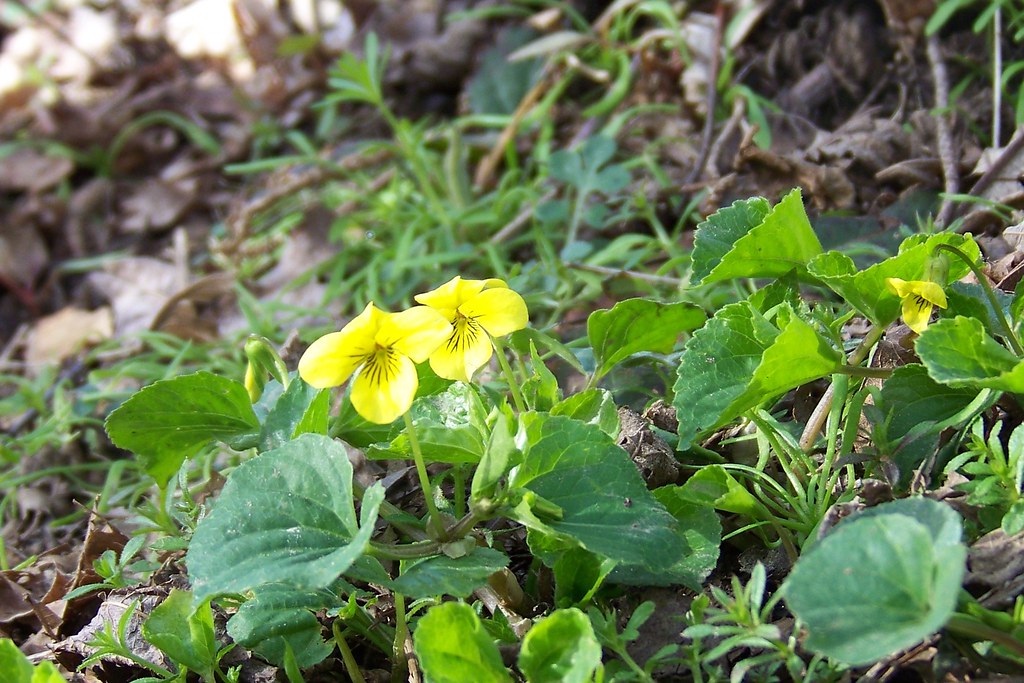
I have been trying for two years to get violets to grow from seeds in my front yard. I see them growing all around my neighborhood and want some of my own. They are so small and dainty with their heart shaped leaves and lovely little flowers in purple, indigo and yellow. They seem to grow so well in our climate, too. I see them growing in cracks in the sidewalk, on the edges of lawns and along gravel roads. They even grow wild around here. I have planted little starts, lovingly planted and watered seeds and even just tossed handfulls of seeds out into the lawn. All to no avail. We've got daffodils, roses, tulips, sheep sorrel, pampas grass, a 40 foot tall fir tree and even a quince bush. No violets, however, are growing in my front yard.


Cultivating an examined, Spirit filled life can thought about as like trying to grow plants. You and God both spend time cultivating the soil and you both sow seeds. What grows is a collaboration and neither parties are completely in control of the results. It is important as a gardener of plants make sure you spend enough working in your garden but it is also important to give the plants the time and space they need to grow. Sometimes you can't grow what you want and sometimes a weed pops up that turns out to be the most satisfying plant in your garden. You have to work, but you aren't in control of the results.

Listening to or reading the ideas of others is the equivalent of planting seeds in your spitirual garden. Other people's ideas can be the little kernals of thought that you grow a pearl of wisdom around or can be a window that lets you see truth where otherwise you just saw a wall. And you never know which seeds are going to be the important ones that grow big in your heart. In recent sessions of deep spritiual thinking I quoted U2, the Buddhist 8 Fold Path and Futurama, a satirical cartoon by the creators of the Simpsons. I have harvested rich spiritual fruit from the writings of Rob Breszny who is most well known for his syndicated astrology column, Free Will Astrology. Reading the lectures of Rudolph Steiner and seeing how people have worked with his ideas have also led to great thinking on my part, as have the writings of such diverse authors as Walt Whitman, Phillip Pullman, Jean Auel, Marion Zimmer Bradley, and Laura Ingalls Wilder. Quaker thought and Taoist thought deeply influence my spirituality as well as Wiccan and other earth based traditions. I wouldn't be where I am today spiritually without all these different seeds. My garden would not be as diverse and beautiful.

Seeds alone aren't enough to make a garden, though. I believe engaging other people with your ideas is the spiritual equivalent of tilling and fertilizing your garden soil. Over my life this has taken the form of journaling, late night conversations over a bottle of wine or bourbon, afternoon hikes with friends and more recently conversations during coffee hour at church. This blog is also a way for me to cultivate the soil of my garden through concious thought and the process of putting pieces together to make coherent sentances and essays.

Watering my spiritual garden and giving it space to grow through prayer and contemplation is a part of the process I am just now coming into concious appreciation of. I suspect I have always done it, unconciously, through letting ideas rest and meld but prayer is like watering your garden by hand, with little cups of water each day. It gives those idea seeds your concentrated attention and nourishment and allows them to grow to the fullness of their ability. Watering your garden by hand is also a time to really see what those little plants are doing and so prayer or contemplation is a time to allow the works of god/spirit/subconcious mind to come forward and show itself. Its amazing what you can see and hear when you stop doing and give the universe a chance to speak.

Just like I may never grow violets in my front garden there may be fruits or callings of the spirit that I will never cultivate. I will probably never be a monk or nun, but by putting the work into my spiritual garden I will find what I am here to grow. What seeds have been planted in your spiritual garden lately? How do you till your garden and water it? What have been growing good fruit for you? What is growing in your front garden that you never expected?

Thursday, March 18, 2010

To Everything There Is A Season

To every thing there is a season and a time to every purpose under the heaven:
A time to be born, and a time to die; a time to plant, and a time to pluck up that which is planted;
A time to kill, and a time to heal; a time to break down, and a time to build up;
A time to weep, and a time to laugh; a time to mourn, and a time to dance;
A time to cast away stones, and a time to gather stones together; a time to embrace, and a time to refrain from embracing;
A time to get, and a time to lose; a time to keep, and a time to cast away;
A time to rend, and a time to sew; a time to keep silence, and a time to speak;
A time to love, and a time to hate; a time of war, and a time of peace.
Ecclesiastes 3:1-8 King James Version of the Bible

*** *** ***
To everything there is a season, and thank the goddess this is the season for sprouting and flowering and planting and loving the sun! It is a time of parties and birthdays, new babies and new projects. How exciting!

In her Pagan Lent article, Waverly Fitzgerald talks about the wisdom of using the new growth energies of spring to catapult new changes in your life. People seem to do this unconsciously and we seem almost driven to try new things this time of year. I was at a party last night (my second or third party this week) and everyone was talking about their new projects. New jobs, new school, new careers, new boyfriends, new houses, new gardens. I have three new babies coming into my life in the next week or so, and new projects of my own both public and private.

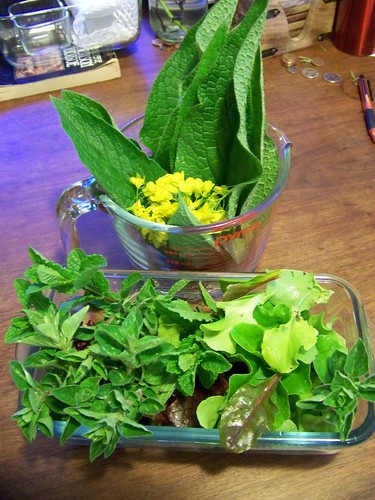
The earth is getting ready for the great big outbreath of summer and plants are bursting forth with new growth. The difference between winter and spring in Portland is the presence of flowers and boy-howdy do we have flowers! The cherry blossoms have been out for a while and the daffodils and crocuses are at or past their peak, but others are showing up. Camellias, azaleas, magnolias, hyacinths, daffodils, apple blossoms, even some tulips in sheltered yards. I found mint, sheep sorrel, comfrey and a new spring onion growing in my favorite foraging grounds this week.

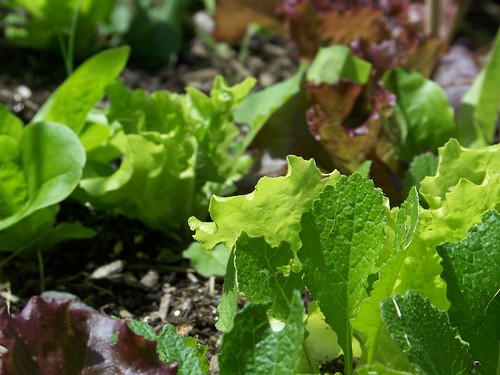
Just like last year I am spending this early part of the Seed Moon planning and planting my garden. I have expanded my garden to at least double what it was last year and already have a good solid plan for the early spring on paper. I realized last year that I grew too much lettuce and not enough greens for cooking so I'm halving the lettuce and doubling the turnips, mustards and beets. I'm also planning space for carrots, peas, beans and tomatoes. So exciting! Check out my photos from last year here to get a glimpse at what it will be like this year.

I'm already feeling a little stretched thin by this fantastic new energy and know that I need to continue giving myself enough down time to recover. Every year trees pool all their energy to explode forth in blossoms every spring before they even have leaves. What a crazy task! They know to take a break between blossoming and fruiting to recharge, and I need to keep that recharging part of the cycle happening in my life too.

What is starting new this spring for you? What flowers are you seeing? How do you recharge to be ready for all that spring and summer have to offer?

Friday, September 18, 2009

The Harvest Moon is New

As you sow, so shall you reap. That is the message of the Harvest Moon. It is the time of year when the fruits of the year's work at coming ready for harvest both literally and figuratively. As the days get shorter we are spending more time thinking and we have time to reflect on what we have and what we have earned. It is a time to fess up to taking too much responsibility and to own up to not taking enough. It is a time to reap the good karma of our loving, thoughtful actions as well as the bad karma of our thoughtless or malicious actions.

It is also the time of year to harvest the goodies out of the fields and gardens that we spent all year working on. I planted and tended a beautiful little vegetable garden this year and have really enjoyed the work and the harvest. The Harvest Moon is the polarity to the Seed Moon which adds symmetry to the fact that the last time I told you about my garden was in my Seed Moon post.

As I said then I was planning two gardens for this year, one at my parent's house and one at my own little house. The bed at my parent's house is 4' x 6' and I planted early season greens, peas and beets as well as an eggplant, a chile pepper plant and some flowers. My lettuce was a huge success and there was a time when I was harvesting more than I reasonably wanted to eat. The radishes, on the other hand, were a complete bust. Who knows why but the garden spirits just didn't feel like granting me radishes this year. Ah well, they made up for it in beets and chard. One of the big suprises in my little garden was the calendula I planted. I think I planted it late and didn't expect it to do anything but then one day I looked out and there was a gorgeous yellow sun of a flower. In fact, all the flowers I had in my garden were thrilling. Mostly they were bolted veggies like radish and mustard, but I loved my nasturtium, rosemary and pea flowers as well.

The little garden really isn't that much littler, but it did end up growing just one kind of food - tomatoes. Everyone needs a tomato plant or three and I had four. I grew a hybrid grape tomato and three heirloom slicing tomatoes. One set flower and fruit so late that I got only one single red tomato before the weather changed (note to self, don't buy that variety next year) but the Kellogs Breakfast Tomato and the Amish Paste both did respectably. The Kellogs Breakfast makes giant wrinkly tomatoes that ripen to an orange juice orange color. I am certainly growing those again next year!

Growing a garden is a deeply moving experience when you approach it as a partnership between yourself and the plants. I really enjoyed getting to meet new plants and new vegetables this year. I loved eating food that grew in dirt I tended with my own hands. I loved the work I put into my garden and loved showing it off. Of course, I am already making plans for next season. I put in more lettuce and radishes for the fall (maybe the autumn fairies will like radishes more than the spring ones did) as well as collards, kale and chard. I'm planning a garlic planting and daydreaming about another bed or two or three.

What are you harvesting this autumn? What did you grow in your garden? What did you grow in the garden of your life this summer? How is that harvest coming along?

You can see more photos of my garden on my flickr stream here.

Friday, March 13, 2009

Seeds! Seeds!!

It is the full moon in the Seed moon and I can't think of a better time to start planting the garden! Well, OK, it is mostly planning right now but it will soon be time to sow. I am so excited about my garden this year. Growing food is such a primal urge and touches on so many aspects of my spirituality. I love watching plants grow and change and love even more making and eating food that I tended from seed to plate. I have not been settled enough the last few years to make gardening a priority but this year I am!

I going to be planting two different garden plots this year, one in my parents' yard and one in my little yard. I have been focusing on the plot at my parents' house because it needs the most work and is where I intend to grow my early season crops. Last winter I bought Mel Bartholomew's Square Foot Gardening and have been reading it cover to cover for months. The idea of his gardening method is to use his garden mix so you don't have to ammend native soil, and plant in squares instead of rows to reduce space and keep the harvest manageable. Sounds perfect to me!

I've been planning and replanning my square foot garden at my folks' house all these last two weeks. It's 4' x 6' and I will be planting peas, lettuce, bok choy, swiss chard, onions, radishes and maybe some kale or broccolli this spring. I can't wait! I did put some pea seeds in last weekend but we've been having snow and hard frost followed by 60 degree days, so I'm not expecting much germination out of these ones. I'll plant some more next week and hope Mother Nature gives them a little more help with the weather.

I believe that planting and growing food is an important activity for all people to engage in. Even if it is sprouts in a jar, herbs on the windowsill or a tomato in a pot it is vital for us to be connected with the growth of the food we eat. In the Celestine Prophecy, a parable novel written by James Redfield, food grown with the aid of spritual energy is more nutritious than food grown in more traditional ways. I think at some levels this is a universal truth - the energy, love and attention that is put into food plants comes back to those who eat the food. Whether a home grown tomato has more vitamin A than a storebought one is almost irrelevant (though in many cases it is true) because a home grown tomatoe has more love to share. It has more chi, it has more God in it. And we can all use some more of that.

What are you planting this spring?